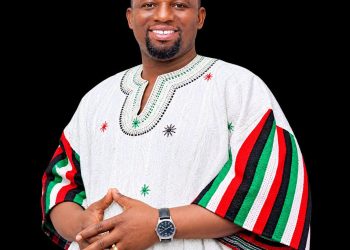























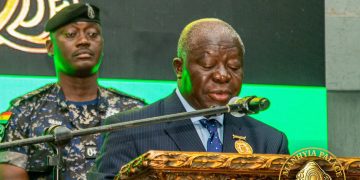


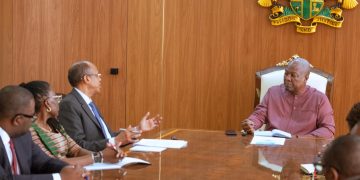




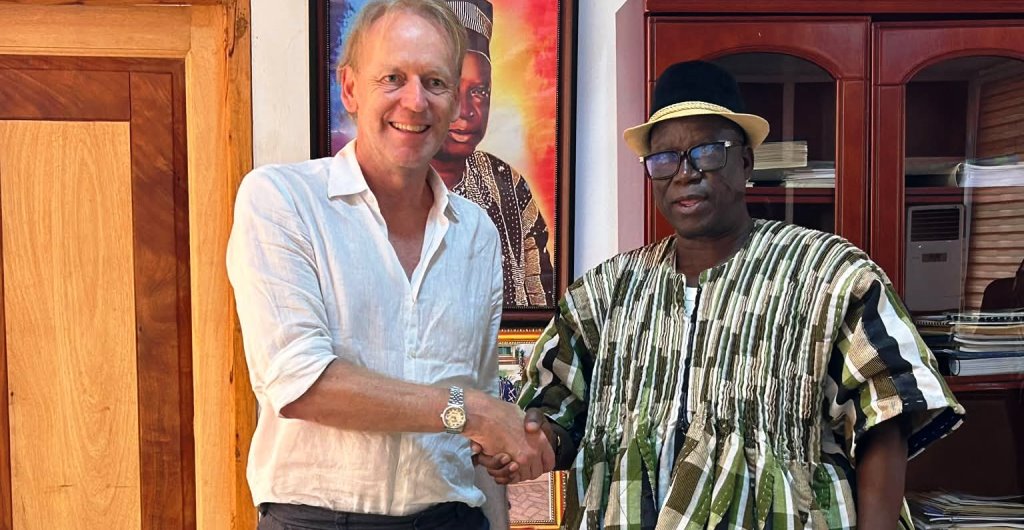
The Upper East Regional Minister, Akamugri Donatus Atanga, has appealed to the Netherlands to support efforts to strengthen border surveillance and address security gaps in the region amid growing concerns over cross-border threats and violent extremism.


He made the appeal during a meeting with the Dutch Ambassador to Ghana, Hans Akerboom, who paid an official visit to the Regional Coordinating Council to discuss security and development challenges confronting the region.
Mr Atanga said the region’s strategic location, sharing borders with neighbouring countries, exposed it to security threats, particularly through numerous unofficial crossing points that make it difficult for security agencies to effectively monitor movements across the borders.
The region, which has 15 districts, requires stronger border surveillance systems, adequate logistics and improved security infrastructure to enable security agencies to respond effectively to emerging threats, he stressed.
He further argued that addressing the security situation required more than strengthening the operations of security agencies, insisting that development gaps in border communities could create opportunities for extremist groups to exploit vulnerable populations.
The Regional Minister therefore called for increased investment in social amenities, particularly healthcare facilities, in communities along the country’s borders.
According to him, providing essential services in such communities would strengthen state presence and reduce the vulnerability of residents to extremist influence.
He suggested that some social infrastructure, including health facilities, could be designed to serve not only Ghanaian communities but also neighbouring populations where necessary.
The appeal comes as northern Ghana continues to attract attention over concerns about the possible spread of violent extremism from the Sahel and the need to strengthen community resilience and state presence in vulnerable border areas.
Mr Akerboom, who described the visit as his first official engagement in the Upper East Region, said he was interested in understanding local conditions and engaging directly with regional authorities.
He was accompanied by officials of the Dutch Embassy, including Ines Hasanovic, who is responsible for regional security.
Ms Hasanovic disclosed that the embassy was working with the Coastal States Stability Mechanism and other development partners on initiatives aimed at preventing violent extremism in northern Ghana.
She explained that the interventions were designed to strengthen the presence of the state through collaboration with security agencies and the Ghana Health Service.
According to her, the delegation was also in the region to assess ongoing interventions, understand the challenges facing local authorities and identify areas where the Netherlands could provide additional support.
She emphasised that the initiatives were government-led, with the Dutch Embassy providing complementary support to existing government efforts.
Beyond border security, Mr Atanga also used the meeting to renew the region’s call for the establishment of a regional remand centre or prison facility at a central location to address logistical and security challenges associated with the transportation and detention of suspects.

He said the absence of an adequately equipped detention facility in the central part of the region created difficulties for law enforcement agencies, particularly when suspects had to be transported over long distances from the eastern and western parts of the region.
He noted that the constitutional requirement for suspects to be brought before a court within 48 hours of arrest also placed additional pressure on security agencies when detention infrastructure was inadequate.
Mr Atanga argued that establishing a properly equipped facility would improve law enforcement operations and serve as a deterrent to criminal activities.
He appealed to the Dutch delegation to consider supporting the region’s broader security infrastructure and development priorities.
The Regional Minister expressed appreciation to the Netherlands for its existing interventions and assured the delegation of the Regional Coordinating Council’s readiness to deepen collaboration.
Source: www.kumasimail.com