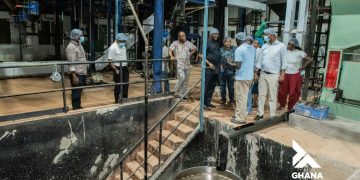







































The government has disclosed that 60 out of 95 factories established under the Rural Enterprises Programme require further attention before they can become fully operational.


Minister for Trade, Agribusiness and Industry, Elizabeth Ofosu-Adjare, said the government had commenced a nationwide assessment of the facilities to establish their actual condition and determine the interventions needed to restore viable factories to production.
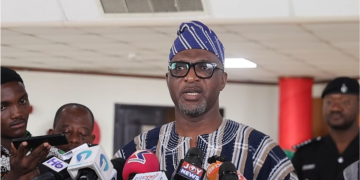
She made the disclosure on Monday, November 16, 2026, at the commissioning of the NADKANSCO Cashew Processing Limited factory in Techiman in the Bono East Region.
According to the Minister, although the Rural Enterprises Programme had formally closed, the government was continuing to follow up on the factories established under the initiative to establish which ones could be revived and what resources would be required.
“Although the programme has formally closed, the Ministry is following up on this 95th facility. Of these, 60 require further attention. Some factories still need equipment while the condition and use of other facilities must be confirmed,” she said.
Madam Ofosu-Adjare disclosed that a team established by the Ministry was visiting facilities across all 16 regions to assess their condition and identify the support required to bring viable ones back into operation.
The disclosure highlights a significant challenge confronting Ghana’s industrialisation ambitions, where investments in physical infrastructure do not always translate into sustained production, employment and commercial returns.
The Minister cautioned that establishing factories was only one part of the industrialisation process, stressing that manufacturers also needed dependable raw material supplies, access to financing, efficient regulatory processes and reliable markets for their products.
She identified unreliable supplies of agricultural commodities, difficulties obtaining financing, administrative delays in accessing public services and challenges securing buyers as some of the major constraints affecting manufacturers.
In a related intervention aimed at addressing the regulatory challenges, Madam Ofosu-Adjare announced that the Ministry was preparing a Business Regulatory Reform Bill to establish an Office of Business Regulatory Reform.
She said the proposed office would help investors obtain the permits, approvals and public services required to establish or expand businesses without unnecessary administrative delays.
The Minister disclosed that the proposal would be forwarded to the Attorney General in the coming days for final drafting, after which a Cabinet Memorandum would be prepared for consideration by Cabinet.
She explained that the proposed office would strengthen the Ministry’s ability to monitor business-related regulatory activities, work with regulatory institutions and address obstacles confronting investors.
“Regulations are necessary to protect consumers, workers, and the environment, but business should not be burdened with avoidable administrative difficulties,” she said.
The proposed reform is expected to make regulatory processes more predictable for businesses, particularly manufacturers seeking to establish new factories or expand existing production facilities.
Madam Ofosu-Adjare also identified the National Agribusiness Policy and the Feed the Industry programme as key interventions being pursued by government to strengthen the relationship between farmers and processors.
She said the initiatives were intended to provide farmers with dependable markets for their produce while ensuring that manufacturers had adequate raw materials to sustain production and meet market demand.
Her remarks came against the background of the commissioning of the NADKANSCO cashew processing facility, which illustrates both the opportunities and financing challenges associated with Ghana’s agro-industrial ambitions.
Chief Executive Officer of Ghana EXIM Bank, Sylvester Adinam Mensah, disclosed at the ceremony that the bank had committed approximately US$12 million to the establishment and operations of the facility.
He said the financing covered automated processing equipment, working capital and workforce training, with more than US$3 million invested in acquiring the factory’s automated machinery.
However, Mr Mensah disclosed that the working capital support available to the company would enable it to procure approximately 5,000 metric tonnes of raw cashew nuts, against an annual processing requirement of at least 30,000 metric tonnes.

He urged the company’s management to expand production and operate at full capacity, assuring it of the bank’s continued support through affordable, long-term financing.
The EXIM Bank CEO described cashew processing as a business requiring patient capital, stressing that the bank’s financing approach was designed to support industries with long-term economic potential rather than demand immediate returns.
The financing challenge reinforces the Trade Minister’s argument that access to capital and dependable raw material supplies are critical to the survival of manufacturing businesses.
For the government, the assessment of the 95 factories and the proposed regulatory reforms present an opportunity to address weaknesses in the country’s industrial investment framework.
The outcome of the nationwide assessment, particularly how many of the 60 factories requiring attention can be restored to productive operations, will be an important test of the administration’s commitment to turning existing industrial investments into functioning businesses, sustainable jobs and economic value.
Source: www.kumasimail.com