























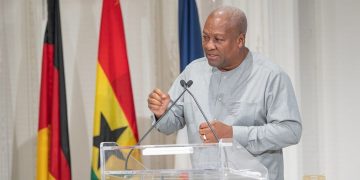


President John Dramani Mahama has attributed the extensive flooding recorded in parts of Accra to a combination of extreme rainfall, inadequate urban planning, blocked waterways and human activities.


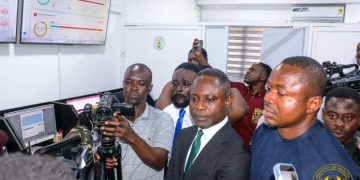
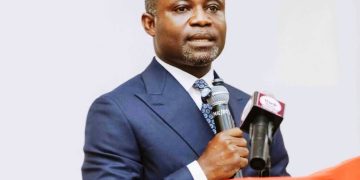
Speaking after touring flood-affected areas in the capital, President Mahama said the rainfall recorded on the day was among the highest experienced in recent years, with about 140 millimetres of rain falling on Accra.
He said the volume of rainfall far exceeded previous records, noting that the highest daily rainfall recorded last year was about 56 millimetres.
According to the President, changing climate patterns have contributed significantly to the increasing frequency and intensity of flooding in the city.
He cited data from the Ghana Meteorological Agency (GMET), which showed a sharp rise in rainfall levels during June over recent years. He said Accra recorded 85 millimetres of rainfall over a 30-day period in June 2024, which increased to 172 millimetres in 2025 and rose further to 333 millimetres in 2026.
President Mahama explained that the continuous rainfall has left little time for waterways to recover, as Accra experienced rain on about 22 days out of the 30-day period in June.
He, however, said while climate change was beyond human control, engineering and human-related factors were also major contributors to the flooding crisis.
The President explained that Accra’s location between the Akwapim mountain range and the Atlantic Ocean means the city was naturally designed with waterways that allowed streams to flow into the sea.
He said rapid population growth and unplanned development have restricted these natural water channels, preventing the free movement of water.
“Before Accra was built, the streams used to flow through this plain to reach the sea. But as the population continues to increase and people continue to build, it restricts the path of the streams,” he said.
President Mahama also blamed improper waste disposal practices, including the dumping of garbage into drains and wetlands, for worsening the situation.
He said investigations during the tour uncovered illegal dumping sites where wetlands had been converted into waste disposal areas, with some individuals later selling the reclaimed land for development.
He announced that government would work with district assemblies and the Ministry of Works, Housing and Water Resources to identify and remove structures obstructing waterways.
The President said the removal exercise would include clearing debris after demolitions, stressing that leaving rubble in waterways would continue to block water flow.
He added that a National Security Council meeting would be convened to address the issue and coordinate efforts to deal with structures affecting drainage channels across the country.
President Mahama acknowledged that removing buildings from waterways could generate public concerns but insisted that such measures were necessary to protect communities from recurring floods.
He said the long-term solution to Accra’s flooding challenge would include reducing pressure on the capital through decentralisation and the development of new centres of growth outside Accra.
The President said government’s plan to relocate some major government departments and create a new growth hub was part of a long-term strategy expected to take about 20 years to fully implement.
Source: www.kumasimail.com