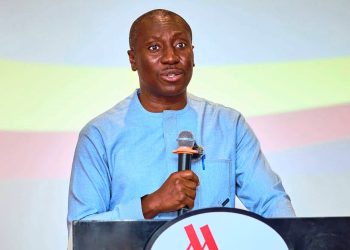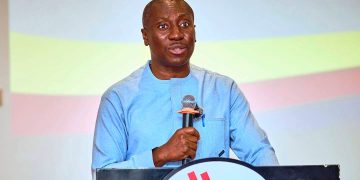


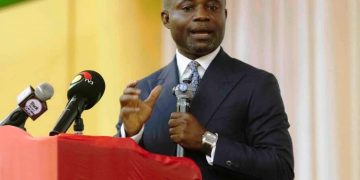
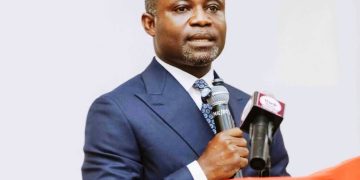

















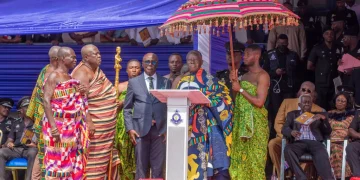
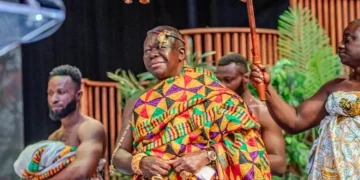


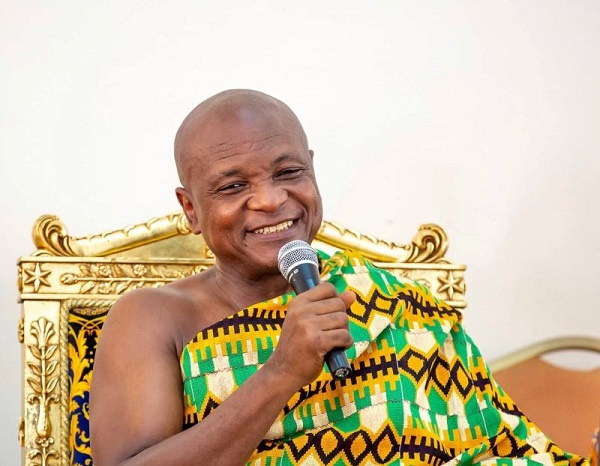
The Agbogbomefia of the Asogli State, Togbe Afede XIV, has called on government, employers and organised labour to forge a stronger alliance to drive national growth, insisting that higher productivity and a relentless fight against corruption are essential to Ghana’s economic transformation.


Delivering the closing remarks as Chairman of the 2026 National Labour Conference at Ho, Togbe Afede urged all three social partners to deepen collaboration beyond dialogue and commit themselves to safeguarding the nation’s resources.
The three-day conference, held under the theme “Strengthening Industrial Harmony as a Catalyst for Accelerated Economic Growth and National Development,” brought together leaders from government, organised labour, employer associations, academia and civil society to deliberate on strengthening labour relations and accelerating economic development.
Togbe Afede reminded participants that sustainable improvements in workers’ incomes and business performance are inseparable from increased productivity.
“If productivity is enhanced, employers achieve returns on their investment, and workers secure growth in their incomes. In a partnership where one party is left unsatisfied, sustainability is impossible,” he said.
He stressed, however, that productivity alone would not be enough without strong institutional integrity.
In a blunt assessment of Ghana’s governance challenges, he described corrupt actors as “termites at the woodwork” and “internal predators” who continue to drain the country’s wealth.
“We have seen our roads and our hospitals sitting inside some people’s pockets,” he remarked, warning that corruption creates untaxed parallel financial flows that increase prices and weaken the formal economy.
While commending government’s anti-corruption efforts aimed at stabilising key macroeconomic indicators, Togbe Afede said the responsibility must be shared by government, employers and organised labour to eliminate systemic leakages and ensure national resources are invested in infrastructure, businesses and workers’ welfare.
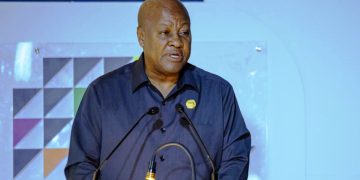
His remarks echoed concerns raised earlier in the conference by the Secretary General of the Trades Union Congress (TUC), Joshua Ansah, who argued that lasting industrial harmony cannot be achieved through silence or suppression but must be anchored on social justice and fairness.
Opening his address with a workers’ chant, Mr. Ansah declared that “industrial harmony is built on mutual trust, respect, social justice, fairness, dialogue and shared responsibility among government, employers and workers.”
He said workers must be treated as partners in development rather than merely factors of production, adding that industrial harmony is not simply the absence of strikes, lockouts or workplace disputes, but the result of deliberate policies and institutions that protect workers’ rights while supporting enterprise growth and national competitiveness.
According to him, genuine industrial peace cannot exist where workers are excluded from decision-making, labour rights are ignored, or wages fail to keep pace with the rising cost of living.
Mr. Ansah reaffirmed organised labour’s commitment to constructive engagement with government and employers while calling for increased investment in education, technical and vocational training, reskilling and lifelong learning. He also defended tripartism and collective bargaining as critical tools for maintaining stable labour relations.
A major outcome of the conference was the consensus reached by all three social partners to sustain socio-economic dialogue, promote decent work, create employment opportunities, implement public sector pay reforms and strengthen pension administration to guarantee workers a dignified retirement.
The conference concluded with the signing of a joint communiqué committing government, organised labour and employers to sustained dialogue, industrial peace and shared responsibility for Ghana’s socio-economic development.
The communiqué was formally adopted by Dr. Rashid Pelpuo, Minister for Labour, Jobs and Employment, in his capacity as Chairman of the National Tripartite Committee, following its endorsement by Organised Labour and the Ghana Employers’ Association.
Source: www.kumasimail.com