































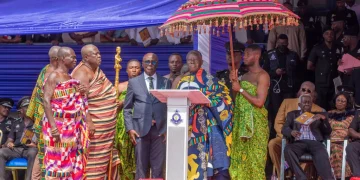
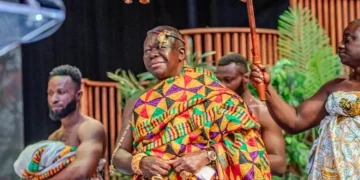
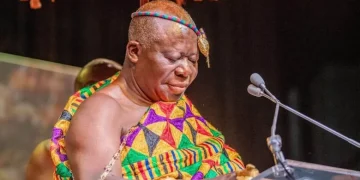






The Awukugua State in the Okere Traditional Area of the Eastern Region has announced its decision to withdraw its consent to the Abotakyi Accord and cease recognizing the authority of the Okuapehene as the Paramount Chief of Akuapem.


In a letter dated July 14, 2026, and addressed to the President of the Akuapem Traditional Council, the Awukuguahene, Nenye Osabarima Opese Kunadu, said the state has taken a “firm and irreversible decision” to revoke its participation in the centuries-old agreement.
According to the statement, the Abotakyi Accord, which is believed to have been entered into over 300 years ago among Okere states, Larteh and Akyem allies, was originally a security arrangement to protect the Guan communities against external attacks.
The Awukugua State, however, argues that the accord has over time been transformed into a chieftaincy arrangement that places independent Okere states under the authority of Akropong, a situation it describes as unacceptable.
“The Abotakyi Accord which was only a fraternal relationship has been turned into a chieftaincy bondage for the people of Okere,” the statement said.
The Awukugua traditional authorities further contend that the various Okere states are independent entities with their own histories, cultures, territories, customs and traditional governance systems, and therefore should not be subordinate to another state.
The statement also challenges the historical basis for Akropong’s paramountcy, claiming that the Akyem settlers who became the Akropong people were invited to the Akuapem ridge by the Awukugua people and other Okere states during a period of conflict with the Akwamu Kingdom.
It argues that the arrangement was initially meant to provide support in warfare but later evolved into a political and traditional structure that gave Akropong authority over the other states.
The Awukugua State has consequently declared that it will henceforth operate as an independent state and regard Akropong as an equal traditional entity.
The notice outlined four major decisions, including the abrogation of the Abotakyi Accord, withdrawal of consent to Akropong’s rule, continuation of Awukugua’s independent statehood, and recognition of Akropong as an equal partner without any form of subordination.
The statement further urged other Okere states, including Dawu, Apirede, Abiri, Abonse, Adukrom and Aseseeso, to consider similar actions, arguing that Okere is made up of independent communities bound together by language and shared history.
The development revives historical debates surrounding the Akuapem traditional structure, which has experienced divisions in the past.
Between 1993 and 2013, various divisions within the Akuapem Traditional Area broke away from the traditional union on similar ground, resulting in tensions and security concerns before reconciliation efforts restored unity and allegiance to the Okuapehene.
Source: www.kumasimail.com