















As DNA ancestry research reconnects descendants of enslaved Africans to communities in Northern Ghana, a ground-breaking effort to remap forgotten slave routes and growing calls for reparatory justice are reshaping one of Africa’s most painful historical narratives.


For generations, Ghana’s story of the transatlantic slave trade has largely begun at the imposing walls of Cape Coast and Elmina castles. They have become enduring symbols of one of humanity’s darkest chapters, drawing thousands of visitors from across the world every year.
Yet long before enslaved Africans passed through the infamous “Door of No Return,” their stories began hundreds of kilometres farther north.
They began in villages nestled across today’s Upper East, Upper West, Savannah, North East and Northern regions, where families were torn apart, communities devastated and countless men, women and children forced into long, brutal marches towards the coast.
Today, a growing convergence of historical research, oral tradition, DNA ancestry studies and renewed calls for reparatory justice is challenging the long-held narrative of the slave trade. Increasingly, historians, traditional leaders, policymakers and members of the African diaspora argue that the full story cannot be told without placing Northern Ghana at its centre.
That conversation is gathering momentum through three significant developments: a bold initiative by Professor David Millar to remap Northern Ghana’s forgotten slave routes; DNA ancestry research linking thousands of people of African descent to communities around Paga; and renewed calls by political leaders for Northern Ghana to be recognised in any future reparations framework.
Together, they suggest that history may be coming full circle—from capture to homecoming.
The story that began before the coast
For Professor David Millar, President of Millar Open University, the conventional history of Ghana’s slave routes tells only part of the story.
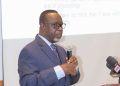
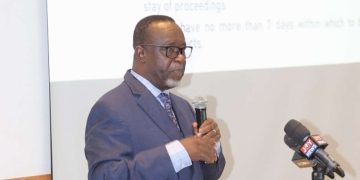
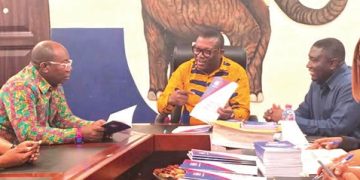
Speaking during the Upper East Region’s Prosperity through Enterprise, Agriculture, Resilience and Livelihoods (PEARL) Framework forum in Bolgatanga, Prof. Millar argued that historical maps have traditionally started the slave routes somewhere in northern Ghana before ending at the coast.
That, he insists, is incomplete.
“The coast was only the exit point,” he said.
“The enslaved people came from communities much farther north.”
His university has therefore announced an ambitious research project to redesign the historical slave route map by tracing the journeys from the communities where captives actually lived.
Unlike previous studies that largely concentrated on the coastal forts, the project intends to retrace the routes on foot while documenting indigenous languages, settlements, migration patterns and oral traditions preserved by traditional authorities across Northern Ghana.
“If the people taken to the coast were speaking Gurune, Sisala or Dagaare,” Prof. Millar explained, “then those histories and migration routes must be properly documented.”
Supported by partners in the Kingdom of the Netherlands, the project seeks to produce a more complete historical record while strengthening heritage tourism and public understanding of the transatlantic slave trade.
His appeal to chiefs and community elders to preserve oral histories reflects a growing recognition that valuable historical knowledge still survives in communities often overlooked by mainstream scholarship.
Science reconnects families separated by centuries
While historians work to reconstruct forgotten routes, another effort is attempting something equally remarkable: reconnecting descendants of enslaved Africans with their ancestral communities through DNA genealogy.
At this year’s Emancipation Day celebration at the historic Pikworo Slave Camp in Nania-Paga, the Chairman of the Paga Youth Movement (PAYOM), Wenawome Duriyem Aborah, announced what he described as one of the most significant ancestry discoveries associated with Northern Ghana.
According to Mr. Aborah, genealogical research led by Dr. Lukisha David of the Department of Anthropology at Illinois State University analysed DNA samples collected from residents of Pikworo Slave Camp, Nania and surrounding communities in Paga.
He said the research has linked approximately 6,000 people of African descent to Paga, with many others tracing ancestral connections to Navrongo, Sandema, Bolgatanga and communities across the Northern, Upper West and Savannah regions.
The findings, as presented by PAYOM, represent an important step towards reconnecting Africans in the diaspora with communities from which their ancestors may have been taken during the slave trade. Independent publication of the full research findings would further help scholars evaluate and build upon these claims.
Mr. Aborah described the project as more than scientific research.
It is, he said, a bridge between separated families and a pathway towards reclaiming identities erased by centuries of forced migration.
When home is finally found
Perhaps no story captures that emotional journey better than that of Illinois State Representative Carol Ammons.
Her recent visit to Paga carried significance beyond diplomacy.
According to PAYOM, DNA ancestry research connected her family lineage to the community.
During her visit to Nania, she was ceremonially welcomed by the Paga Pio and given the traditional name Alorisongo, meaning “I have traced my roots home.”
For descendants of enslaved Africans, such moments represent more than symbolism.
They affirm that centuries after the transatlantic slave trade fractured families and identities, science, history and culture can work together to rebuild lost connections.
Representative Ammons has also emerged as a strong advocate for reparatory justice, historical reconciliation and stronger ties between Africa and its global diaspora.
Her visit underscored the growing importance of Northern Ghana not only as a place of historical memory but also as a destination for ancestral pilgrimage.
A new voice in the reparations debate
The renewed focus on Northern Ghana’s role in the slave trade is also influencing conversations about reparations.
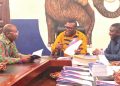
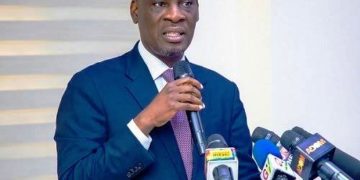
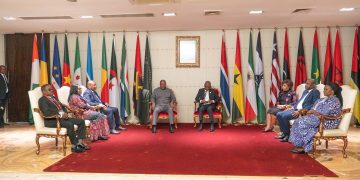
During Representative Ammons’ meeting with Upper East Regional Minister Donatus Akamugri Atanga and the leadership of the Pikworo Slave Camp Board, the Minister argued that Northern Ghana should receive priority consideration if future reparations are pursued.
His reasoning was straightforward.
The north, he said, served as the principal source of captives.
Describing the region as the supplier of the “raw materials” of the transatlantic slave trade, he argued that the devastating human losses continue to shape the region’s social and economic development generations later.
He further called for national remembrance activities such as PANAFEST to be expanded beyond the coastal regions to include Northern Ghana, where many historic slave routes and sites remain preserved.
The call reflects a broader national conversation that has gained momentum following President John Dramani Mahama’s advocacy for reparatory justice at the United Nations and discussions among African and global leaders in Accra.
Beyond the slave castles
For decades, Ghana’s heritage tourism has understandably centred around Cape Coast Castle and Elmina Castle.
Yet sites such as Pikworo Slave Camp, Salaga, the ancient transit corridors through the north and numerous communities identified through oral history have received comparatively little international attention.
Researchers believe these locations hold crucial evidence for understanding how captives moved across the region before reaching the coast.
Professor Millar’s proposed mapping project could therefore complement existing heritage tourism by expanding the historical landscape beyond the castles to include the communities where lives were forever changed.
Combined with genealogy and DNA ancestry initiatives, such work could transform Northern Ghana into an important destination for descendants seeking to reconnect with their ancestral roots.
The economic implications are equally significant.
Improved preservation of historical sites, increased international tourism, academic collaborations and cultural exchanges could create new opportunities for local communities while ensuring that these histories are protected for future generations.
Completing an unfinished history
History is rarely static.
As new evidence emerges and overlooked voices are heard, societies continually revisit their understanding of the past.
Northern Ghana now finds itself at the heart of such a moment.
Professor David Millar’s call to redraw the slave routes, DNA research linking members of the African diaspora to communities around Paga, and growing demands for reparatory justice are not isolated developments.
Together, they represent a broader effort to restore forgotten histories and reconnect fractured identities.
The slave castles will always remain powerful symbols of the transatlantic slave trade.
But they were never the beginning of the journey.
That journey began in the villages, farms and kingdoms of Northern Ghana, where families were separated, cultures disrupted and lives permanently altered.
Centuries later, descendants are beginning to return—not in chains, but in search of names, memories and belonging.
From capture to homecoming, Northern Ghana is reclaiming its place in history.
And in doing so, it may be helping the world tell a more complete story of the transatlantic slave trade.
Source: www.kumasimail.com