






















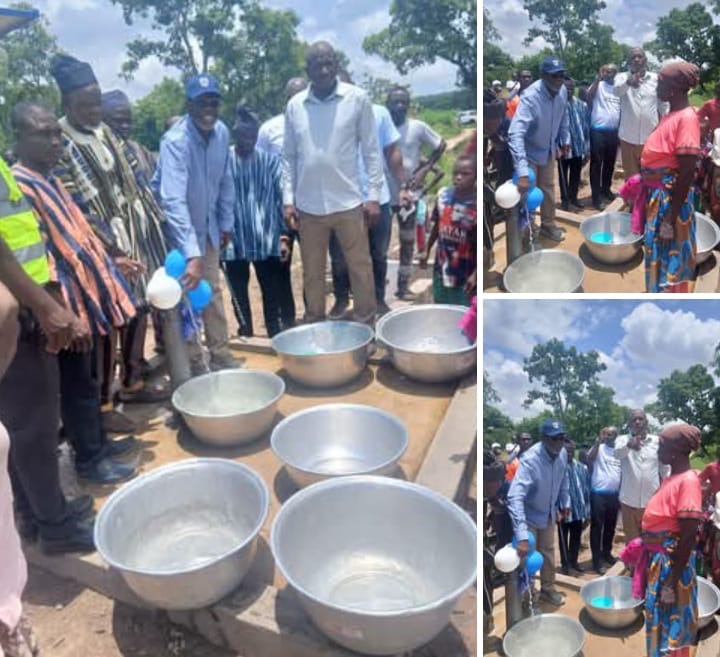
The Ghana Maritime Authority (GMA), in partnership with Humanity First Ghana, has commissioned five solar-powered mechanised boreholes across the Wa, Wa East and Wa West districts as part of a broader intervention to tackle water scarcity and improve conditions in schools and rural communities.


The latest facilities at Boli, Biihee, Chansa and T.I. Ahmadiyya Senior High School follow the commissioning of the first solar-powered mechanised borehole at Motigu in the Wa East District on August 24, 2026.
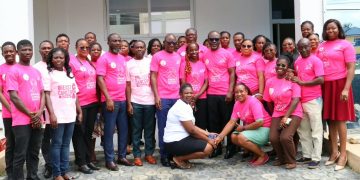
The five projects form part of a wider Corporate Social Responsibility (CSR) programme through which the GMA and Humanity First Ghana are providing reliable sources of potable water to underserved communities and institutions in the Upper West Region.
The intervention is particularly significant for schools where water shortages have disrupted teaching and learning, affected sanitation and forced students and pupils to leave school premises in search of water.
At T.I. Ahmadiyya SHS, which has a student population of 1,433, the lack of reliable water had compounded sanitation challenges and placed additional pressure on the school’s limited toilet facilities.
The school’s Senior Prefect, Kunkuni Masroor, said water shortages had contributed to frequent cases of illness among students, while the Girls’ Prefect, Mac Adams Qaaimah, said some students struggled to complete basic hygiene routines before reporting to class.
She said the new solar-powered facility had eased the problem and helped students report to class on time and concentrate on their studies.
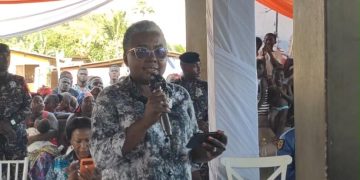
At Boli M/A Primary B, Headteacher Osman Issah said pupils were previously sent into the community during instructional hours to fetch water, resulting in the loss of valuable contact hours.
“Going to town during school hours has completely stopped since this facility was installed,” he said.
The projects are also easing water access in rural communities. At Biihee, residents previously depended heavily on a single hand pump, with long queues forcing some people to spend several hours waiting for water.
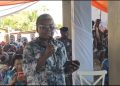
A resident and teacher, Yahaya Niamatu, said the new facility had also relieved residents who could not afford to pay for water from commercial sources.
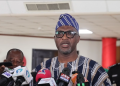
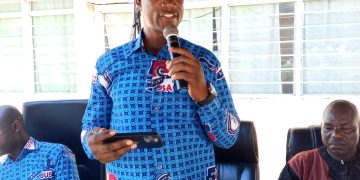
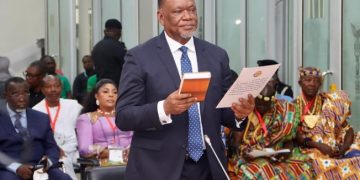
Speaking during the commissioning activities, GMA Director-General, Naval Captain Dr Kamal-Deen Ali, said the intervention was intended to ensure that lack of water did not continue to undermine education, health and sanitation.
“Water is very key to life. Without water, there is no education, no survival, and health problems multiply,” he said.
He explained that providing water directly to schools would prevent students from leaving school premises in search of water and help protect instructional time.
The GMA said the intervention would extend beyond the five commissioned facilities, with additional mechanised water systems planned for Jirapa and Nandom in the coming weeks. The Authority also plans to distribute 400 sets of dual desks and tables to beneficiary schools.
The water projects add to the GMA’s recent CSR interventions in the Upper West Region. Following the drowning of seven Lawra Senior High School students while crossing the Black Volta in 2025, the Authority collaborated with the Upper West Regional Coordinating Council to provide 30 life jackets to five riverine communities and conduct water-safety education for canoe operators and passengers.
The latest boreholes therefore represent a broader GMA community intervention in the region, combining access to safe water with inland waterway safety, while addressing practical challenges affecting education, public health and rural livelihoods.
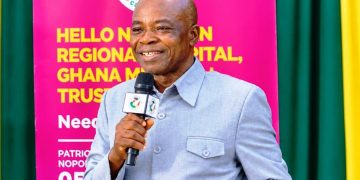
Humanity First Ghana Regional Coordinator, Maulvi Abu Zul-Haq, said the boreholes operate primarily on solar power, with the national grid serving as backup. Water is pumped into elevated storage tanks for distribution.
He urged beneficiary communities, school authorities and local leaders to protect the solar equipment from theft and damage, warning that replacing imported photovoltaic panels could take more than a month.
The five boreholes in Motigu, Boli, Biihee, Chansa and T.I. Ahmadiyya SHS mark a significant expansion of the GMA and Humanity First Ghana’s efforts to improve access to potable water in underserved parts of the Upper West Region.
Source: www.kumasimail.com