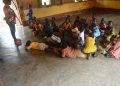

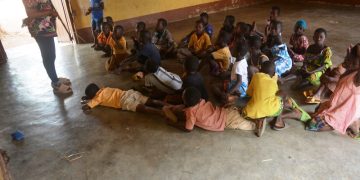

















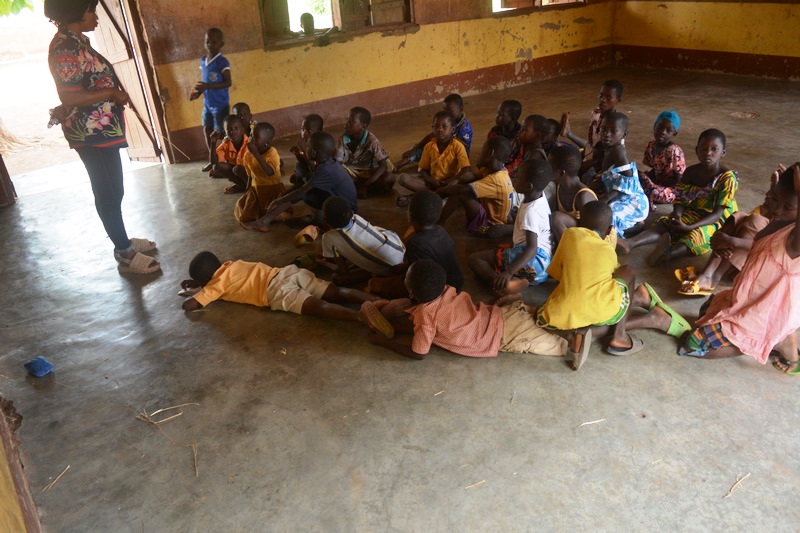
A new study by Africa Education Watch (Eduwatch) has revealed that 76 per cent of parents surveyed in Ghana’s public basic schools say their children have been excluded from school activities at some point because of their inability to pay certain fees and levies.


The findings raise fresh concerns about the effectiveness of Ghana’s Free Compulsory Universal Basic Education (FCUBE) policy, with the study also showing that 99 per cent of surveyed parents had paid out of pocket for at least one of 10 basic education cost items.
The study, titled Out-of-Pocket Costs of “Free” Basic Education in Ghana, surveyed 200 parents and guardians across 65 public basic schools in 20 districts, using data from the 2025/2026 academic year.
According to Eduwatch, parents spent a median of GH¢620.67 per child annually on expenses that fall within the public financing responsibilities of government.
Some parents reported paying as much as GH¢800 in admission fees, GH¢2,950 for textbooks and GH¢1,000 for desks.
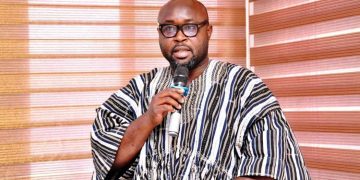
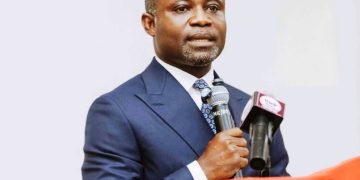
Executive Director of Eduwatch, Kofi Asare, said the findings exposed the gap between Ghana’s free basic education policy and the reality confronting families, particularly those from poor households.
In a statement highlighting the findings, Mr Asare argued that more than two decades of underfunding had normalised the collection of admission fees and other charges in public basic schools, effectively shifting the financial burden of education onto parents.
He described the situation as a contradiction of the FCUBE policy, arguing that government must take responsibility for adequately financing the essential requirements of basic education rather than allowing schools to pass the costs on to families.
The study identified 10 major areas of household expenditure, including examination fees, admission fees, extra classes, Parent-Teacher Association levies, textbooks, exercise books, school uniforms, desks, Basic Education Certificate Examination (BECE) preparation and placement fees.
It also found that examination-related charges remained widespread, with 85 per cent of respondents reporting such payments, while 82.5 per cent paid PTA levies and 72.5 per cent incurred extra-class fees.
Eduwatch further raised concerns about the implementation of existing directives against school-based examination fees, noting that such charges continued despite several Ghana Education Service directives issued between 2022 and 2025.
Mr Asare questioned the substance of Ghana’s free basic education commitment, arguing that a policy should be judged by the actual experiences of beneficiaries rather than its official designation.

He also called for a comprehensive, fully costed and adequately financed FCUBE policy that clearly defines the financial responsibilities of government, parents and other stakeholders in delivering basic education.
The organisation maintains that without adequate funding and enforcement, the promise of free basic education will continue to be undermined by charges that place children from disadvantaged households at risk of exclusion.
The findings are particularly significant against the backdrop of an estimated 10 per cent of basic school-age children remaining out of school in Ghana.
Eduwatch is urging government to move beyond the policy declaration and ensure that essential educational inputs and services are adequately financed so that poverty does not determine a child’s ability to participate fully in basic education.
Source: www.kumasimail.com