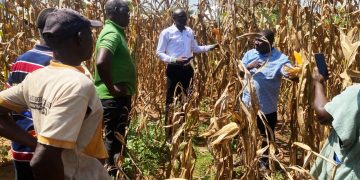






































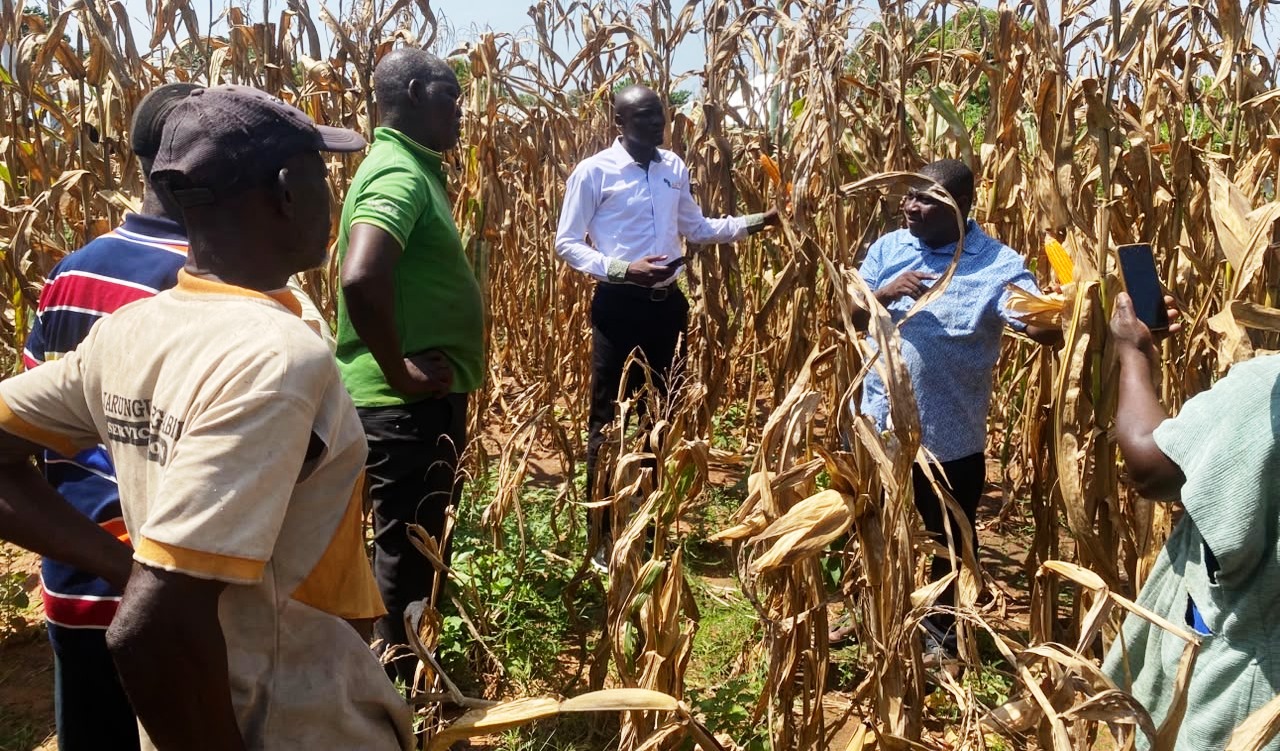
The Council for Scientific and Industrial Research-Savanna Agricultural Research Institute (CSIR-SARI) has showcased five improved maize varieties to farmers in Damongo as part of efforts to boost agricultural productivity, strengthen climate resilience and address nutritional deficiencies.


The field demonstration, held at Canteen Electoral Area in Damongo on November 11, 2026, was organised in collaboration with the African Agricultural Technology Foundation (AATF) under the Technologies for African Agricultural Transformation Phase II (TAAT II) Maize Compact.
Leading the demonstration, Dr Isaac Kodzo Amegbor of CSIR-SARI said the varieties were developed to address major challenges facing maize production, including low yields, climate-related pressures and nutritional deficiencies.
He said the improved varieties offered desirable characteristics such as high yields, early maturity and resistance to major production constraints, while some were enriched with essential micronutrients, particularly iron and zinc.
Dr Amegbor noted that some of the varieties had recently received approval for production in Ghana, describing the introduction of nutrient-enriched maize as an important step towards improving food security and tackling nutritional deficiencies.
He explained that although the institute had engaged farmers in other parts of the Savannah Region over the years, the demonstration marked its first engagement with farmers in the Canteen Electoral Area, in collaboration with local farmer Emmanuel Kechana.
Also speaking, Gilbert Moses Otieno of AATF highlighted the partnership’s efforts to promote climate-resilient maize varieties, particularly yellow maize, to help farmers adapt to changing climatic conditions.
He stressed that access to quality seeds was fundamental to successful farming, warning that poor-quality seeds could lead to crop failure and undermine national food production.
Mr Otieno urged farmers to adopt improved varieties and encouraged greater youth participation in agriculture to sustain the sector.
On postharvest management, Flavian Anyango cautioned that improved yields would not translate into better incomes if farmers continued to suffer significant losses after harvesting.
She emphasised the need for proper harvesting, drying, shelling, cleaning, sorting and storage to preserve grain quality, ensure food safety and improve farmers’ returns.
She also highlighted the importance of proper grain moisture management, hermetic storage technologies and measures to prevent storage pests, mould development and aflatoxin contamination.
Ms Anyango urged farmers, extension officers and other agricultural value-chain actors to adopt improved postharvest practices to protect the nutritional quality and market value of maize, particularly biofortified varieties enriched with provitamin A, iron and zinc.
A participating farmer, Emmanuel Kechana, expressed satisfaction with the performance of the improved maize variety cultivated on his farm, saying the results had exceeded his expectations.
He disclosed that he planted the seeds on July 17, 2026, and was impressed by their performance during the November 11 field demonstration.

Mr Kechana said he was prepared to continue cultivating the variety, adding that its production requirements were similar to conventional farming methods and that good yields largely depended on quality seeds and adherence to recommended agronomic practices.
He, however, appealed to CSIR-SARI to strengthen its engagement with farmers by providing timely technical advice before every farming season.
He also called for support to make agricultural inputs available at affordable prices, citing their high cost as a major constraint to farming.
The demonstration forms part of efforts by CSIR-SARI and its partners to bridge the gap between agricultural research and farming communities by promoting the adoption of improved technologies.
The initiative is expected to improve access to high-yielding, climate-resilient and nutrient-enriched maize varieties, with potential benefits for farmers’ incomes, food security and nutrition.
Source: www.kumasimail.com