




























The Kwame Nkrumah University of Science and Technology (KNUST) has reaffirmed its commitment to strengthening its academic and institutional partnership with France, with particular emphasis on artificial intelligence (AI), scientific research, innovation, language development and international academic exchanges.
The university says it is positioning itself to move beyond academic excellence to global prominence by building stronger partnerships capable of expanding its influence beyond Ghana and the African sub-region.
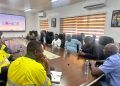
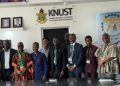
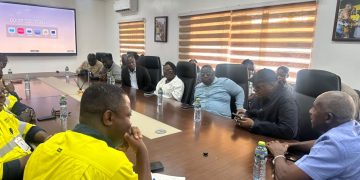
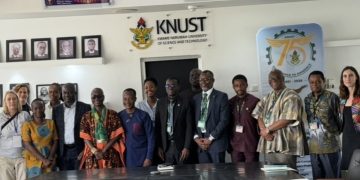
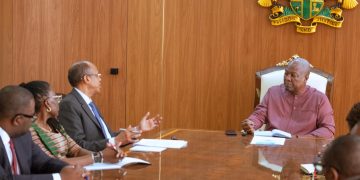
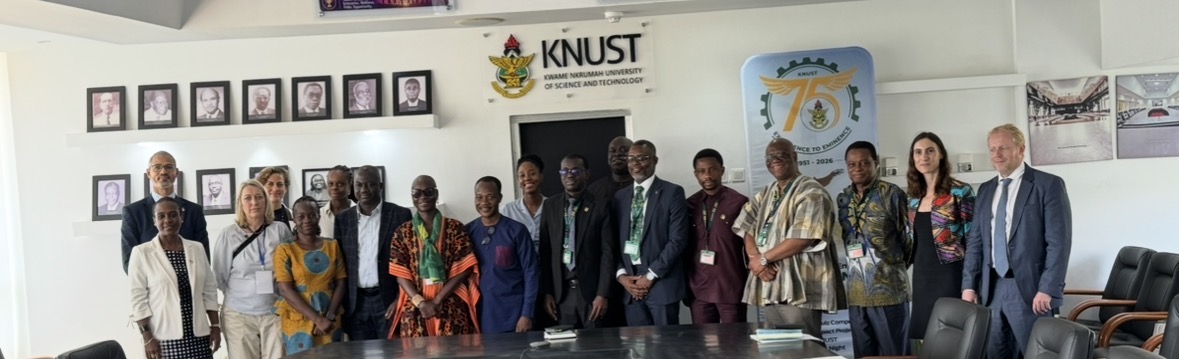
This was highlighted during a visit by the French Ambassador to Ghana, Diarra Dimé-Labille, to the management of KNUST in Kumasi, where discussions focused on strengthening existing areas of cooperation and exploring new opportunities for collaboration.
The visit provided an opportunity for both sides to assess their partnership and identify areas where French institutions and the university could work together to advance education, research and technological development.
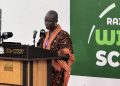
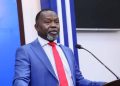
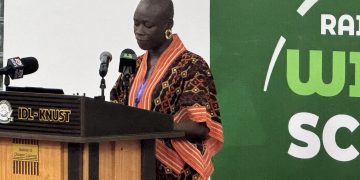
Speaking on behalf of the university’s management, Professor Samuel Asare Nkansah, a professorial member of the KNUST Council, said the institution was determined to strengthen strategic partnerships as part of its long-term development agenda.
He explained that as KNUST celebrated its 75th anniversary, its strategic direction was to move from excellence to eminence, requiring stronger collaborations with reputable international institutions and development partners.
According to him, the university wants its engagements, operations and initiatives to generate global, regional and sub-regional impact rather than remain limited to Kumasi or Ghana.
He stressed that no institution could achieve such ambitions independently in the increasingly interconnected world, making international partnerships and collaborative ecosystems essential to sustainable growth.
Professor Nkansah identified the promotion of French language education and cultural exchanges as two important areas where the existing relationship with France could be strengthened.
He particularly highlighted the role of Maison Française, a French government-supported institution that promotes the teaching and learning of the French language.
He disclosed that French is already taught in some academic programmes at KNUST, including the Pharmacy programme, and called for additional resources and institutional support to strengthen language training.
He argued that language learning should go beyond classroom instruction and become a practical communication skill that prepares students to engage effectively in international environments.
Professor Nkansah said a stronger Maison Française would provide students with the necessary resources and opportunities to develop their proficiency in French.
He also acknowledged the contribution of Campus France to creating educational opportunities for Ghanaian students through academic exchanges, student mobility and research collaborations.
He expressed optimism that deeper cooperation with French institutions would expose KNUST students and researchers to international opportunities while enhancing the university’s capacity to compete globally.
KNUST seeks stronger collaboration in artificial intelligence
Professor Nkansah further identified artificial intelligence as one of the emerging areas where KNUST would welcome expanded cooperation with France.
He said the university was already undertaking research and innovation activities in areas including climate change, healthcare, energy and agriculture, and believed that stronger international partnerships could accelerate the development of practical solutions to national and global challenges.
He also highlighted opportunities for collaboration in assistive technologies aimed at improving the lives of persons with disabilities.
According to him, innovations that enable deaf people and other persons with physical challenges to participate more independently in society are important areas that could benefit from further research and technological collaboration.
He said KNUST was interested in developing technologies tailored to the needs of Ghana and other African countries rather than relying exclusively on imported solutions.
Professor Nkansah, on behalf of the university’s management and Vice-Chancellor, expressed appreciation to the French government for its continued partnership and welcomed further opportunities to deepen the relationship.
France reaffirms commitment to KNUST partnership
For her part, the French Ambassador to Ghana, Diarra Dimé-Labille, expressed satisfaction with the existing relationship between France and KNUST and reaffirmed her country’s readiness to continue supporting academic and scientific collaboration.
She described the visit as an important engagement aimed at reviewing existing areas of cooperation and identifying new opportunities for strengthening the partnership.
The Ambassador emphasised that France considered academic collaboration, scientific exchanges and institutional partnerships important tools for promoting innovation and addressing development challenges.
She indicated that the French government had an important role to play in supporting KNUST’s ambition to expand its international reach.
Madam Dimé-Labille highlighted Maison Française as one of the key institutions through which France supports the promotion of French language education in Ghana.
She welcomed the inclusion of French language courses in some KNUST academic programmes, particularly Pharmacy, and expressed interest in exploring ways to strengthen the capacity of Maison Française.
She said providing students with adequate learning resources and practical language training would help them acquire the communication skills needed to participate in international academic and professional environments.
The Ambassador also identified cultural exchanges as another important component of the relationship, noting that stronger cultural engagement could complement academic cooperation and deepen relations between Ghana and France.
She commended Campus France for its contribution to facilitating educational opportunities, student exchanges, academic mobility and research partnerships between French and Ghanaian institutions.
Focus on research, innovation and inclusive technology
Madam Dimé-Labille further expressed interest in expanding cooperation in artificial intelligence and other emerging technologies, particularly in areas where research could deliver practical benefits to society.
She identified climate change, healthcare, energy and agriculture as important areas for scientific collaboration and innovation.
The Ambassador also welcomed opportunities to explore assistive technologies and other innovative solutions that could improve access to services for persons with disabilities.
She stressed the importance of ensuring that technological advancement and scientific research contribute to inclusive development, with no section of society left behind.
According to her, closer collaboration between French and African researchers would create opportunities for knowledge-sharing, capacity development and the development of solutions suited to the needs of individual countries.
She expressed confidence that sustained cooperation between France and KNUST would strengthen scientific research, create opportunities for students and researchers and contribute to technological advancement.
The engagement forms part of broader efforts by KNUST to strengthen its international partnerships as it pursues its ambition of becoming a globally recognised institution in science, technology, research and innovation.