

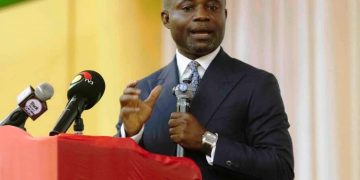

























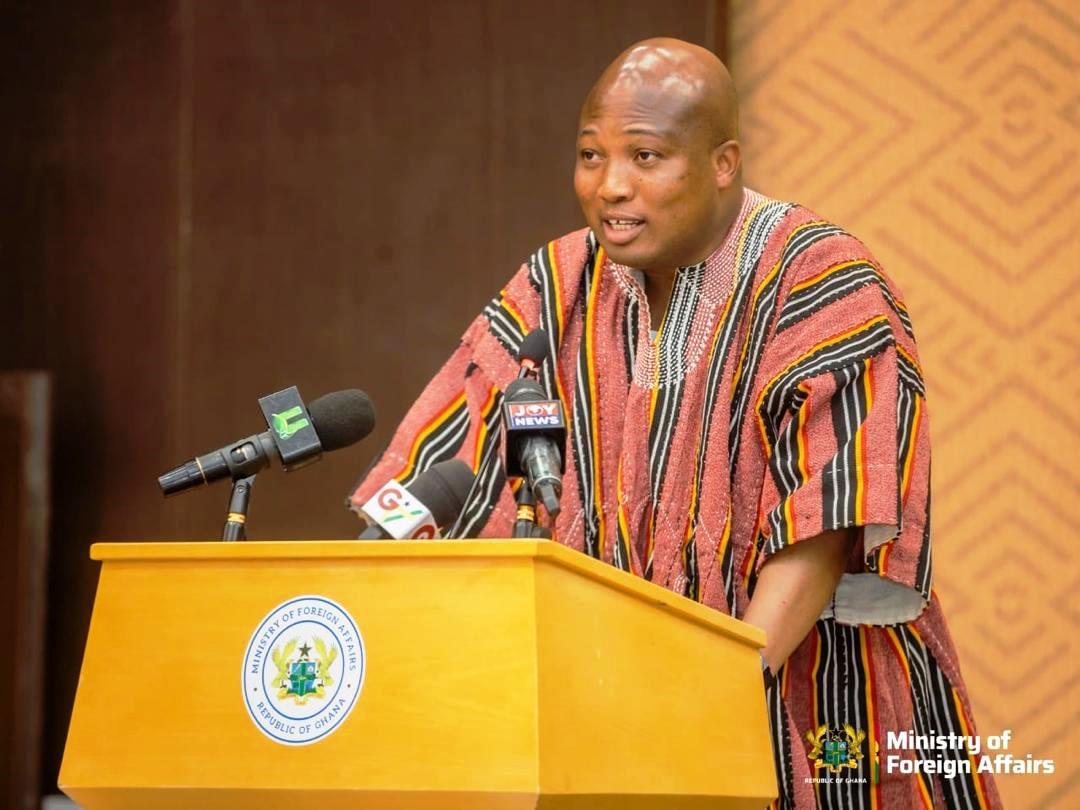
Foreign Affairs Minister Samuel Okudzeto Ablakwa has asked the Auditor-General to conduct a special audit into Ghana’s evacuation exercises since 2017, including the recent GH¢49.7 million operation to bring home 1,964 Ghanaians from South Africa.


The move comes amid sustained demands from the Minority in Parliament for detailed documentation on how public funds were spent on the South Africa evacuation.
The Ministry says the audit will cover the 2026 South Africa evacuation as well as previous operations, including the 2020 COVID-19 evacuation, the 2022 evacuation from Ukraine and the 2023 evacuation from Sudan.
The request to the Auditor-General was made on September 17, according to documents cited by MyJoyOnline.
The development follows the Minority’s demand for an itemised account of the GH¢49,721,786 spent on the South Africa operation, which ran from May 27 to September 4, 2026.
A total of 1,964 Ghanaians were evacuated through chartered and commercial flights following renewed xenophobic attacks and threats against foreign nationals in parts of South Africa.
Ablakwa announced the total cost at a press briefing on September 7, saying GH¢38,835,512 went into chartered flights, commercial tickets, ground transportation, feeding, accommodation and medical care.
Another GH¢10.802 million was spent on reintegration and transportation allowances, while GH¢84,274 covered the repatriation of the remains of two Ghanaian nationals. Government financed GH¢33.72 million, with Engineers and Planners contributing GH¢16 million.
Minority presses for the books
The Minority’s demand intensified after the Foreign Affairs Ministry disclosed the overall cost.
Ranking Member of Parliament’s Foreign Affairs Committee and Damongo MP Samuel Abu Jinapor said the Minority supported the evacuation but wanted the expenditure backed by detailed records.
The Minority subsequently demanded an itemised bill covering flights, transportation, accommodation, feeding, medical services and reintegration, alongside invoices, payment vouchers, receipts, contracts and procurement documents.
Deputy Ranking Member Nana Asafo-Adjei Ayeh also invoked the Right to Information Act, seeking records that would allow Parliament and the public to verify the government’s figures.
The Minority later said it would boycott a planned closed-door briefing on the evacuation unless the requested expenditure records were made available. It said its RTI request had been submitted on August 17 and received by the Ministry on August 25.
The pressure has since produced a substantial response.
On Friday, September 18, the Foreign Affairs Ministry submitted a report of more than 200 pages to Nana Asafo-Adjei Ayeh in response to the RTI request. The report covers more than 1,900 evacuees and includes expenditure and operational records relating to the exercise.
The Ministry has also indicated that the documentation includes receipts and records relating to the 1,964 people evacuated.
Audit extends beyond South Africa
The latest move takes the accountability process beyond the current controversy.
According to the Ministry, the Auditor-General’s proposed special audit will examine evacuation exercises undertaken since 2017, allowing the independent review to cover several major emergency repatriation operations rather than only the South Africa exercise.

The Ministry says its records show that the GH¢49.72 million South Africa evacuation ranks among its least costly operations when compared with previous exercises.
It cited the 2020 COVID-19 evacuation as an example, saying GH¢44.46 million was spent on quarantine alone during that exercise, compared with the GH¢49.72 million spent on the entire 2026 South Africa operation.
The Ministry has described the South Africa exercise as its most transparent evacuation operation, saying the additional audit and disclosure measures are intended to reinforce accountability.
The evacuation itself was triggered by a resurgence of anti-foreigner violence and intimidation in parts of South Africa. Government said four Ghanaians died during the period, while others suffered harassment, threats and loss of property.
With the Minority now in possession of the Ministry’s 200-page response and the Auditor-General being invited to examine evacuation spending dating back to 2017, scrutiny of Ghana’s emergency repatriation expenditure is set to move from demands for disclosure to an independent audit process.
Source: www.kumasimail.com