































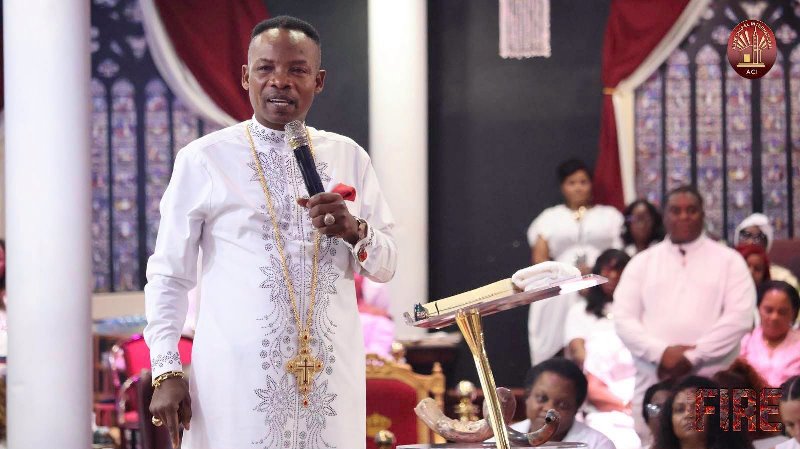
Few religious journeys in Ghana’s contemporary Pentecostal landscape are as dramatic as that of Archbishop Dr. Elisha Salifu Amoako.


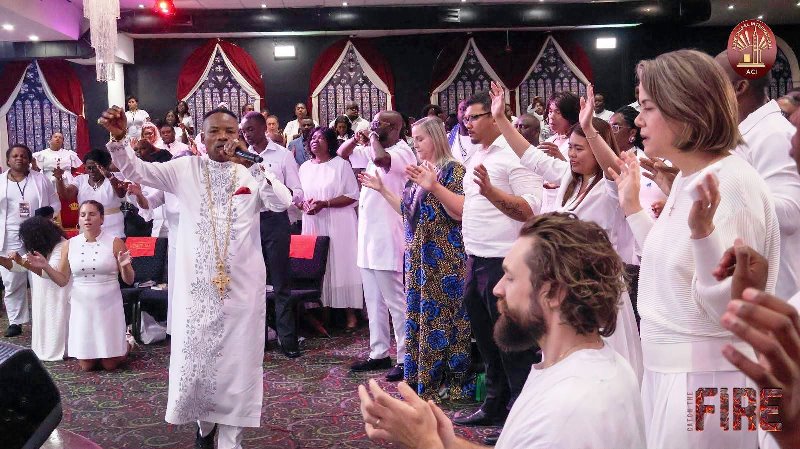
Today, he is the founder and General Overseer of Alive Chapel International, a major prophetic ministry headquartered in Accra, with a reputation that extends beyond Ghana’s borders. His ministry is built around salvation, prophetic direction, intensive prayer, spiritual mentorship, deliverance and the ministry of angels.
But the story of the man behind the clerical robes began far removed from the pulpit.
Born Salifu Alhassan in 1966 into a Muslim family in Kumasi, Salifu Amoako grew up in circumstances that offered little indication of the religious institution he would eventually build. His family struggled financially, and his education was delayed until he was considerably older than other children in his class.
The age difference made him an easy target for ridicule. Persistent bullying and embarrassment eventually pushed him out of school after only about a year.
For the young Alhassan, leaving school marked the beginning of a difficult period. He has spoken publicly about becoming involved in smoking, drinking and petty robbery as he navigated the streets of Kumasi.
Then came an encounter that would alter the direction of his life.
The stones that changed his life
During a local Christian crusade, the young Salifu and some friends went to heckle Evangelist Francis Akwasi Amoako, who was preaching to the crowd.
The boys reportedly threw stones at the evangelist.
Rather than responding with anger, Amoako warned them to repent, telling them that refusing to change their ways could lead to tragic consequences.
Not long afterwards, two of Salifu’s friends died.
Their deaths reportedly shook him deeply. For a young man already living a troubled life, the events transformed the evangelist’s warning from something he had dismissed into a personal reckoning.
Salifu surrendered his life to Christ.
His first attempt to establish himself within Christianity took him to an Assemblies of God congregation in Bantama, Kumasi. But the heavy use of English in the services presented a barrier for a young convert who was not sufficiently conversant with the language.
He eventually found his way back to the man whose preaching had first confronted him with the possibility of changing his life.
The evangelist who became a spiritual father
Salifu joined Evangelist Akwasi Amoako’s Resurrection Power Evangelistic Ministry at Santasi in Kumasi, where services were conducted largely in Twi.
He did not enter the ministry through a theological college or a conventional clerical career path.
Instead, his training was practical.
He took on menial jobs, helped manage musical instruments during crusades and performed household duties. His commitment eventually impressed Evangelist Amoako enough for the young convert to be invited to live in his home.
What began as service developed into a relationship of deep spiritual mentorship.

Salifu would later describe the period as his real “Bible school”—a period in which he learned ministry not primarily from classrooms but through close observation, service and personal discipleship.
His connection with his mentor became so profound that he eventually changed his legal surname from Alhassan to Amoako, taking the name of the man he regarded as his spiritual father.
The mantle
One of the most significant accounts in Salifu Amoako’s personal testimony concerns the final days of his mentor.
He has recounted that about a week before Evangelist Amoako’s death, he was sleeping in the evangelist’s car when the older preacher laid hands on him and declared that the anointing upon his life would be transferred to Salifu and that God would use him around the world.
When news of his mentor’s death reached him, Salifu said he was devastated. He withdrew into a room and began praying.
According to his account, he subsequently experienced what he understood to be divine confirmation of his mentor’s prophecy—that his ministry would ultimately have a worldwide reach.
Whether viewed through the lens of faith or personal calling, the experience became an important part of the story he tells about the emergence of his ministry.
From a small fellowship to Alive Chapel
Salifu Amoako began his own ministry by gathering a small fellowship in Kumasi.
That fellowship eventually developed into the Jesus Is Alive Ministry. Over time, the ministry grew into a church and was transformed into Alive Chapel International.
On January 10, 1998, Alive Chapel International was inaugurated in Accra, marking a significant turning point in Salifu Amoako’s journey from a young disciple in Kumasi to the leader of an emerging Pentecostal institution.
From that foundation, he developed a ministry whose identity is strongly associated with prophecy, prayer, deliverance, salvation and spiritual guidance.
Another distinctive feature of his theology is his emphasis on angels. Salifu Amoako teaches that angels play important roles in God’s dealings with humanity and can serve as instruments through which supernatural events occur. He also places the ministry of angels within his understanding of end-time prophetic activity.
Building a Pentecostal institution
The growth of Alive Chapel International mirrors the broader expansion of Ghana’s Pentecostal-Charismatic movement, but Salifu Amoako has developed a distinctive identity within that landscape.
His ministry combines prophetic preaching with prayer, deliverance, salvation and spiritual mentorship. His public profile has grown alongside the institution he leads, making him one of the more recognisable figures in Ghana’s contemporary prophetic movement.
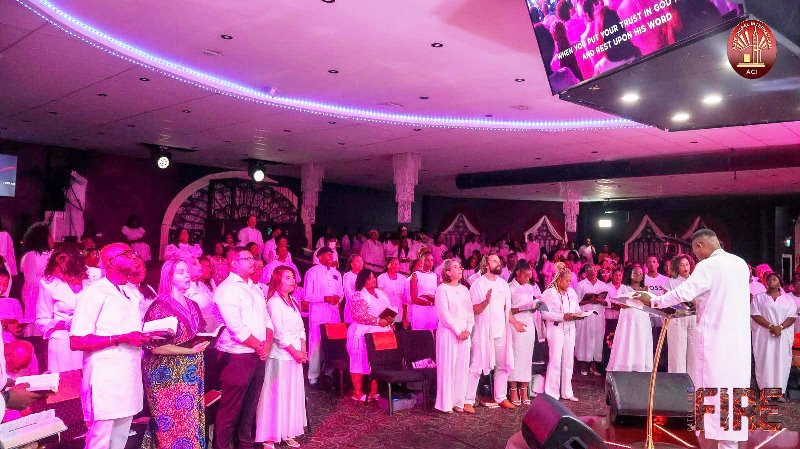
At the centre of that institution is the Alive Chapel International Headquarters in Accra, which serves as the principal base of a ministry whose influence extends beyond Ghana.
For Salifu Amoako, however, the journey is not simply about the expansion of a church. It is the continuation of a calling he traces back to a street encounter, a frightening personal loss and the mentorship of the evangelist who first confronted him with the Christian faith.
The man behind the title
In May 2026, Salifu Amoako marked his 60th birthday after decades in Christian ministry.
The milestone represented more than a personal anniversary. It offered a moment to assess a journey that began with hardship and uncertainty and evolved into a life of religious leadership.
He is now widely referred to by followers and supporters as Archbishop Elect or Archbishop Dr. Salifu Amoako.
His story has also been documented in The Prophet, a biography authored by Maxwell A. Hagan, providing another account of the journey from his early years to his emergence as a prominent Pentecostal leader.
Beyond the pulpit, his personal life has remained closely connected to the institution he has built. He is married to Mouha Amoako, and they have children.
Source: www.kumasimail.com