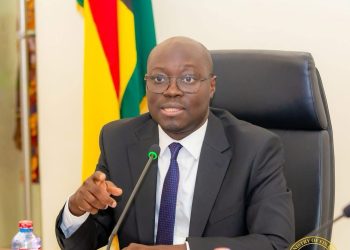










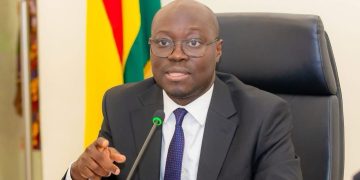





















Finance Minister Dr Cassiel Ato Forson has emerged as the strongest performing potential National Democratic Congress (NDC) presidential candidate against former Vice President 2028 flagbearer of the New Patriotic Party (NPP) Dr Mahamudu Bawumia in a new poll by Global InfoAnalytics, leading across all nine ethnic groups assessed.


The September 2026 polling data, compared with results from September 2023, suggest a significant shift in the electoral dynamics surrounding religion and ethnicity, two factors that continue to shape Ghanaian presidential elections.
According to Mussa Dankwah, Executive Director of Global InfoAnalytics, Dr Ato Forson’s performance stands out because he has overturned the NDC’s deficit among Akan voters and strengthened the party’s advantage among Christians.
The findings present a different electoral picture depending on which of the three NDC figures is matched against Dr Bawumia, the NPP candidate in the 2028 presidential election.
“Religion and ethnicity are embedded in our politics and who wins the Christian and the Muslim votes gives an indication of who would eventually emerge as the president of the Republic,” Mr Dankwah said.
He added that religious denominations and Muslim sects were not necessarily homogeneous in their political behaviour, although the latest analysis did not examine those subgroups.
Ato Forson overturns Akan deficit
The most striking finding is Dr Ato Forson’s performance among Akan voters, who constitute 45.7 per cent of Ghana’s population, according to the 2021 Population and Housing Census.
In September 2023, former President John Dramani Mahama trailed Dr Bawumia among Akan voters by 6.1 percentage points.
The September 2026 poll, however, places Dr Ato Forson 3.9 percentage points ahead of Dr Bawumia among the same ethnic group, representing a substantial reversal in the NDC’s fortunes.
Mr Dankwah identified the shift as a potential game changer for both major political parties.
He said the development was particularly significant for the NPP because it suggested that the party could be losing ground among its traditional Akan support base, with polling indicating that more Akans now associate with the NDC than with the NPP.
The other NDC contenders recorded less dramatic results among Akan voters. Dr Bawumia leads NDC National Chairman Johnson Asiedu Nketia by 3.4 percentage points in the September 2026 scenario.
Dr Ato Forson also recorded stronger results among other ethnic groups, leading Dr Bawumia among Ga-Adangme voters by 44.6 percentage points and among Ewe voters by 57.4 percentage points.
Asiedu Nketia leads Dr Bawumia among Ga-Adangme voters by 30 percentage points and among Ewe voters by 46 percentage points.
The Mole-Dagbani group, which accounts for 18.5 per cent of Ghana’s population, presents a more difficult picture for the NDC. Dr Bawumia narrowly leads Asiedu Nketia by 0.2 percentage points, while the data put Dr Ato Forson’s support among the group at 10.5 per cent.
The poll also shows Dr Bawumia leading Asiedu Nketia among other ethnic groups by 7.7 percentage points.
Overall, Mr Dankwah’s analysis indicates that while Mahama led in seven of the nine ethnic groups assessed in September 2023, Asiedu Nketia leads in six of the nine groups in the latest comparison, while Dr Ato Forson leads in all nine.
Christian vote strengthens Ato Forson’s position
The religious breakdown also favours Dr Ato Forson, particularly among Christians, who account for approximately 71 per cent of Ghana’s population.
In September 2023, Mahama led Dr Bawumia among Christian voters by 7.4 percentage points. In the latest poll, Asiedu Nketia’s lead stands at 5.8 percentage points, while Dr Ato Forson’s advantage has widened to 13.5 percentage points.
Mr Dankwah said Dr Ato Forson had nearly doubled the NDC’s advantage among Christians compared with the results recorded for Mahama and Asiedu Nketia.
Among Muslim voters, the figures point to a notable change in the size of the NDC’s advantage.
Mahama led Dr Bawumia by 34.2 percentage points in September 2023. The September 2026 poll, however, puts Asiedu Nketia’s lead at 10.4 percentage points and Dr Ato Forson’s at 21.7 percentage points.
The results suggest that Dr Bawumia has made substantial gains among Muslim voters compared with the position he faced against Mahama three years earlier, although both NDC figures retain leads in their respective match-ups.
Among voters who practise traditional religions, Mahama led Dr Bawumia by 18 percentage points in 2023. The latest poll puts Asiedu Nketia’s advantage at 1.4 percentage points, while Dr Ato Forson leads by 22.1 percentage points.
For respondents identifying with other religions, Mahama’s lead was seven percentage points in 2023. The latest figures show Asiedu Nketia leading by 10.2 percentage points and Dr Ato Forson by 27.8 percentage points.
The non-religious category also records a shift. Mahama led Dr Bawumia by 24.1 percentage points in September 2023, compared with leads of 0.8 percentage points for Asiedu Nketia and 3.9 percentage points for Dr Ato Forson in the latest scenarios.
National race still depends on the NDC candidate
The ethnic and religious findings are reflected in the overall presidential match-ups, which show different levels of competitiveness depending on the NDC candidate.
In September 2023, Mahama led Dr Bawumia nationally by 14.7 percentage points.
In the September 2026 scenario involving Asiedu Nketia, the NDC figure leads Dr Bawumia by 6.4 percentage points, an 8.3 point narrowing of the advantage recorded by Mahama toin 2023.
Dr Ato Forson, however, leads Dr Bawumia by 15.9 percentage points, 1.2 points more than Mahama’s margin in the earlier comparison.
The results suggest that the choice of an NDC presidential candidate could significantly influence the party’s prospects in the 2028 election, particularly if the patterns among Akan and Christian voters are sustained.
Dr Ato Forson’s ability to attract support across the ethnic groups assessed, coupled with his stronger showing among Christian voters, distinguishes his performance from those of Mahama and Asiedu Nketia in the poll.
However, the findings represent polling scenarios rather than the outcome of an election, and the figures alone do not establish why voters’ preferences have changed.
The poll’s findings on ethnicity and religion therefore offer a snapshot of the evolving political landscape, with Dr Bawumia appearing to have recovered ground against some NDC contenders while facing a more challenging national comparison against Dr Ato Forson.
The September 2026 data provides a basis for assessing how candidate selection, voter identity and shifting party loyalties could shape the contest for the presidency in 2028.
Source: www.kumasimail.com