
































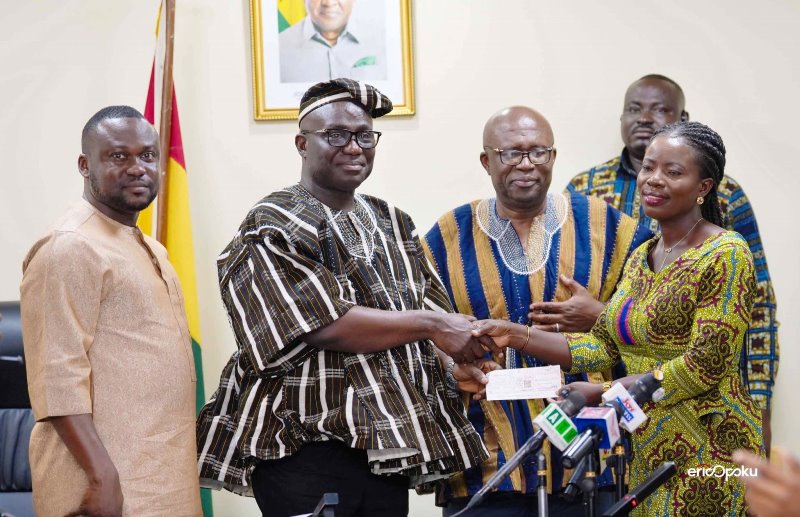
Ghana has stepped up efforts to end its heavy dependence on imported rice after securing a US$18.8 million grant from the African Development Bank (AfDB) to expand domestic rice production under the Regional West Africa Resilient Rice Value Chains Development Project, known as REWARD.


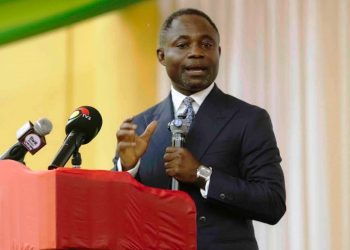
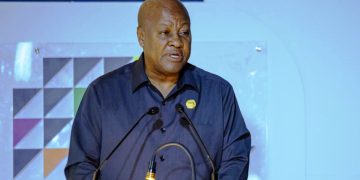
The Minister of Food and Agriculture, Eric Opoku, said the project would serve as a major pillar of the government’s Feed Ghana Programme and help put the country on course to achieve rice self-sufficiency by 2028.
Mr Opoku said Ghana currently produces enough rice to meet only about 56 percent of national demand, leaving approximately 44 percent to be supplied through imports.
He said the country spends between US$320 million and US$500 million annually on rice imports, arguing that increasing domestic production would help retain more of the money within the Ghanaian economy.
“REWARD is Feed Ghana in action for rice. It is a deliberate intervention in the rice value chain to raise local output and reduce the national import bill,” Mr Opoku said.
3,200 hectares to be developed
Under the REWARD project, government will develop 3,200 hectares of land for rice cultivation within the Northern Savannah Ecological Zone and support more than 20,000 smallholder farmers with improved production technologies, quality seeds and mechanisation.
The beneficiary areas include Tamale Metropolitan, Mion, Savelugu, East Mamprusi, West Gonja, Bawku West, Wa Municipal, Sissala East and Nandom.
The intervention is expected to increase average rice yields from about 3.5 tonnes to 4.5 tonnes per hectare, while improving the quality and competitiveness of locally produced rice.
The REWARD project is designed to strengthen climate-resilient rice production systems, improve access to quality inputs and mechanisation, enhance irrigation and land development, and strengthen rice marketing and value chains.
Its major components cover production and productivity, processing and marketing, policy and governance, as well as project coordination.
Machinery for 20,000 farmers
Mr Opoku said specialised farm machinery would be distributed to farmers in the selected production areas to support various stages of rice production, including land preparation, planting and harvesting.
The government will also equip 10 strategic rice processing centres with modern milling and parboiling technology.
The move is intended to address one of the major weaknesses in Ghana’s rice value chain by ensuring that increased production is matched by adequate processing capacity.
According to the Minister, locally produced rice will also be channelled into reliable institutional markets, including schools, prisons and other public institutions.
“Rice produced under the project will also help supply schools, prisons and other public institutions with quality locally produced rice,” Mr Opoku said.
Japan provides additional US$2.49m support
The rice production drive is being complemented by a US$2.49 million grant from the Government of Japan under the CARD Grant Aid Project on the Enhancement of Rice Seeds Production Capacity.
The Japanese support will provide equipment including combine harvesters, trucks for transporting harvesters and seeds, seed-cleaning machines, maintenance tools, air blowers and dusters, high-pressure cleaners, transformers and a monitoring vehicle.
The equipment is expected to arrive in November 2026, with training for value-chain actors also planned.
Mr Opoku has urged beneficiaries to ensure that the machinery and other interventions are properly utilised, stressing that effective management of the support would be critical to achieving sustainable food and nutrition security.
He also disclosed that the Ministry, in consultation with the AfDB, plans to formally launch the REWARD project in the first week of November 2026, ahead of the 2027 production season.
Feed Ghana targets food import dependence
The rice intervention forms part of the broader Feed Ghana Programme, the government’s four-year agricultural transformation programme covering 2025 to 2028.
The programme is aimed at accelerating agricultural transformation, improving food security, creating sustainable employment and reducing Ghana’s dependence on food imports while increasing domestic production and exports.

Its objectives include increasing agricultural productivity, improving nutrition, supplying raw materials to agro-processing industries, increasing value addition and creating jobs.
The programme covers 22 priority commodity value chains and includes interventions in irrigation, improved inputs, land development, farmer cooperatives, agro-production enclaves, mechanisation, storage and processing infrastructure.
Other Feed Ghana interventions include the Dobidi Initiative, which targets 30,000 smallholder farmers with inputs and technical support, as well as the School Farms Initiative, Home Gardening and Urban Agriculture, Youth Agriculture Estates, Youth in Aquaculture and poultry and livestock development.
The government’s rice strategy therefore goes beyond increasing paddy production. It seeks to develop an integrated value chain covering land development, production, mechanisation, processing, marketing and institutional demand.
Mr Opoku said the ultimate target is to achieve 3.31 million metric tonnes of paddy production and rice self-sufficiency by 2028, reducing Ghana’s exposure to international rice prices and retaining more of the economic value of rice consumption within the country.
Source: www.kumasimail.com