























Gold Fields has disclosed that it has invested approximately US$5 billion in Ghana over the past 30 years, revealing that more than 70 per cent of revenue generated from its operations remains within the country.


Gold Fields, whose Tarkwa Mine has featured prominently in discussions on foreign participation, resource nationalism and local ownership, says its contribution to Ghana extends beyond gold production to include taxes, procurement, employment and community development.
The company also announced plans to invest more than US$1 billion in fresh capital over the next three to four years, signaling continued confidence in Ghana’s mining sector despite heightened scrutiny of the industry’s future direction.
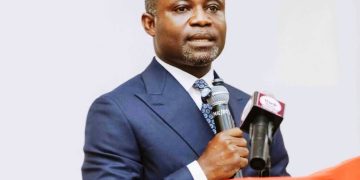
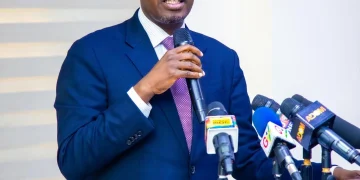
The figures were presented by Executive Vice President for External Affairs and Investor Relations, Jongisa Magagula, during the 2026 Ishmael Yamson & Associates Business Roundtable in Accra.
“In summary, Gold Fields is proud that more than 70% of all revenues earned by Gold Fields in Ghana remain in Ghana,” Magagula told participants.
Her remarks come at a time when public debate continues over mining leases, ownership structures and how much value Ghana should retain from its natural resources.
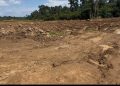
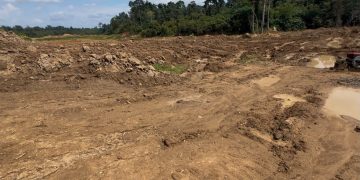
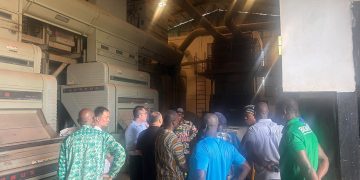
Rather than continue underground operations, the company embarked on an extensive exploration programme to evaluate the viability of a large-scale open-pit operation.
Over four years, Gold Fields deployed up to 15 drilling rigs and completed more than two million metres of exploration work. The exploration programme eventually transformed Tarkwa into one of Ghana’s largest gold mines.
Today, the operation produces approximately 500,000 ounces of gold annually — more than 40 times its output when the company first arrived.
The mine’s current estimated life span stands at 21 years.
Gold Fields says the transformation demonstrates the importance of long-term investment and a stable operating environment.
“The rejuvenation of Tarkwa since 1993 was possible because the Government of Ghana created the environment necessary to attract billions of dollars of investment,” Magagula said.
The basis of the 70% retention claim
Gold Fields says its Ghana operations paid about 5.8 billion Ghanaian cedis to the government in 2025 through taxes, royalties and dividends. That is up from 4.4 billion cedis the year before.
The company also spent 6.5 billion cedis on host community procurement and another 8.8 billion cedis on local suppliers.
Based on these expenditures, the company says more than 70% of revenue generated from its Ghanaian operations remains within the local economy.
Responding to calls for greater local benefit
Magagula acknowledged growing expectations that Ghana’s mining sector should deliver greater benefits to citizens.
“There continues to be a legitimate expectation on the part of Ghanaians that the mining industry should generate greater benefits for Ghanaians,” she said. “We fully appreciate this imperative.”
However, she argued that Ghana can pursue greater national benefit while continuing to attract international capital and technology.
“Ghana is well placed to continue taking advantage of global capital and technological advances in mining,” she said, “whilst negotiating equitable terms that deliver meaningful national benefits as well as fair returns.”
Community investments exceed US$110 million
Beyond taxes and royalties, Gold Fields operates a community development model through the Gold Fields Ghana Foundation, which receives funding from a contribution of US$1 per ounce of gold sold and 1.5 per cent of the company’s pre-tax profit.
Through the Foundation, Gold Fields says it has invested more than US$110 million in projects covering education, agriculture, healthcare, infrastructure, water and sanitation.
Among the projects completed are 52 schools, 116 boreholes, a 33-kilometre paved road linking Tarkwa and Damang, and several bridges.
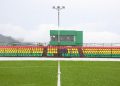
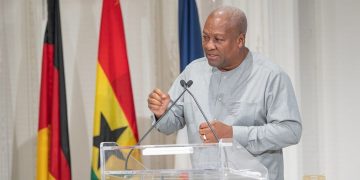
The company also highlighted the Tarkwa Abosso Stadium, which Magagula said “has been commended by the President of Ghana, John Mahama, as a value for money project and which he says would be replicated in some parts of the country”.
Gold Fields also supports scholarship schemes and graduate development programmes, with more than 100 students trained for the world of work, including mining engineers currently employed on projects across the globe.
“Our community projects are decided on, developed and delivered at the instance of the communities,” Magagula said. “The value of these investments is not measured only in financial terms.”
Continued support for Ghanaian sports
The company also highlighted its long-standing support for sports development in Ghana.
Gold Fields has supported the Black Stars, Black Queens and the Black Challenge amputee football team for more than two decades and has recently expanded its support to the Ghana Women’s Premier League.
The company is currently an official partner of the Ghana Football Association.
According to Magagula, Gold Fields’ latest US$5 million investment in Ghanaian sports is expected to have a significant impact on youth development and national pride.
Gold Fields says it intends to deepen its contribution through employment creation, supplier development, technology transfer and environmental stewardship..
“At Gold Fields, our purpose is to create enduring value beyond mining,” Magagula said.
Source: www.kumasimail.com