


























The Minister for Food and Agriculture, Eric Opoku, has described a newly commissioned solar-powered irrigation project at Moglaa in the Savelugu Municipality as a major intervention to strengthen food security, increase farmers’ incomes and reduce poverty across Northern Ghana.


Speaking at the inauguration ceremony on Tuesday, May 5, 2026, the Minister said erratic rainfall and limited access to water have for years undermined agricultural productivity and contributed to seasonal unemployment among farmers in the northern belt.
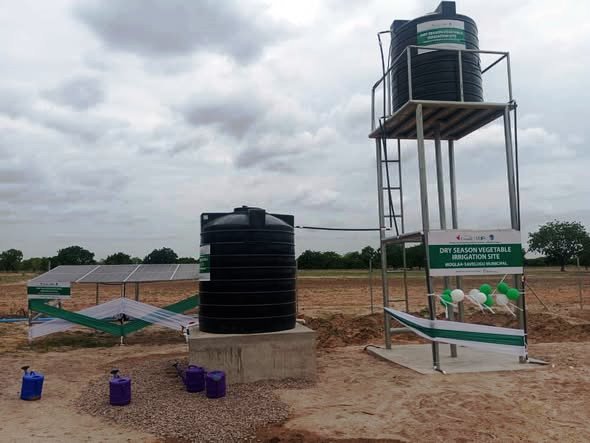
He said the solar-powered boreholes would provide a reliable and environmentally sustainable source of water to support year-round vegetable cultivation beyond the rainy season.
“This initiative forms part of broader efforts to revitalise the agricultural sector, particularly in underserved regions,” he stated, expressing confidence that it would position northern Ghana as a hub for all-year-round vegetable production.
The project, designed to support women smallholder farmers through dry-season vegetable farming, forms part of a wider irrigation intervention across the Northern, Upper East, Upper West, North East and Savannah Regions.
Each facility is equipped with solar-powered pumps, water storage infrastructure and irrigation systems aimed at ensuring sustainability and efficient water delivery.
Collectively, the facilities are expected to support about 50 acres of irrigable land and benefit more than 3,000 women farmers organised into Savings and Loans Groups across 11 districts. Beneficiaries are also expected to receive training, agricultural inputs and market access support to maximise productivity.
Meanwhile, the Chief Director of the Northern Regional Coordinating Council, Mr. Sumaila Ewuntomah Abudu, who represented the Northern Regional Minister, Ali Adolf John, said the project aligns with government’s agenda to modernise agriculture, strengthen food security and promote inclusive economic growth.
He described the intervention as a sustainable response to the challenges posed by climate change and dependence on unreliable rainfall patterns.
According to him, agriculture remains the backbone of the regional economy, employing a large proportion of women and young people, but productivity has continued to suffer due to climate-related shocks.
Mr. Abudu said the solar-powered irrigation system would enable women farmers in Moglaa to undertake continuous vegetable production throughout the year, especially during the dry season, while improving household incomes and creating employment opportunities.
He also commended the Government and people of Canada for financing the initiative through the Canadian High Commission in Ghana, describing the support as a demonstration of the strong diplomatic relations between Ghana and Canada.
The Chief Director further praised the use of solar energy in powering the irrigation facilities, noting that it represents an environmentally responsible approach to agricultural development.
He urged beneficiary farmers to maintain the facility properly and appealed to the Savelugu Municipal Department of Agriculture to continue providing technical and extension support to farmers.
Mr. Abudu expressed optimism that the Moglaa irrigation garden would become a model for similar interventions across the Northern Region.
For her part, the Canadian High Commissioner to Ghana, Myriam Montrat, said the intervention reflects Canada’s commitment to supporting Ghana’s agricultural priorities, particularly in irrigation expansion and food security.
She described the irrigation facilities as “engines of transformation” for rural communities and reaffirmed Canada’s commitment to supporting agricultural development in northern Ghana beyond the lifespan of the GROW 2 project, which ends in September 2026.
“Behind each statistic lies a story of empowerment a woman attaining economic independence, a family achieving food security, and a community building a more resilient future,” she stated.
She added that the value of the project lies not only in the technology provided, but also in the opportunities it creates for sustainable livelihoods and climate resilience.
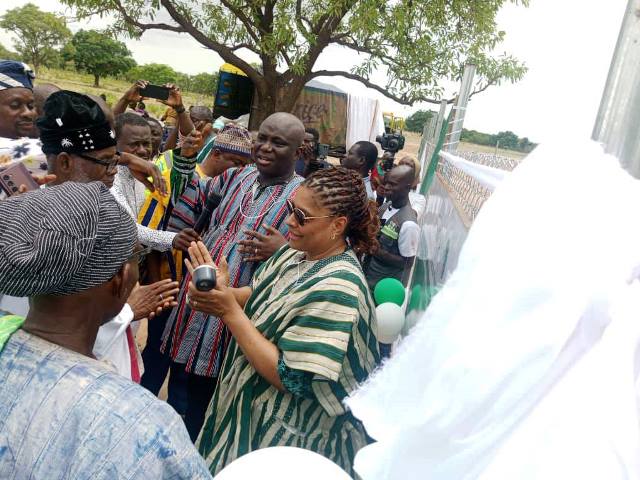
The commissioning ceremony was attended by the Canadian High Commissioner, traditional authorities, heads of departments, development partners and members of the Moglaa community.
Source: www.kumasimail.com