





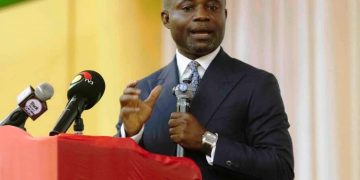
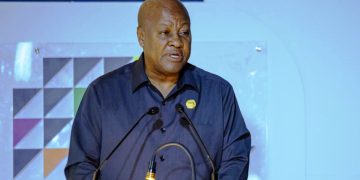
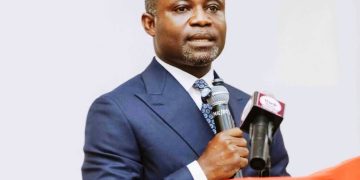



























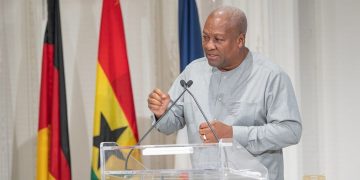




Minister for Energy and Green Transition Dr John Abdulai Jinapor has outlined an ambitious agenda for Ghana’s energy sector in 2027, with plans to install 3,000 transformers, expand electricity access and strengthen domestic petroleum refining.


The minister announced the priorities after engaging the leadership of agencies and institutions under his ministry to review their 2026 performance, address outstanding challenges and establish strategic targets for the coming year.
He said the sector had made significant progress despite persistent challenges, particularly in strengthening electricity supply, expanding access and revitalising domestic oil refining.
Dr Jinapor stressed that the next phase of the government’s energy programme must focus on measurable results, warning that accountability, efficiency, transparency and value for money would be central to evaluating the performance of agencies and their leadership.
“Every Agency and its leadership must demonstrate tangible results, with no room for unnecessary delays or persistent non-performance,” he said.
Infrastructure expansion and electricity access
A key priority for 2027 is the installation of 3,000 transformers to improve electricity distribution and reduce outages caused by ageing and overloaded equipment.
The initiative builds on the ministry’s ongoing efforts to strengthen the distribution network. In March 2026, the minister announced plans to procure and install about 1,500 transformers nationwide, while a subsequent programme announced by the Electricity Company of Ghana targeted the deployment of approximately 2,000 new distribution transformers.
The latest 3,000-transformer target signals a broader infrastructure ambition, although its implementation timetable, financing and geographical distribution will be important in determining its impact.
The ministry has also been pursuing improvements to transmission infrastructure, including the replacement of ageing equipment, construction and expansion of substations, and development of transmission lines to improve the reliability of electricity supply.
Dr Jinapor cited an electricity access rate of 89.13 per cent as one of the sector’s gains. The expansion of access remains a key national objective, particularly for remote and underserved communities where extending conventional grid infrastructure can be expensive.
Under the Scaling-Up Renewable Energy Programme, the government has pursued initiatives to expand electricity access through solar systems and mini-grids. The programme includes plans for 35 mini-grids serving 47 island and lakeside communities, alongside solar installations intended to benefit households, businesses and public institutions.
Renewable energy and sustainability
The government is also pursuing a gradual diversification of Ghana’s energy mix to reduce dependence on conventional sources and improve long-term energy sustainability.
In August 2026, Dr Jinapor reaffirmed the government’s commitment to achieving at least 10 per cent renewable energy penetration in the national electricity generation mix by 2030.
The government’s renewable energy programme includes solar power development, mini-grids, rooftop solar installations and other off-grid solutions.
Plans have also been advanced for a 200-megawatt solar project, while the Bui Power Authority has been developing floating solar capacity at the Bui Generating Station.
In September 2026, Ghana launched an updated Renewable Energy Master Plan for 2026 to 2030, developed by the Ministry of Energy and Green Transition with support from the United Nations Development Programme.
The plan sets targets for additional utility-scale solar, wind and hydropower capacity, as well as hundreds of mini-grids for rural and island communities. Its implementation is expected to require substantial investment and coordination among government institutions, development partners and private investors.
These initiatives are intended to diversify electricity generation, improve access, support economic activity and advance Ghana’s climate commitments.
TOR revival and domestic value addition
Another significant development during the period has been the revival of the Tema Oil Refinery (TOR), which resumed crude oil processing in December 2025 following major maintenance works.
The refinery recorded its first annual profit in nearly a decade in 2025 and subsequently resumed processing additional crude consignments, including locally produced Jubilee crude.
In August 2026, President John Dramani Mahama commissioned the refurbished Crude Distillation Unit, marking a major milestone in efforts to restore the refinery’s operational capacity.
The government has identified domestic refining as an important component of energy security and industrial development because it enables Ghana to process more of its crude oil locally, retain greater value within the economy and reduce dependence on imported finished petroleum products.
The recovery has required cooperation among TOR’s management, the Ministry of Energy and Green Transition, the National Petroleum Authority and other industry stakeholders.
Accountability and outstanding challenges
Despite the gains, Ghana’s energy sector continues to face challenges involving infrastructure reliability, financing, operational efficiency and the need to expand access sustainably.

Recent disturbances in the electricity system prompted the government to initiate a comprehensive review of the national grid and its infrastructure in August 2026.
The review is expected to provide an independent assessment of the condition and performance of the electricity network and help identify interventions required to improve reliability.
The minister’s emphasis on accountability and measurable performance therefore comes at a time when the sector must translate policy commitments and investment plans into dependable services for households and businesses.
As the ministry prepares for 2027, its priorities include strengthening power infrastructure, improving electricity access, advancing renewable energy, consolidating TOR’s recovery and ensuring that public resources deliver measurable benefits.
Dr Jinapor said the ultimate objective was to build a reliable, affordable, sustainable and resilient energy sector capable of supporting economic growth and improving the lives of Ghanaians.
Source: www.kumasimail.com