








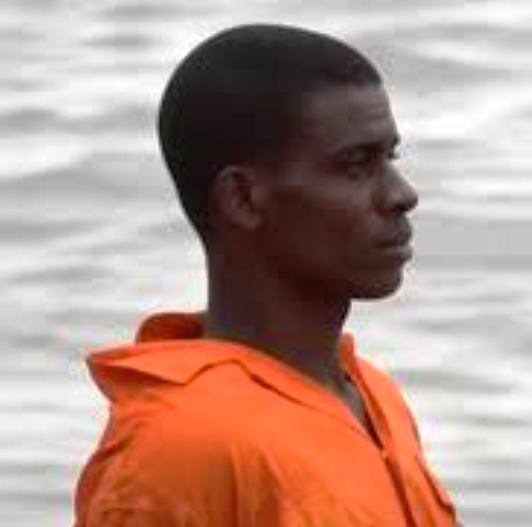
For many Ghanaian Catholics, the name Matthew Ayariga may sound unfamiliar. But in Arlington, Texas, his name is about to become a permanent part of the spiritual life of Ghanaian Catholics in North America.


The Diocese of Fort Worth has established St Matthew Ayariga Parish in Arlington as a personal parish for the Ghanaian Catholic community in North Texas — making it the first Ghanaian national Catholic parish in the United States and the first Catholic parish anywhere in the world established under the patronage of St Matthew Ayariga.
The announcement has, however, raised a question among some Ghanaian Catholics: When did Matthew Ayariga become a saint?
The answer goes back to one of the most brutal episodes in the persecution of Christians in the modern era.
Matthew Ayariga was the only Ghanaian among 21 Christian migrant workers murdered by Islamic State militants in Libya in February 2015. Twenty of the victims were Egyptian Coptic Orthodox Christians. Ayariga, a Black African migrant worker, was the 21st man.
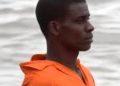
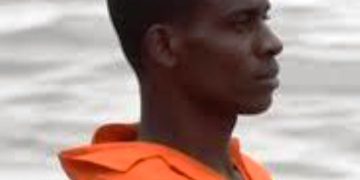
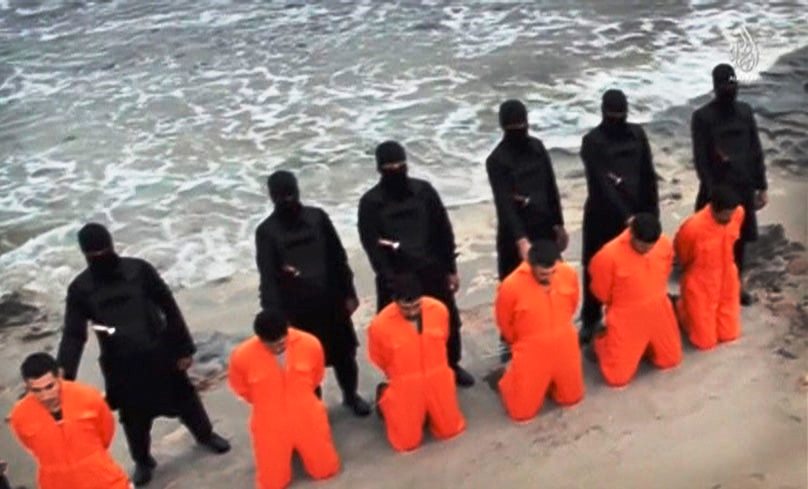
The men had been working in Libya when they were abducted by Islamic State militants. On February 15, 2015, a video released by the terrorist organisation showed the 21 captives in orange jumpsuits being marched to a beach near Sirte.
They were ordered to renounce their Christian faith.
They refused.
Ayariga’s story became particularly powerful because, unlike the 20 Egyptians, his religious background was uncertain. Some accounts suggest he was already a Christian, while others say his captors gave him an opportunity to separate himself from the Coptic Christians.
What is consistently remembered is his response when questioned about his faith:
“Their God is my God.”
He was then executed alongside the others.
The words transformed an otherwise obscure Ghanaian migrant worker into a symbol of Christian courage and martyrdom. The Catholic Bishops’ Conference of England and Wales describes him as a man who was martyred for his faith alongside the 20 Coptic Orthodox workers and notes that his willingness to die with his companions is the reason he is celebrated as a saint and martyr.
So when did Ayariga become a saint?
The first formal recognition came from the Coptic Orthodox Church of Alexandria.
Only days after the February 15, 2015 killings, Pope Tawadros II recognised the 21 men as martyrs. The Coptic Orthodox Church’s own records state that on February 16, 2015, Pope Tawadros II issued a statement canonising the 21 men who had been beheaded by ISIS in Libya as martyrs.
That means Ayariga’s recognition as a saint did not begin in Arlington in 2026. He had already been venerated as one of the 21 Martyrs of Libya for more than a decade.
The Coptic Orthodox Church continues to commemorate the 21 martyrs every February 15. Pope Tawadros has described them as saints of the Coptic Orthodox Church.
The Catholic Church’s recognition came later.
On May 11, 2023, during a historic meeting at the Vatican between Pope Francis and Pope Tawadros II, Pope Francis announced that the 21 martyrs would be included in the Roman Martyrology, the Catholic Church’s official catalogue of saints and martyrs commemorated in its liturgical life.
Francis described the decision as a sign of the spiritual communion between the Catholic and Coptic Orthodox Churches.
The significance of that decision was considerable. It meant that the Catholic Church officially recognised the martyrdom of the 21 men, including the Ghanaian among them.
Ayariga therefore occupies a unique place in Christian history: he is the only Ghanaian among the 21 martyrs of Libya and the only one whose identity was not Coptic Orthodox. His precise Christian background remains uncertain, although some accounts say he was already a Christian and some have suggested he may have been Catholic.
A Ghanaian saint whose life remains a mystery
Ironically, despite the international recognition that has followed his death, very little is known about Ayariga’s life.
Reliable accounts say he was Ghanaian and a migrant worker in Libya, but his exact birthplace, date of birth, family history and early Christian life have not been firmly established.
The Catholic Bishops’ Conference of England and Wales says he is believed to have been born in Ghana, although some early reports suggested Chad, and notes that little is known about his life before he became a migrant worker.
That lack of information has not diminished the significance of his martyrdom.
Instead, his final act has become the defining story of his life.
He saw his fellow Christians facing death rather than renouncing Christ and chose to identify himself with them.
In that moment, Matthew Ayariga became more than a Ghanaian migrant worker in Libya.
He became a martyr.
From a Libyan beach to Arlington
More than 11 years after his death, Ayariga’s name is now being permanently attached to a Catholic parish thousands of kilometres from Ghana.
The Diocese of Fort Worth announced on August 28, 2026, that St Matthew Ayariga Parish had been established as a personal parish for the Ghanaian Catholic community in North Texas.
The Ghanaian Catholic community there had been celebrating Mass weekly at St Joseph Parish in Arlington since 2007. The growth of the community eventually led the Diocese of Fort Worth to establish a dedicated parish.
The new parish is currently being renovated from a former Methodist church in south Arlington, with completion expected in January 2027.
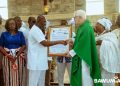
Bishop Michael Olson is scheduled to celebrate three Masses from January 29 to 31, 2027, to dedicate the church. Archbishop Gabriel Anokye of Kumasi is expected to attend, alongside Ghanaian community representatives and dignitaries from Ghana, Texas and Arlington.
The parish will become the 93rd parish in the Diocese of Fort Worth.
But its significance goes beyond the number.
It gives Ghanaian Catholics in America a church bearing the name of a Ghanaian martyr whose blood was shed in Libya because he refused to distance himself from Christ.
Is this Ghana’s first saint?
There is another question that Ayariga’s new prominence is likely to revive in Ghana: Is he Ghana’s first saint?
That question requires some care.
Ayariga is certainly a Ghanaian-born figure officially recognised as a saint and martyr by both the Coptic Orthodox Church and the Catholic Church. But it would be inaccurate to suggest that he is necessarily the first saint associated with Ghana in the entire history of Christianity, particularly because the Catholic Church’s categories of canonisation and recognition of ancient saints are complex.

What makes Ayariga extraordinary is not simply that he is a saint.
It is how quickly his sainthood emerged from his martyrdom, the fact that he was a modern Ghanaian migrant worker rather than a priest or religious leader, and the ecumenical nature of his recognition.
He was canonised by the Coptic Orthodox Church after his death and later entered into the Catholic Church’s Roman Martyrology alongside the 20 Coptic martyrs.
And now, in Arlington, Texas, a Catholic parish is being established under his name.
That appears to make St Matthew Ayariga the first Ghanaian to have a Catholic parish anywhere in the world established specifically under his patronage — a distinction the Diocese of Fort Worth itself makes in announcing the new parish.
For Ghanaian Catholics who may only now be hearing his name, the story of St Matthew Ayariga is therefore not a new story.
It is a story that began on a Libyan beach in 2015 — and has now travelled all the way to a new Ghanaian Catholic parish in Texas.
Ayariga’s life may remain largely unknown.
But his final words have ensured that his faith is not forgotten:
“Their God is my God.”
Source: www.kumasimail.com