


































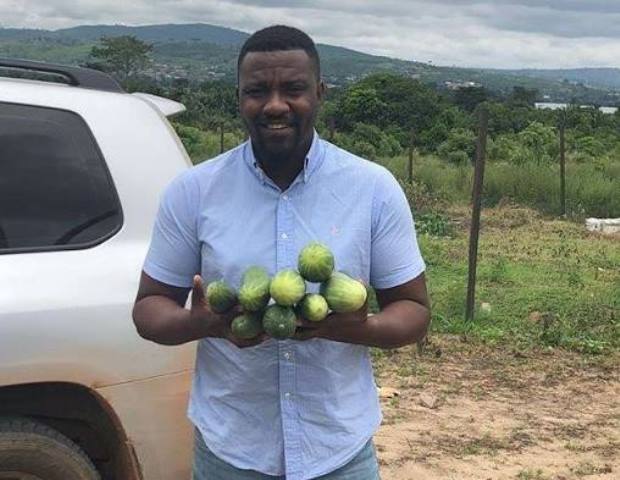
Vice President Professor Jane Naana Opoku-Agyemang has commended Ayawaso West Wuogon MP and Deputy Minister of Food and Agriculture, John Setor Dumelo, for promoting the consumption of made-in-Ghana rice and other locally produced foods.


The Vice President, in a Facebook post on Wednesday, said Mr Dumelo’s advocacy was important to strengthening Ghana’s agricultural sector and supporting farmers and businesses along the food value chain.
She called on Ghanaians to increasingly “eat what we grow and grow what we eat”, saying the choice of locally produced food had economic benefits beyond the individual consumer.
“Choosing locally produced food helps support hardworking Ghanaian farmers, strengthens local businesses, keeps more value within our economy, and creates jobs along the agricultural value chain,” she said.
Professor Opoku-Agyemang said government would continue to support increased agricultural production through programmes such as the Feed Ghana Programme, but stressed that government interventions must be complemented by the choices consumers make.
“Government action must be matched by our choices as consumers,” she said, urging Ghanaians to “proudly consume what Ghana produces.”
Mr Dumelo’s campaign comes at a time when the government is intensifying efforts to reduce Ghana’s dependence on imported food and make agriculture a stronger driver of economic transformation.
The Feed Ghana Programme, one of the flagship interventions of the government’s agricultural agenda, seeks to increase domestic food production, improve food security, create jobs and strengthen linkages between farmers, processors and markets.
Rice is among the key commodities targeted under the programme, reflecting the government’s broader objective of increasing domestic production and reducing the country’s reliance on imported rice.
The programme is also designed to support farmers with improved inputs and production systems while addressing challenges along the agricultural value chain, including post-harvest losses, storage, processing and market access.
The government’s approach is based on the premise that increasing production alone is insufficient unless farmers can find ready markets for their output and consumers develop a stronger preference for locally produced alternatives.
That makes Mr Dumelo’s role as both a farmer and Deputy Minister particularly significant.
His promotion of locally produced food effectively complements government’s production-focused interventions by encouraging consumers to create demand for the products Ghanaian farmers are being supported to produce.
The government has also been pursuing measures to strengthen the connection between agricultural production and industry, with the aim of ensuring that increased farm output feeds into agro-processing, manufacturing and job creation.

The broader agricultural transformation agenda covers rice, maize, soybean, poultry, livestock, vegetables, aquaculture and other strategic value chains.
The emphasis is therefore shifting from agriculture merely as a source of food to agriculture as a major economic sector capable of generating jobs, supporting local enterprises, reducing imports and retaining more value within Ghana.
Professor Opoku-Agyemang’s endorsement of Mr Dumelo’s campaign consequently highlights a key component of that strategy: government can provide the policies, inputs and infrastructure to increase production, but consumers must provide the market by choosing Ghanaian products.
For a country seeking to build a more resilient food system and reduce its exposure to external shocks, the Vice President’s message is both an economic and behavioural call—Ghanaians must not only produce more locally, but also consume more of what they produce.
Source: www.kumasimail.com