









































Journalists and civil society organisations have been warned against treating artificial intelligence (AI) tools as authoritative sources of information, amid growing concerns over hallucinations, deepfakes and the misuse of sensitive data.


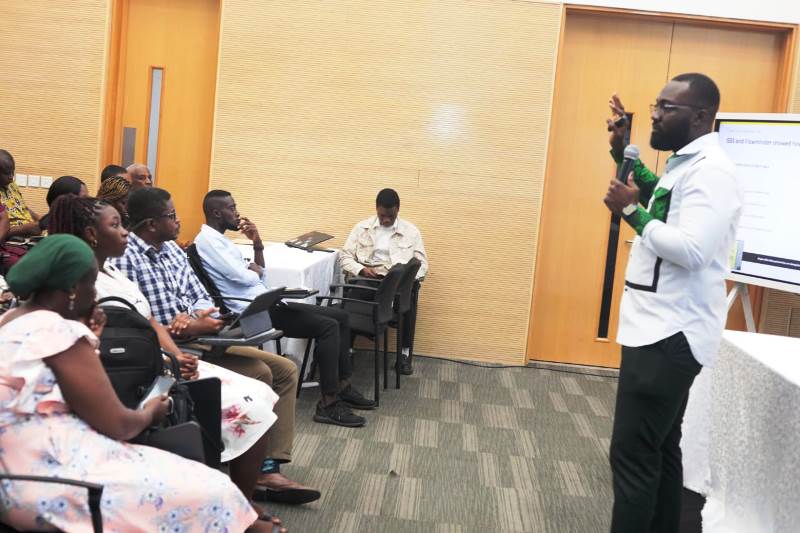
The warning came at an AI capacity-building session for media practitioners and civil society representatives organised by MTN Ghana in Accra on Wednesday, September 2, 2026.
Participants were told that while tools such as ChatGPT can improve research, content production, data analysis and routine workflows, their outputs can be inaccurate even when presented in language that appears credible and authoritative.
Facilitators therefore urged journalists and CSO practitioners to independently verify AI-generated text, images and other content before using or publishing them.
The session also highlighted the growing threat posed by deepfakes and manipulated images, particularly in an environment where false information can spread rapidly through digital platforms.
Samuel Adranyi, CEO and Founder of Afrilogic Solutions, demonstrated prompting techniques and practical ways professionals can use AI to improve research and productivity.
Nehemiah Yelu Attigah, CEO of HatuaTech, stressed that AI should complement rather than replace human judgment, critical thinking and professional oversight.
The facilitators also cautioned participants against entering confidential or sensitive information into free, consumer-facing AI platforms because of potential data privacy and security risks.
For journalists, the concerns are particularly significant because AI-generated errors can enter news reports if information produced by automated systems is published without independent verification.
CSOs also face similar risks when using AI to produce reports, analyse information or communicate issues to the public.
Kwame Manu, Senior Manager for Digital Analytics and Monetisation at MTN Ghana, said the increasing use of data analytics and automation was changing how organisations understand customer behaviour, automate processes and predict trends.
He said the growing adoption of AI must, however, be matched by stronger attention to privacy, ethics and accountability.
Mr Manu also outlined how MTN is incorporating AI into its operations, including the use of predictive and prescriptive analytics to improve the personalisation of services.

He said the company’s broader AI strategy also involves potential collaboration with government institutions, universities, STEM education partners, startups and media organisations.
Efua Falconer, Acting Senior Manager, Corporate Communications at MTN Ghana, said the rapid pace of technological change made it necessary for professionals to understand how AI was reshaping their work.
The training brought together media practitioners and CSO representatives physically at MTN House in Accra, with others participating virtually.
The central message from the session was that greater access to AI does not remove the need for professional responsibility. Rather, the technology makes verification, privacy protection and human judgment more important as its use expands.
Source: www.kumasimail.com