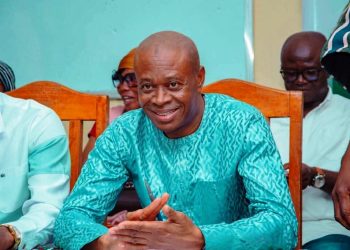







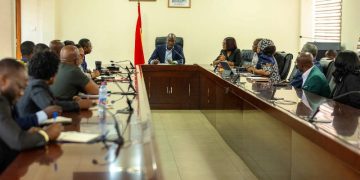
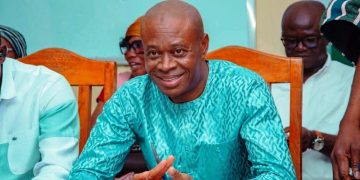


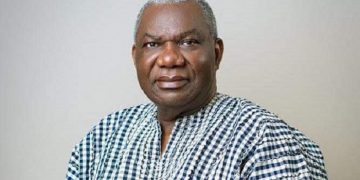

















On most days, Municipal Chief Executive Anthony Ziniel is expected to make critical decisions that balance limited resources, rising expectations from people, and the long-term future of Nandom.


But for him, the reality of the job only became clear after assuming office.
“To be frank, I didn’t know that service was this difficult,” he admitted in an interview with KumasiMail as he marks one year in office on May 3, 2026.
That honesty frames a first year defined not just by projects and policy alignment with President John Dramani Mahama’s reset agenda, but by hands-on leadership, tough trade-offs, and a deliberate attempt to reposition Nandom as a functional and forward-looking municipality.
A Municipality with Big Needs and Limited Means
When Ziniel took office, one issue stood out immediately: money or the lack of it.
Like many local assemblies, Nandom depends heavily on central government quarterly transfers. But internally generated funds (IGF), which are meant to complement these allocations, remain very low.
“Our biggest challenge has been how to generate internal revenue,” he said.
The Assembly’s reliance on market tolls has proven insufficient, forcing a rethink. Ziniel’s approach is not cosmetic—he is pushing structural reforms, including the creation of a property database to enable realistic property rate collection.
But even that comes with its own paradox.
“The amount involved is even going to be bigger than what we usually generate at the end of the year,” he explained, referring to the cost of hiring consultants and building a credible system.
Still, he sees it as a necessary investment worth making because more revenue will come in eventually once the Assembly is able to do it.
Leading from the Ground: A Month in the Market
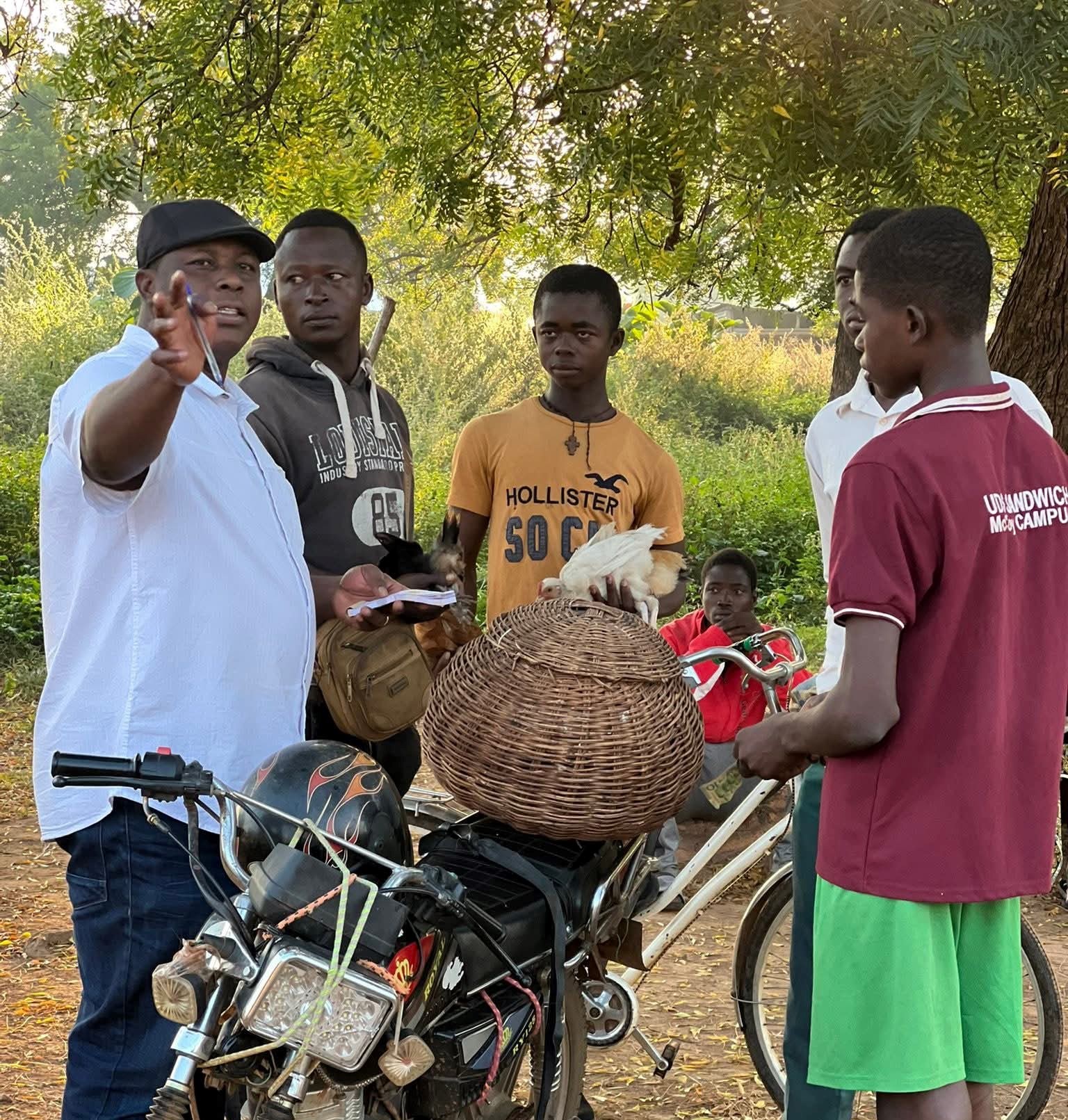
Rather than staying behind a desk, Ziniel took a different approach to one of the Assembly’s most persistent problems—revenue leakages at the market.
For nearly a month, he personally visited the Nandom market, observing traders and engaging them directly, often without being recognised.
“I had confrontations with people… they didn’t know who I was,” he said.
The experience exposed a deeper issue, which is resistance to paying tolls, partly driven by mistrust and habit.
His response has been a mix of enforcement and engagement—reorganising the market, creating designated parking spaces for motorbikes and bicycles, and introducing modest user fees to improve both order and revenue.
Building for Growth: Roads, Markets and Cross-Border Opportunity
Nandom’s location near Burkina Faso is both a challenge and an opportunity. However, Ziniel wants to turn it into an advantage.
“If Nandom becomes a good place, a lot of people from Burkina Faso can come here, have a good time, and go back,” he said.
Central to that vision is infrastructure.
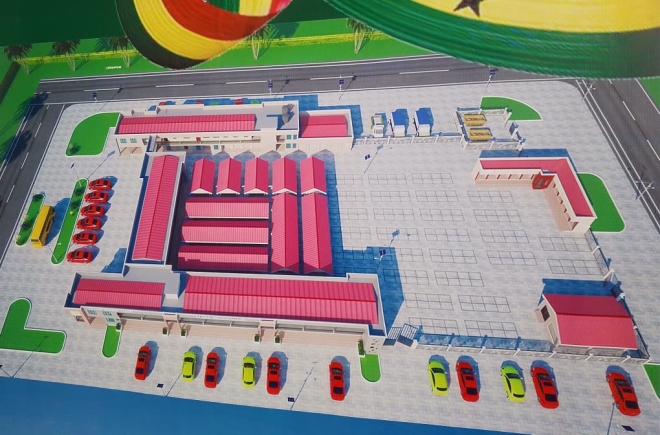
The municipality is set to benefit from the government’s 24-hour economy policy, with plans to redevelop the old Nandom market into a modern facility. Stakeholder consultations and contract signing have been completed to pave the way for construction.
At the same time, the Assembly is planning an 18-acre truck park to serve long-distance vehicles along the Burkina Faso corridor which is another potential revenue stream.
On roads, progress has been slower. The Wa-Nandom-Hamile stretch, initially part of the Big Push programme, has been deferred to a second phase after government prioritised the Wa-Sawla road.
Still, Ziniel remains optimistic.
“If we are lucky, probably in the course of the year, they may announce this road project,” he said.
Quiet Gains: Water, Health and Education Projects
While major projects are in the pipeline, the Assembly has focused on delivering smaller but critical interventions across communities.
In one year, 15 boreholes have been drilled, five of them mechanised in communities such as Tangkyara, Kuselle, Goziir and Bu, whereas 10 hand pump boreholes are in places including Betaglo, Begineteng, Baaperi and Tokuu.
In health, two CHPS compounds are under construction at Tokuu and Bapila while funding has been secured for a new health centre at Ketuo, where the existing facility has deteriorated after years of use.
Education infrastructure is also expanding, with new kindergarten blocks at Betaglo and Zimuopare, and a JHS block at Monyupele.
But Ziniel is clear in his mind that infrastructure alone will not fix education.
A Difficult Conversation: Too Many Schools, Too Few Teachers
One of the most sensitive issues facing the municipality is declining education standards. Ziniel traces the problem to a mismatch between the number of schools and available teachers.
“Now the schools are in every community, but there are no teachers,” he said.
In some cases, schools operate with just one or two teachers. His proposed solution is merging some schools temporarily to ensure adequate staffing. This has sparked discussions but requires community buy-in.
“It is not something you can just get up and implement,” he acknowledged.
The Assembly has submitted its teacher needs to the Ghana Education Service and is awaiting recruitment outcomes. In the meantime, stakeholder consultations are being planned to build consensus around practical solutions.
Jobs, Expectations and the Reality of Governance
Beyond infrastructure and services, Ziniel faces constant pressure from residents especially the youth, for jobs and financial support.
“Even if you are able to give about 50 jobs, it is still not enough,” he said, noting that more than 500 people may be seeking opportunities at any given time.
Still, there have been gains.
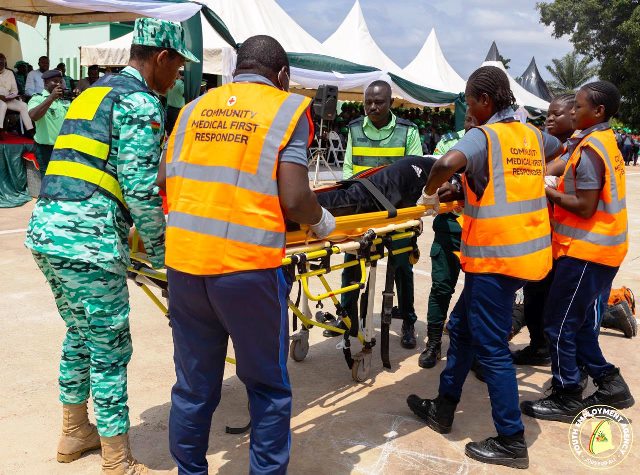
About 106 youth have been employed under government programmes across the police, fire service, prisons and ambulance service. An additional 38 master craftsmen are training over 200 apprentices under a skills development initiative, making Nandom one of the top beneficiaries in the region.
Scholarships have also provided relief, with 13 out of 14 applicants from the municipality securing support last year.
Yet expectations remain high and often immediate.
“Some people will not apply for opportunities even when the information is there, but they will come and ask you to give them money,” he noted.
Fixing the System: Planning, Permits and Order
Urban planning presents another long-term challenge.
In areas like Zongo, unregulated construction has led to blocked access routes and disorganised layouts.
Strict enforcement of building laws could mean demolishing a large number of structures—something the Assembly is keen to avoid.
Instead, Ziniel is pursuing a gradual approach by enforcing rules for new developments while educating residents and working with Assembly Members to manage existing issues.
A key strategy has been linking building permits to utility access. Through collaboration with NEDCo and Ghana Water Limited, only buildings with proper permits can now receive electricity and water connections.
Connectivity, Security and Social Stability
Poor telecommunications, particularly in communities like Naapaal and Betaglo, has also been a concern.
The Assembly is working with GIFEC to install infrastructure in six communities, including Gegenkpe, the Ko area and the Nursing and Midwifery Training College enclave.
Meanwhile, periodic tensions around the selection of a Chief Imam continue to test local stability. Ziniel is careful to draw boundaries because the issues are mixed.
“It is a management issue, not a religious issue,” he said, noting that the Traditional Council is handling the matter while the Assembly focuses on security.
Looking Ahead: Culture, Tourism and Identity
Beyond immediate challenges, Ziniel is thinking about the long-term identity of Nandom. Tourism, he believes, remains largely untapped.
From the St. Theresa Minor Basilica to traditional xylophone music and dance, he sees opportunities to build a cultural economy. Plans are being considered for a cultural centre where visitors can learn to play the xylophone and experience Dagara traditions.
Even natural features, such as the presence of hippos in nearby areas, are being viewed as potential attractions if properly developed.
But he insists that such efforts must be locally driven.
“Our people must find a way to invest. If we depend on outsiders, they may not come,” he said.
A Personal Reflection on Power and Service
Perhaps the most revealing part of Ziniel’s first year is his perspective on the nature of his office. Unlike elected officials, his position is not guaranteed.
“Even tomorrow, I can be asked to step aside,” he said.
That uncertainty, rather than discouraging him, appears to shape his urgency towards bringing development to the people of Nandom.
“We will continue to give our best for the development of Nandom,” he said. “Whatever it takes to make sure that the people benefit, we will do it.”
For now, one year in, Anthony Ziniel’s tenure reflects a blend of ambition, constraint, and steady groundwork, an attempt to translate national policy into local progress, one decision at a time.
Source: www.kumasimail.com