








































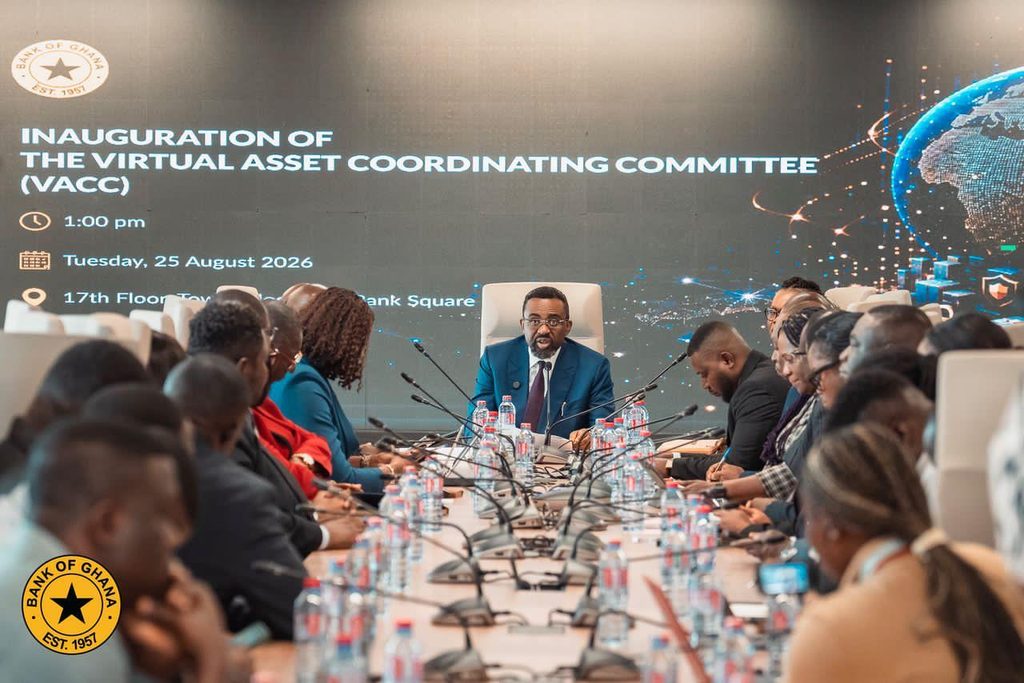
The Bank of Ghana (BoG) has inaugurated the Virtual Assets Coordinating Committee (VACC) to strengthen inter-agency coordination and support the implementation of Ghana’s legal and regulatory framework for virtual assets.


The committee was inaugurated by the Governor of the Bank of Ghana, Dr. Johnson Pandit Asiama, on Aug. 25, 2026, at the Bank’s headquarters in Accra.
The establishment of the committee follows the enactment of the Virtual Asset Service Providers Act, 2025 (Act 1154), which provides the legal framework for regulating Ghana’s rapidly expanding virtual asset sector.
Speaking at the inauguration, Dr. Asiama said Ghana had taken a major step in its digital finance journey with the passage of the legislation in December 2025.
He said the law was necessary following the 2024 National Anti-Money Laundering, Counter-Terrorist Financing and Proliferation Financing (AML/CFT/PF) Risk Assessment, which identified significant adoption and use of virtual assets in Ghana and increasing connections between the sector and the formal financial system.
According to him, the assessment highlighted the urgent need for a comprehensive legal and regulatory framework to govern the emerging sector.
Committee membership
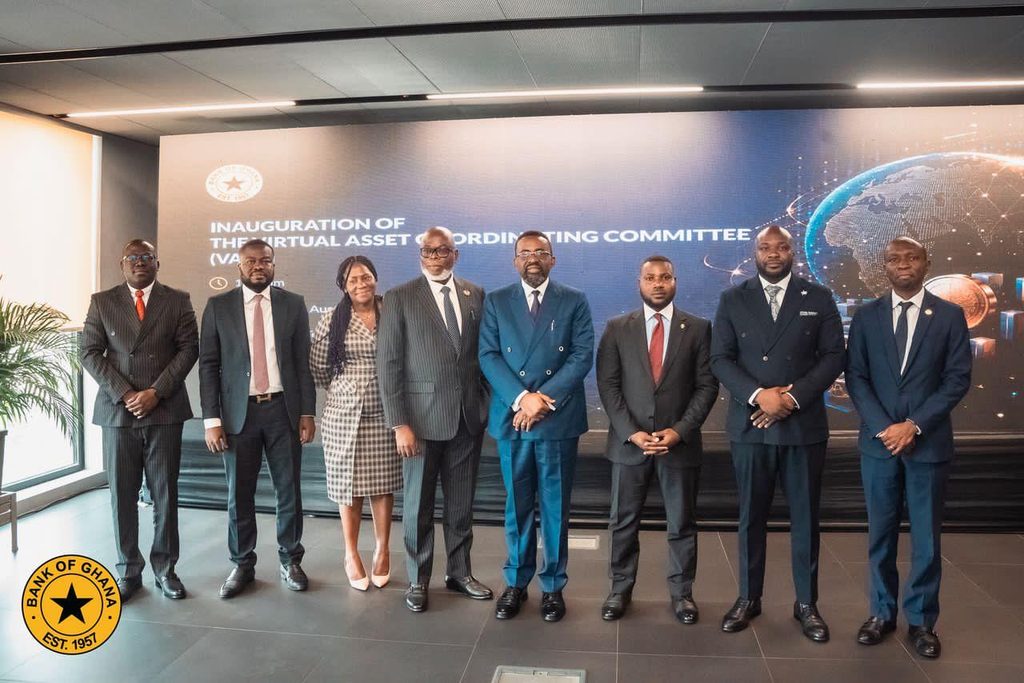
The VACC comprises representatives from the Bank of Ghana, Securities and Exchange Commission (SEC), Ministry of Finance, Cyber Security Authority and Financial Intelligence Centre.
Dr. Asiama said the committee could also co-opt other relevant institutions where necessary, reflecting the cross-cutting nature of virtual assets and the need for collaboration among regulators and other competent authorities.
He said the chairmanship of the committee would rotate between the Bank of Ghana and the SEC.
The Bank of Ghana will hold the inaugural chairmanship for two years, after which the chairmanship will rotate to the SEC.
Focus on financial stability and emerging risks
Dr. Asiama, who is also Chairman of the Financial Stability Council, said the committee would be expected to pay particular attention to financial stability risks arising from virtual assets.
He said the implications of virtual assets for the broader financial system made coordination among regulatory institutions essential.
The committee is expected to facilitate harmonised implementation of Act 1154 and its subsidiary regulatory instruments, strengthen information sharing and inter-agency cooperation, and support coordinated responses to emerging risks.
It will also contribute to efforts to address money laundering, terrorist financing, cybersecurity threats and consumer protection concerns associated with virtual assets.
Dr. Asiama said the committee’s inauguration marked an important transition from the enactment of the legislation to the establishment of an effective and sustainable regulatory framework for the sector.
Regulatory guidelines under development
The Governor disclosed that the Bank of Ghana and the Securities and Exchange Commission were developing operational guidelines to support the implementation of Act 1154.
He said both institutions were also working on policy sandboxes as part of efforts to fully operationalise the law by 2027.
Dr. Asiama urged members of the committee to approach their responsibilities with urgency, noting that the rapid pace of developments in virtual assets and digital finance globally required regulators to remain proactive.
He emphasised the importance of effective coordination, timely information sharing and a shared commitment to protecting the integrity of Ghana’s financial system.
He said the ultimate objective was to establish a virtual asset ecosystem that would be safe and properly regulated while supporting innovation and financial inclusion.
The Governor commended the Bank of Ghana’s Virtual Assets Department, the SEC and other participating institutions for their work towards establishing the committee.
Source: www.kumasimail.com