
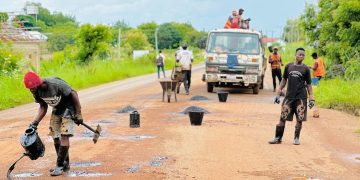







































Road construction under the government’s Big Push programme has emerged as the leading cause of fibre-optic network damage in Ghana, accounting for about 49 per cent of all fibre cuts recorded in the country, the Minister for Communication, Digital Technology and Innovations, Sam Nartey George, has said.


According to the Minister, the frequent damage to fibre infrastructure is disrupting telecommunications services while imposing significant repair costs on network operators, limiting the resources available for expanding coverage and improving connectivity.
Speaking at the Accountability Series on Monday, September 7, 2026, Mr George said Ghana had recorded 8,578 fibre cuts so far this year, with the cost of repairing the damage exceeding US$20 million.
He said the amount being spent on repairs could instead have been invested in the construction of new telecommunications sites and other infrastructure to improve network coverage.
“That’s money that without the fibre cut we could have used to build new sites,” he said, identifying road construction as the single largest source of fibre damage.
“The biggest source of fibre cuts is from the Big Push project because the Ministry of Roads is carrying out an aggressive project to construct roads across the country,” he added.
Rising fibre damage
The Minister said fibre cuts had remained a persistent challenge for Ghana’s telecommunications sector over the past several years.
He cited industry figures showing that the country recorded about 3,900 fibre cuts in 2021, more than 10,000 in 2022, over 6,000 in 2023 and more than 5,600 in 2024.
The number rose again to about 8,000 in 2025, while nearly 4,300 fibre cuts had already been recorded by the end of June 2026.
Mr George said the mid-year figure put Ghana on course to record close to 9,000 fibre-cut incidents by the end of 2026 if the current trend continued.
The damage to fibre infrastructure can result in disruptions to mobile and internet services and requires operators to undertake emergency repairs, potentially affecting the quality and reliability of telecommunications services.
Government targets 800 new sites
Despite the challenges, Mr George said government remained committed to expanding telecommunications infrastructure and improving connectivity across the country.
He disclosed that government had revised its target for new telecommunications sites from 50 in 2025 to 800 in 2026.
The Minister, however, stressed that protecting existing fibre infrastructure was essential to achieving the expansion target.
He said reducing avoidable fibre cuts would help ensure that funds earmarked for expanding telecommunications infrastructure were not continually diverted towards repairing damaged networks.
Mr George’s comments come as government intensifies road construction under the Big Push programme, highlighting the need for closer coordination between road contractors and telecommunications operators to protect critical underground infrastructure during construction works.
Source: www.kumasimail.com