
































The Ghana Police Service has warned that the increasingly international nature of organised crime requires law-enforcement agencies to deepen cross-border cooperation or risk giving criminals an advantage.


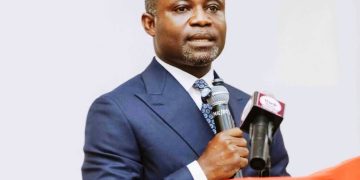
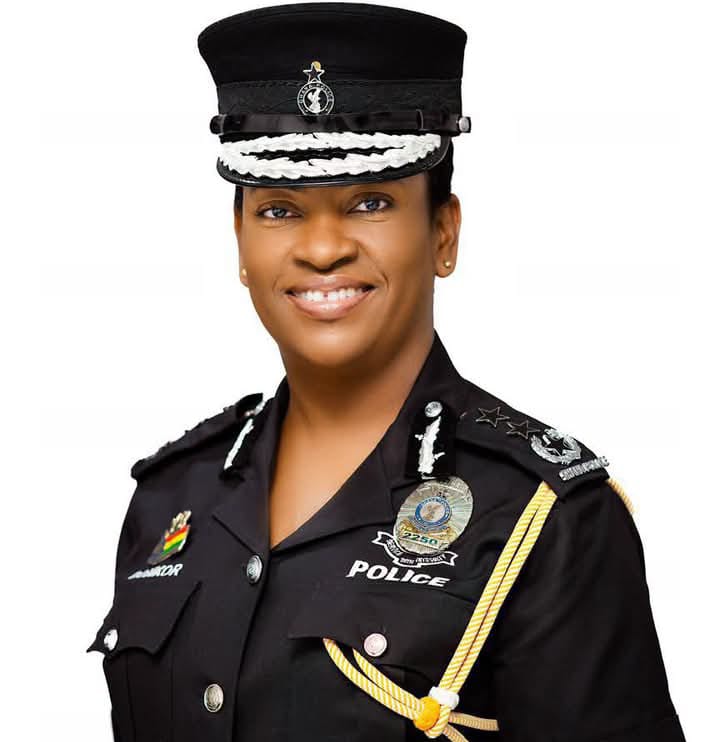
Director-General of the Criminal Investigations Department (CID), Commissioner of Police (COP) Lydia Yaako Donkor, said criminal networks were increasingly exploiting national borders to perpetrate cybercrime, human trafficking, vehicle-related crimes and firearms smuggling.
Speaking on Monday, September 7, 2026, to mark the United Nations International Day of Police Cooperation, COP Donkor said Ghana’s response to transnational crime must therefore go beyond domestic policing.
“As criminal networks become more international, police cooperation must become more global; and as criminals attempt to exploit borders, law enforcement must continue to build bridges across them,” she said.
“Our cooperation must not be limited by our borders.”
COP Donkor, who is also a member of the INTERPOL Africa Committee, said recent international operations had demonstrated the value of intelligence-sharing and coordinated policing in tackling crimes that cross jurisdictions.
Ghana, a member of INTERPOL since 1958, participated in Operation Contender 3.0, an INTERPOL-coordinated operation against romance scams and sextortion conducted simultaneously across 14 African countries in August 2025.
The operation resulted in the arrest of 68 suspects, the seizure of 835 electronic devices and the identification of 108 victims.
Investigations uncovered financial losses of about US$450,000, of which approximately US$70,000 was recovered.
Another INTERPOL operation, Operation Sentinel, conducted across 19 African countries between October and November 2025, helped Ghanaian investigators identify the ransomware used in an attack on a Ghanaian institution in which more than US$120,000 was stolen.
The operation also led to the recovery of nearly 30 terabytes of data and the arrest of the perpetrators.
COP Donkor said the figures represented more than successful police operations, stressing that they reflected real victims whose money, privacy, security and livelihoods had been threatened.
“These are not abstract statistics,” she said. “They represent businesses protected, savings recovered, digital infrastructure secured and criminal networks disrupted.”
She said the operations demonstrated how international cooperation could transform information gathered across jurisdictions into actionable intelligence.
“When properly used, information becomes intelligence; intelligence becomes action; and action can protect victims and recover their money,” she said.
The CID Director-General also pointed to the protection of vulnerable children as another critical benefit of international police cooperation.
She disclosed that collaboration between Ghanaian and Australian authorities in January 2026 resulted in the arrest of three suspects and the rescue of four Ghanaian children, aged between six and 13, from exploitation in the Ashanti and Bono Regions.
“What price do we place on restoring a child’s safety, dignity and future?” she asked.
“The value of rescuing a six-year-old child from exploitation is priceless. That is precisely why international police cooperation matters.”
COP Donkor said the growing sophistication and geographical reach of criminal networks demanded a corresponding strengthening of cooperation among police services worldwide.
She said the Ghana Police Service, through the CID and the INTERPOL National Central Bureau in Accra, would continue working with INTERPOL, African partners and other law-enforcement agencies to protect victims, disrupt criminal networks, recover criminal assets and pursue fugitives.
“When police services cooperate, criminals lose the advantage of borders,” she said.
“When information is shared, victims have a greater chance of being found. When investigators work together, criminals have fewer places to hide.”
COP Donkor said effective international cooperation must also be accompanied by professional, accountable and trusted policing, in line with the 2026 theme for the International Day of Police Cooperation: “Protecting Against Vulnerability; Building Trust and Legitimacy in Policing.”
“And when policing is professional, accountable and trusted, our communities become stronger,” she said.
Source: www.kumasimail.com