





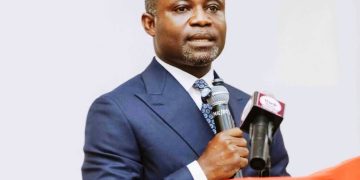


















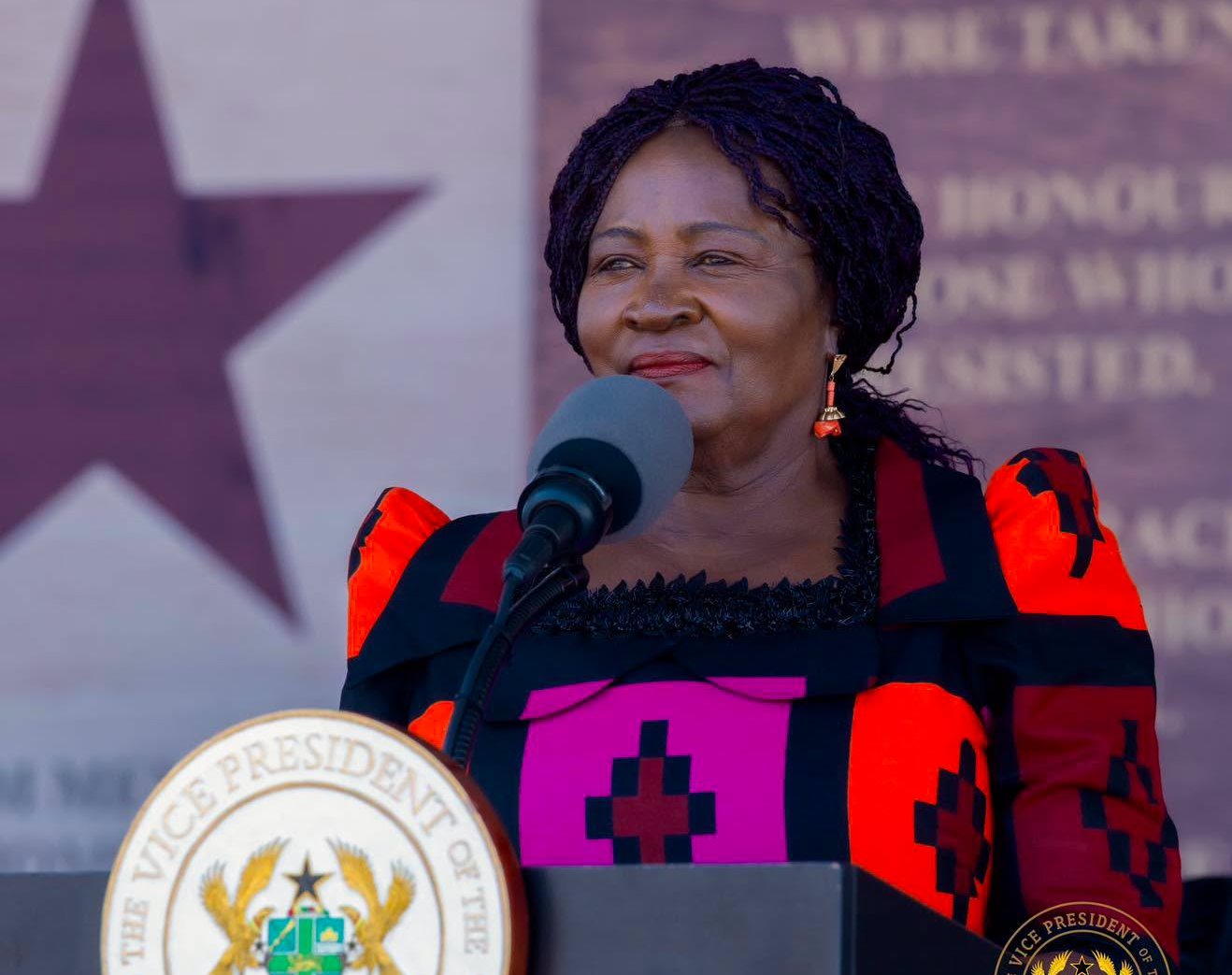
Vice President Jane Naana Opoku-Agyemang has renewed Ghana’s call for reparative justice for the transatlantic slave trade, arguing that centuries of injustice cannot simply be erased without meaningful conversations on accountability and repair.


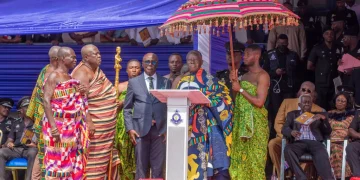
Speaking at a memorial event and public lecture at the Cape Coast Castle, she said the international recognition of the trafficking and enslavement of Africans as a grave crime against humanity should serve as a foundation for renewed efforts to address its enduring consequences.
According to the Vice President, while the past cannot be reversed, formal recognition of the scale of the injustice could help establish a basis for discussions on what should follow.
“Centuries of injustice cannot be reversed. But recognition can establish a shared understanding and provide a foundation for serious conversations about accountability, justice and next steps,” she said.
The Vice President said the transatlantic slave trade had consequences that went far beyond the loss of individual lives, destroying communities and inflicting social, cultural and economic damage whose effects continue to shape societies.
She said it was, therefore, important for Africans and the international community to confront the full history of the trade rather than reduce Africans to passive victims.
“We must also study and preserve the history of African resistance, resilience and agency,” she said, noting that communities across the continent, including those in present-day Ghana, resisted enslavement in various ways.
“They were never simply passive victims of history,” she added.
The Vice President said Ghana’s custodianship of major surviving sites linked to the transatlantic slave trade placed a special responsibility on the country to preserve and properly interpret them for present and future generations.
She said Ghana’s relationship with the African diaspora was consequently central to efforts to preserve the memory of the slave trade and strengthen historical and cultural ties between Africa and people of African descent across the world.

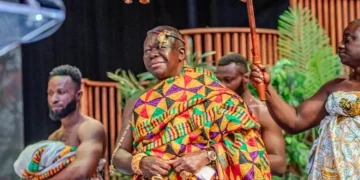
The memorial event, attended by traditional leaders including the Oguaamanhen, Osabarima Kwesi Atta II, the Overlord of Gonja, His Royal Majesty Jira Yagbonwura Bii-Kunuto Jewu Soale I, and the Ga Mantse, His Royal Majesty King Tackie Teiko Tsuru II, also featured the unveiling of a commemorative plaque at the Cape Coast Castle.
Vice President Opoku-Agyemang said the plaque should go beyond commemorating the past and become a reminder of Ghana’s responsibility to preserve historical truth, educate future generations and promote conversations on justice.
She said Ghana owed the past remembrance, but also owed future generations “an honest account of suffering, resistance, and consequences.”
The event follows Ghana’s leading role in efforts that culminated in the United Nations’ historic recognition of the transatlantic trafficking of enslaved Africans as the gravest crime against humanity.
The Vice President said that recognition should strengthen, rather than end, the international conversation on reparations, accountability and justice.
Source: www.kumasimail.com