




































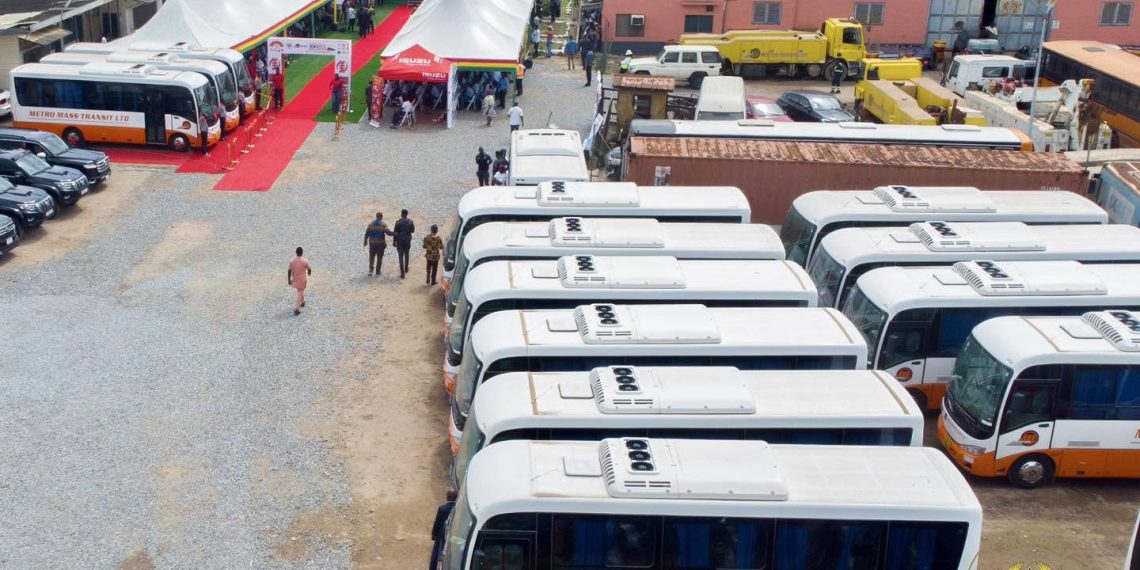
Metro Mass Transit Limited has moved to clarify the purpose of the 100 buses recently commissioned by the government, stating that the fleet is primarily designated for intercity transportation across Ghana rather than addressing commuter congestion in Accra alone.


The clarification follows public speculation that the new buses would help resolve persistent transportation challenges in the capital, where commuters continue to grapple with long waiting times, overcrowded vehicles, and rising transport costs, particularly during peak hours.
According to Metro Mass, the buses form part of a broader national strategy to strengthen public transportation services and expand the company’s operational capacity across multiple regions.
Speaking on the issue, Head of Corporate Communications Mohammed Mubarak Watara said the acquisition was aimed at repositioning and revitalising the state-owned transport operator through support from the Presidency and the Ministry of Transport.
“The buses didn’t come because of intracity operations. It was an arrangement made by the current executives as a way of resetting Metro Mass through the directive and support of the Presidency and the Ministry of Transport,” he explained.
Mr. Watara noted that Metro Mass was originally established to provide intercity transportation services, stressing that the company’s core mandate remains connecting cities and towns across the country.
He also sought to distinguish Metro Mass operations from the Aayalolo bus service, which many members of the public often associate with the company.
“People often mistake the operations of Aayalolo for Metro Mass. Aayalolo basically deals with intracity transport,” he said.
The explanation is expected to temper expectations among Accra residents who had hoped the new fleet would significantly reduce pressure on the city’s strained public transport system.
Metro Mass maintains that while some urban routes may benefit from improved fleet availability, the primary objective of the investment is to enhance intercity mobility and improve passenger transport services nationwide.
Source: www.kumasimail.com