




































Artificial intelligence projects developed by University of Ghana students could be tested and deployed on MTN Ghana’s network under a new partnership aimed at closing the gap between university research and the technology industry.


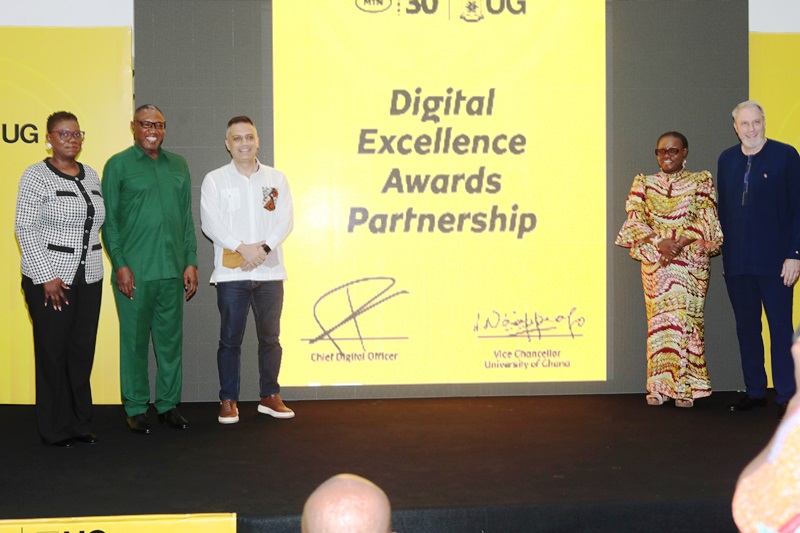
The agreement, formalised through a Memorandum of Understanding (MoU) between MTN Ghana and the University of Ghana (UG), will expose Computer Science students to real-world business and social problems through the Tɛkyɛrɛma Pa AI Hackathon and the MTN Ghana Digital Excellence Awards.
Unlike conventional university projects that often end with academic assessment, the partnership is expected to give selected student innovations a pathway to mentorship, incubation, piloting and, where viable, deployment.
MTN Ghana Chief Executive Officer, Stephen Blewett, said the partnership was intended to create a stronger connection between what students develop in the classroom and the needs of industry.
“Hackathons bring theory to practice,” he said, explaining that participants would be required to identify problems and develop practical solutions to them.
Mr Blewett said promising ideas should not end as final-year projects but should have opportunities to become products capable of serving users.
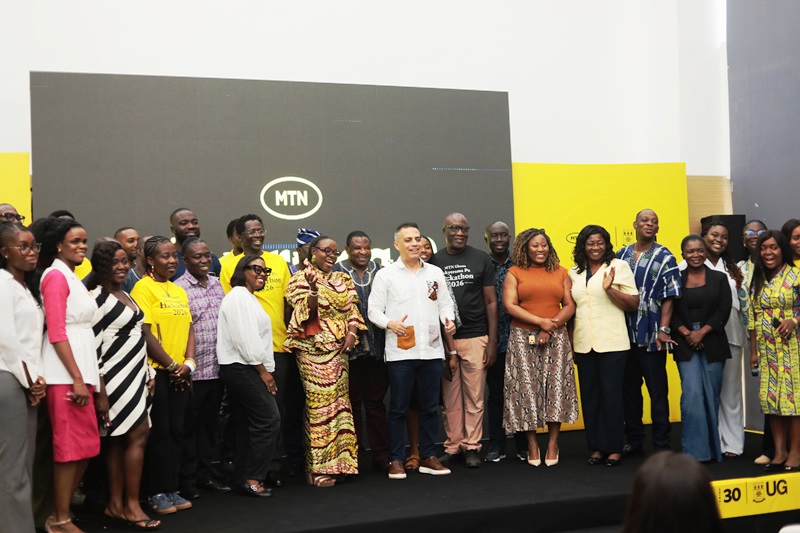
The AI hackathon will challenge students to develop solutions to problems affecting Ghanaians, with particular attention to underserved communities and users who may be excluded from mainstream technology because of language or accessibility barriers.
MTN Ghana’s Chief Digital Officer, Ibrahim Misto, said Ghanaian young people needed to play an active role in developing AI solutions rather than remaining users of technologies developed elsewhere.
He said the objective was to encourage students to develop solutions that respond to Ghanaian needs while having the potential to scale beyond the country.
The University of Ghana’s Vice Chancellor, Professor Nana Aba Appiah Amfo, said the partnership would expose students to aspects of technology development that could not be fully provided through classroom instruction.
She said the collaboration would create opportunities for internships, national service placements, industry visits, masterclasses, joint research and innovation challenges.
Prof. Amfo said the success of the partnership should ultimately be measured by tangible outcomes, including students gaining employment, research being completed and innovations reaching the market.
Deputy Minister for Education, Dr Clement Abas Apaak, also urged the partners to measure the initiative by its practical results rather than the signing ceremony.

He said stronger collaboration between universities, industry and government was necessary to ensure that graduates acquired skills relevant to the technologies and jobs shaping the economy.
Under the Digital Excellence Awards, outstanding students will be recognised in categories including Best Graduating Computer Science Student, Best Graduating Female Computer Science Student and Best Artificial Intelligence-related Project.
The initiative comes at a time when demand for AI and other digital skills is expanding, while Ghana continues to grapple with the challenge of translating academic training and research into commercially viable technologies.
The partnership, therefore, places particular emphasis on creating a pipeline through which student ideas can move from classroom projects to prototypes, testing and potentially real-world deployment.
Source: www.kumasimail.com