




























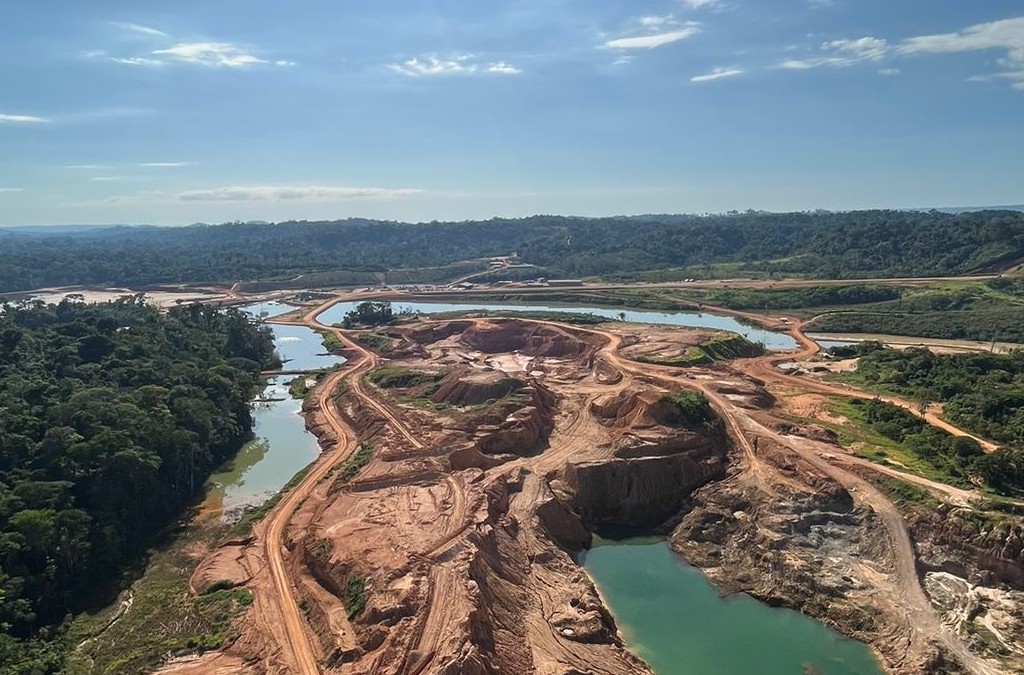
The scale of destruction caused by illegal mining in Ghana’s forest reserves is far greater than previously estimated, with about 8,900 hectares of forest reserve completely degraded, the Minister for Lands and Natural Resources, Emmanuel Armah-Kofi Buah, has disclosed.


The affected area, according to the Minister, is equivalent to about 12,500 football fields, underscoring the scale of the environmental damage confronting the country.
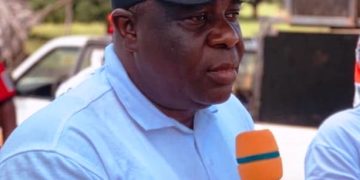
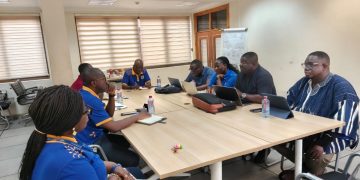
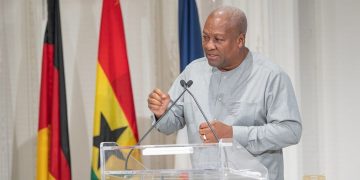
Kofi Buah made the disclosure during a strategic working visit and policy dialogue between the Ministry of Lands and Natural Resources and the IMANI Centre for Policy and Education in Accra.
The engagement was convened to examine the Ministry’s inherited baseline, performance, operational challenges and major policy initiatives in the fight against illegal mining and the broader management of Ghana’s natural resources.
According to the Minister, Ghana has 288 forest reserves, but illegal mining and other destructive activities have severely degraded several of them.
He said nine reserves were among those most severely affected, with the situation in some areas becoming so difficult that Forestry Commission personnel had struggled to gain access because of the presence of illegal miners, violence and weapons.
Kofi Buah said earlier assessments had understated the extent of the destruction because they were based on older data.
He described the updated assessment as a more accurate picture of the damage caused to the country’s forest estate.
Displaying images of devastated forest reserves during the presentation, the Minister said: “What you are looking at is not an earthquake. It is a forest reserve.”
He warned that restoring the degraded landscapes would require enormous financial resources.
258 arrested, hundreds of machines seized
The scale of the environmental destruction is matched by the extensive machinery being deployed in illegal mining operations.
Data from the Ministry, current as of July 2026, show that 258 suspects had been arrested, while 200 excavators had been seized and another 34 immobilised during operations in forest reserves.
The enforcement operations had also resulted in the seizure or immobilisation of 2,728 pumping machines and 1,724 changfan machines.
The figures further show that 144 tricycles and motorbikes had been seized, while another 128 had been immobilised.
A total of 801 structures had also been immobilised, alongside the seizure of 82 gold detectors.
The machinery figures provide an indication of the scale and organisation of illegal mining operations, which rely on excavators, pumping systems, changfans, transportation networks and other specialised equipment.
But while the enforcement figures suggest an intensification of operations, the Minister acknowledged that arresting suspects remains only one part of the problem.
“The challenge is prosecution”
Kofi Buah said the government’s biggest difficulty was now moving cases from arrest to successful prosecution.
“The challenge we are having is not the arrest. It is the prosecution.”
The Ministry is working with the Attorney General’s Department to address the problem, he said.
The July enforcement figures, however, did not provide a corresponding breakdown of how many of the 258 arrested suspects had been charged, prosecuted, convicted, acquitted or still had cases pending.
That gap leaves prosecution as one of the key measures by which the effectiveness of the government’s anti-illegal mining campaign will ultimately be judged.

The question is no longer simply how many people are arrested or how many machines are taken out of operation, but whether those enforcement actions result in convictions and disruption of the networks financing and organising illegal mining.
The changfan supply chain
The seizure and immobilisation of 1,724 changfan machines has also turned attention to the supply chain supporting illegal mining.
According to Kofi Buah, many of the machines are manufactured locally, with workshops producing them before they are transported to mining areas and water bodies.
The revelation broadens the anti-galamsey debate beyond miners operating at illegal sites.
It raises questions about the businesses manufacturing the equipment, those financing its production, the buyers and the networks transporting the machines to protected forests and mining areas.
The Ministry’s enforcement figures also show the extent to which water pumping systems have become embedded in illegal mining operations.
A total of 2,728 pumping machines had either been seized or immobilised by July.
The Minister identified the pollution of water bodies as one of the most serious consequences of illegal mining.
Government has consequently recruited and trained approximately 2,000 Blue Water Guards to provide community-based intelligence and first-response support around affected water bodies.
Kofi Buah acknowledged disciplinary challenges within the programme, including allegations that some guards had accepted bribes, but maintained that the initiative was generally producing useful results.
From arrests to environmental recovery
The latest figures provide a baseline against which Ghana’s anti-galamsey campaign can now be measured.
Government says 8,900 hectares of forest reserves have been completely degraded, while hundreds of machines and thousands of other pieces of equipment have been removed from illegal mining operations.
The more difficult test, however, will be whether the damaged forests can be reclaimed, whether polluted water bodies recover and whether the prosecution of suspects results in convictions.
For Ghana, the real measure of success may therefore lie beyond the number of arrests and seizures.
It will be whether the destruction of the country’s forests and water bodies can be reversed and whether the networks sustaining illegal mining can ultimately be dismantled.
Source: www.kumasimail.com