


































Deputy Minority Leader and Asokwa MP, Patricia Appiagyei, has rejected GH¢70,000 sent to her by the Majority Chief Whip, saying she cannot personally benefit from a parliamentary process in which the Minority Caucus has refused to participate.


Mrs Appiagyei said she was also uncomfortable accepting the money because she had not been informed about its source.
In a memorandum dated September 2 and addressed to Minority Chief Whip Frank Annoh-Dompreh, with Minority Leader Alexander Afenyo-Markin copied, she directed that the money be returned to the Majority Chief Whip.
She explained that her decision was based primarily on principle and a lack of clarity over the source of the funds.
“It is with regret that I return the amount of seventy thousand cedis (GH¢70,000.00) allocated to me as an advance of money from the Majority Chief Whip of Parliament of Ghana. I am returning the money on the basis of the fact that, primarily, I do not know the source of the money being given to me,” she stated.
Mrs Appiagyei said she was particularly unwilling to receive any financial benefit linked to the vetting of members of the governing side’s leadership, including Mahama Ayariga and Zanetor Agyemang Rawlings.
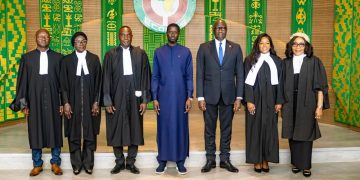
She also pointed to the Minority Caucus’ decision to boycott the vetting of three Supreme Court nominees — Justice Sophia Rosetta Oduokuwa Bernasko Essah, Justice Edward Amoako Asante and Justice Anthony Forson Jnr.
According to her, accepting the money would be inconsistent with the Caucus’ position on the process.
“It is also not my intention to extort any money from any of the above judges,” she added.
The Deputy Minority Leader reaffirmed her support for the Caucus’ position and said her decision was also consistent with that of Mr Afenyo-Markin, who had returned his share of the money.
Minority walks out of vetting
The Minority Caucus walked out of proceedings on August 27 during the vetting of the three Supreme Court nominees, citing what it described as an irregular procedure adopted by the leadership of Parliament’s Appointments Committee.
Before leaving the session, Mr Afenyo-Markin formally raised the Caucus’ objection to the procedure being used.
“The procedure that has been adopted is at variance with the orders of the House. How can you ask us to vet Supreme Court judges with three days’ notice?” he questioned.
His objection followed a lengthy exchange with the Chairman of the Appointments Committee, Bernard Ahiafor.
Mr Afenyo-Markin argued that established parliamentary practice required adequate notice before nominees were vetted.
“The standard practice is to give fourteen days’ notice, advertise in the newspapers before the vetting is done,” he said.
He subsequently cited concerns raised by former Minority Leader and current Finance Minister, Dr Cassiel Ato Forson, during an earlier instance involving the vetting of Supreme Court nominees after short notice had been given.
Addressing the nominees before the Minority members left the session, Mr Afenyo-Markin stressed that the Caucus’ objection was not directed at the nominees themselves but at the procedure adopted by the Appointments Committee.
“To the nominees, we are not against your nomination; we are against the procedure, and we cannot be part of this,” he said.
He then walked out of the session, followed by other Minority members of the committee.
Source: www.kumasimail.com