



























Ghana’s constitutional democracy rests on a simple but fundamental principle: institutions of state must remain within the boundaries of their constitutional mandates, particularly institutions whose legitimacy depends heavily on public confidence.


The Judiciary is one such institution. It is for this reason that I find the recent public conduct and pronouncements of the Chief Justice, His Lordship Justice Paul Baffoe-Bonnie, deeply troubling and deserving of serious national discussion.
My concern is not that the Chief Justice should be silent on the state of the nation or that he cannot recognise good performance wherever it occurs. My concern is the nature, context and political implication of the comments attributed to him, coupled with his recent tour of state-owned institutions and his reported expression of support for the success of the President’s agenda.
These developments raise a fundamental question: Can the head of an independent Judiciary publicly appear to take political sides and still expect every Ghanaian, regardless of political affiliation, to regard him as a neutral arbiter?
What exactly did the Chief Justice say?
This controversy did not arise from an invented statement. On Wednesday, September 2, 2026, the Chief Justice visited the Minerals Income Investment Fund (MIIF) in Accra as part of visits to state institutions. Earlier that day, he had visited the Social Security and National Insurance Trust (SSNIT). The visits have been reported as part of his institutional engagements.
At MIIF, the Chief Justice praised what he had seen at the institution and contrasted its current performance with the state of affairs over the preceding eight years.
He reportedly said: “Sometimes when we hear how well some state organisations are doing now, we wonder what we really have been doing in the past eight years.”
He went further to refer to information presented to him at SSNIT, including the institution’s previous consideration of disposing of some of its prized assets.
The Chief Justice said: “The kind of things that we heard and what we were told, if you compare that to the fact that not too long ago, SSNIT was preparing to sell its prized assets like Labadi Pleasure Beach, you wonder how Ghana could have sunk so low.”
These are not comments made at a private gathering. They were made during an official engagement at a state institution and have subsequently become a matter of public debate.
Nobody should pretend that Ghanaians cannot understand the political context of such language. The “past eight years” referenced by the Chief Justice substantially covers the period of the previous NPP administration.
Consequently, when the head of the Judiciary contrasts what he describes as the improved performance of state institutions under the current administration with what happened during the previous eight years, it is entirely reasonable for citizens to ask whether the comment amounts to a political assessment.
This is especially important because the Chief Justice is not an ordinary citizen, a political commentator or a government communicator. He is the head of Ghana’s Judiciary.
The Chief Justice is not the President’s policy monitor
There is another aspect of this matter that deserves careful consideration: the Chief Justice’s reported tour of state-owned institutions.
Let me be clear. I am not arguing that the Chief Justice is constitutionally forbidden from paying a courtesy call on a public institution. Nor does the Constitution expressly state that he cannot visit a state-owned enterprise.
The issue is one of constitutional role, institutional boundaries and perception. Article 125(4) of the 1992 Constitution provides that: “The Chief Justice shall, subject to this Constitution, be the Head of the Judiciary and shall be responsible for the administration and supervision of the Judiciary.”
That provision is significant.The Chief Justice has an enormous constitutional responsibility: to administer and supervise the Judiciary.
His responsibility includes ensuring that Ghana’s courts function effectively, that justice is accessible, that judicial officers are properly supported and that the Judiciary remains independent and worthy of public confidence.
It does not make the Chief Justice a Monitoring and Evaluation officer for the Executive. It does not make him an inspector of state-owned enterprises. It does not make him responsible for assessing whether government ministries, departments, agencies or state-owned enterprises are performing better than they did under a previous administration.
Those are matters principally belonging to the Executive, Parliament, their oversight institutions and the appropriate public accountability mechanisms.
Indeed, Article 127(1) reinforces the constitutional separation by providing that the Judiciary, in both its judicial and administrative functions, is subject only to the Constitution and is not to be subject to the control or direction of any person or authority.
The constitutional architecture therefore requires distance between the Judiciary and the political branches of government.
That distance is not hostility. It is independence.
Independence must also be seen to exist
Some may argue that the Chief Justice’s visits to SSNIT and MIIF were merely institutional engagements and that his comments were simply expressions of admiration for good management.
That argument cannot completely settle the issue.
Judicial independence is not only about whether a judge can honestly say he is independent.
It is also about whether the conduct of the institution creates a reasonable perception of independence.
The Judiciary must not only be independent; it must be seen to be independent.
When the head of the Judiciary visits state institutions controlled by the Executive, praises their performance, contrasts that performance with the previous administration and is simultaneously reported to have pledged that everything must be done to ensure the success of the President’s agenda, questions about neutrality become inevitable.
The NPP has specifically raised concern about the reported declaration that everything must be done to ensure that the President’s agenda succeeds. The party has asked a simple question: Which agenda?
This question is important because President John Dramani Mahama’s administration has an explicit political and governmental programme, including the Operation Recover All Loot (ORAL) initiative. Individuals associated with the previous administration have faced investigations and legal proceedings connected to matters arising from the government’s accountability agenda.
If cases arising from such initiatives eventually come before the courts, how should an accused person perceive the neutrality of the head of the Judiciary if he has publicly expressed a commitment to ensuring the success of the President’s agenda?
That is not a trivial question.
It goes to the heart of public confidence in justice.
The Judiciary cannot become an extension of the Executive
The Constitution is unambiguous that judicial power belongs to the Judiciary.
Article 125(1) states that justice shall be administered by an independent Judiciary subject only to the Constitution. Article 125(3) further makes clear that neither the President nor Parliament, nor any organ or agency of either, should possess final judicial power.
This constitutional arrangement exists precisely because the Judiciary must sometimes make decisions against the Executive.
A government may be a party to a case.
A government agency may be sued.
A minister may become a defendant.
A politically connected person may appear before a court.
An opposition politician may challenge government action.
In all such circumstances, the person sitting at the head of the Judiciary must be capable of commanding the confidence of both sides.
That confidence is easily weakened when the Chief Justice himself appears to be evaluating the political and economic performance of one administration against another.
The question is not whether the current government is performing well.
The question is who should be saying so from the head of the Judiciary.
Constitutional neutrality is bigger than party politics
I am making this argument not merely as the Ashanti Regional Secretary of the NPP, but as a Ghanaian who believes that our constitutional institutions must survive whichever political party is in power.
Today it may be the NDC in government.
Tomorrow it could be the NPP or another political party.
The principle must remain the same.
If we permit the head of the Judiciary to publicly champion the achievements of one government against another, we would have established a dangerous precedent that could eventually be used by another Chief Justice under another administration.
That is why this issue should not be reduced to an NPP-versus-NDC argument.
The Judiciary belongs to Ghana.
It does not belong to President Mahama.
It does not belong to the NDC.
It does not belong to the NPP.
It does not even belong to the Chief Justice.
It belongs to the Ghanaian people.
There are more urgent responsibilities within the Judiciary
There is also a practical dimension to this matter.
Across the country, citizens continue to complain about delays in the administration of justice. Court infrastructure remains a concern in several locations. Registries require strengthening, judicial staff need better working conditions, and litigants continue to wait for justice in cases that sometimes take years to conclude.
The Chief Justice himself has acknowledged challenges confronting justice delivery. In January 2026, during a courtesy call on the Finance Minister, he identified congestion in the courts as a major impediment to effective justice delivery and raised concerns about working conditions within the Judiciary.
These are precisely the issues that should command the attention of the head of the Judiciary.
If the Judiciary needs resources, let the Chief Justice engage Parliament and the Executive through the appropriate constitutional and administrative channels.
If courts require rehabilitation, let him lead the campaign for modern court infrastructure.
If registries are overwhelmed, let him demand reforms.
If justice is delayed, let him make reducing delays the defining institutional priority of his tenure.
But the Chief Justice should not appear to have become a political assessor of the performance of government institutions.
That is where the constitutional and institutional concern arises.
The Chief Justice must understand the symbolism of his office
The office of Chief Justice carries enormous symbolic authority.
Every word spoken by the occupant of that office is scrutinised differently from the words of an ordinary public official.
When a politician praises a government, nobody is surprised.
When a government appointee defends an administration, nobody is surprised.
When an opposition politician criticises a government, nobody is surprised.
But when the head of the Judiciary appears to praise one administration while questioning what the country was doing under the previous administration, citizens are entitled to ask whether the occupant of that office appreciates the political implications of his words.
Judges do not have to be politically naive.
They have to be politically neutral.
There is a profound difference.
My appeal to the Chief Justice
I therefore respectfully call on the Chief Justice to clarify his recent comments.
If his remarks were intended purely as an assessment of institutional performance, he should say so clearly and remove any ambiguity.
If his reported commitment to ensuring the success of the President’s agenda has been misunderstood, he should clarify precisely what he meant.
And if he genuinely believes that his role requires him to actively support the agenda of the sitting President, then we have a much bigger constitutional question to confront.
The Chief Justice’s first loyalty must be to the 1992 Constitution.
Article 127 requires an independent Judiciary, while Article 125 places the administration and supervision of that Judiciary under the Chief Justice.
That is the mandate.
Not the NDC’s agenda.
Not the NPP’s agenda.
Not the President’s agenda.
The Constitution.
A choice must ultimately be made
I do not make this call lightly.
But public confidence in the Judiciary is too important to be sacrificed at the altar of political convenience.
If the Chief Justice wishes to remain head of an independent Judiciary, then he must demonstrate, in his words and conduct, that he is above partisan politics.
He must avoid conduct that creates the perception that he is an ally, advocate or political cheerleader of the government of the day.
He must allow the Judiciary to speak through its judgments, its reforms and its constitutional responsibilities.
But if he has decided that political advocacy is the path he wishes to pursue, then the honourable course would be to leave the Bench and enter partisan politics openly.
A Chief Justice cannot be both the neutral umpire and a political player.
Ghana deserves a Judiciary that inspires confidence among NDC supporters, NPP supporters and every citizen who belongs to neither party.
The ordinary Ghanaian who walks into a courtroom must know that the judge before whom he or she appears owes allegiance to the Constitution and the law—not to the Presidency, not to a political party and not to a government programme.
That is the Judiciary I want to defend.
That is the Judiciary Ghana deserves.
And that is why I believe the Chief Justice must make his position clear: remain above partisan politics and protect the independence of the Judiciary, or leave the Bench and pursue partisan politics openly.
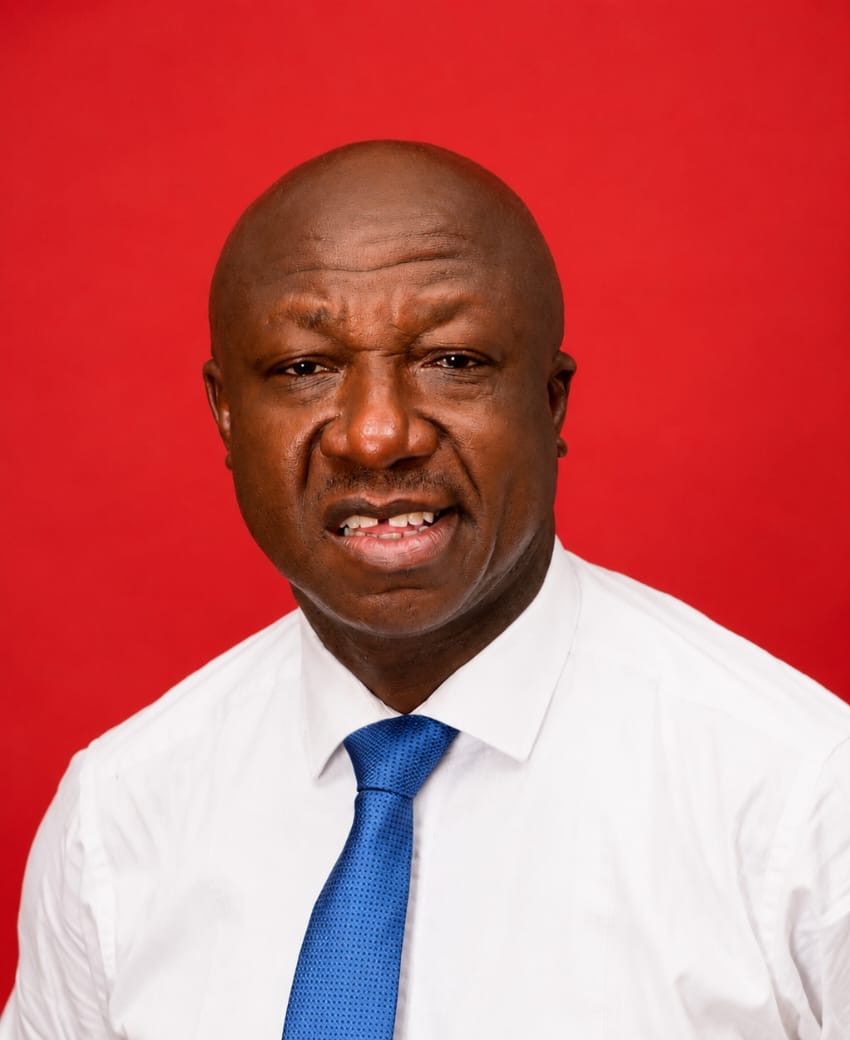
By Dr. Francis Adomako, Ashanti Regional Secretary, New Patriotic Party (NPP)