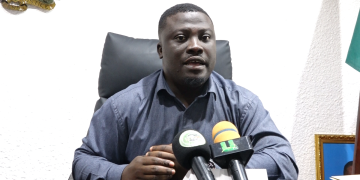



























Upper East Regional Minister, Hon. Akamugri Donatus Atanga, has called for the establishment of a gold refinery in the region and reforms to Ghana’s mining laws to ensure resource-rich communities benefit more directly from the country’s mineral wealth.


The minister said the Upper East Region, which he indicated has mineral deposits across as many as 11 districts, could become a major mining and industrial hub if gold extracted locally were also refined within the region.
“If we mine the gold here and refine it here, it will make the region the hub of industrialisation in the country,” he said.
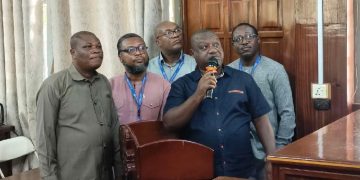
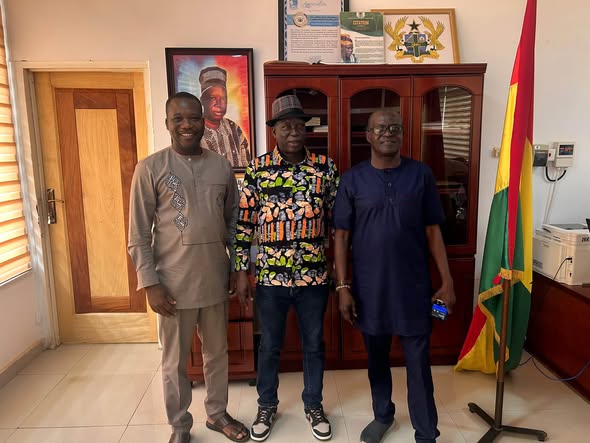
Hon. Atanga made the call during a meeting with the Integrated Social Development Centre (ISODEC), a civil society organisation seeking to strengthen its collaboration with the Upper East Regional Coordinating Council (RCC).
He argued that despite the billions of cedis generated by Ghana’s mining industry, communities where minerals are extracted continue to receive inadequate benefits from the resources beneath their land.
The minister wants a portion of mining revenue to be ring-fenced for development in host communities, arguing that the extraction of valuable natural resources must translate into tangible improvements in the lives of local people.
ISODEC tasked to push mining law reforms
Hon. Atanga tasked ISODEC, which has experience in mining advocacy and policy engagement, to review Ghana’s existing mineral laws, identify gaps and recommend reforms that would guarantee communities a greater share of the benefits from mining.
He said the process should bring together Members of Parliament from the region, traditional authorities, political actors and other relevant stakeholders to develop a common position on the issue.
The minister proposed that the engagement begin with the region’s MPs to secure their backing and strengthen efforts to advance the concerns of mining communities at the national level.
The proposed reforms would seek to address what he considers an imbalance between the wealth generated from mineral extraction and the development outcomes experienced by communities where mining takes place.
A gold refinery in the region, he argued, would complement such reforms by creating opportunities to process minerals locally rather than allowing the region to remain primarily a source of raw resources.
Gold refinery seen as industrialisation opportunity
The minister’s proposal places local mineral processing at the centre of his broader vision to transform the Upper East Region’s economy.
Beyond the direct benefits of refining gold, such an investment could create opportunities for employment, technical skills development, supporting businesses and other industrial activities.
Hon. Atanga said the region’s mineral deposits, combined with its agricultural potential, provided a foundation for building a stronger local economy.
However, turning the proposal into reality would require investment, technical capacity and a clear framework for developing and operating the proposed refinery.
No investment commitment, project cost or implementation timeline for the refinery was announced during the meeting.
Mining communities must have a voice
Hon. Atanga also stressed the need for stronger engagement between mining companies and host communities, warning that inadequate communication could fuel conflict and misinformation around mining activities.
He said involving communities and relevant stakeholders in decisions affecting mineral extraction was important to ensuring that mining activities contributed to sustainable development.
The minister urged ISODEC to help develop practical interventions that would improve local participation in the mining sector while strengthening accountability over the benefits derived from mineral resources.
ISODEC pledges support for regional development
The meeting also explored areas of collaboration between ISODEC and the RCC under the Prosperity through Enterprise, Agriculture, Resilience and Livelihoods (PEARL) framework.

Hon. Atanga said the framework’s focus on creating local economic opportunities aligned with ISODEC’s interest in promoting alternative economic models and improving livelihoods.
He welcomed the organisation’s participation in the PEARL programme and its plans to establish a stronger presence in northern Ghana, adding that the RCC was prepared to work with the organisation to unlock the region’s economic potential.
ISODEC Executive Director, Sam Danse, pledged the organisation’s support for PEARL, saying it would serve as a strong advocate for the programme in Accra.
He said ISODEC, which has operated since 1987, would continue to use research, advocacy and policy engagement to promote development and ensure that communities benefited more from Ghana’s natural resources.
The proposed gold refinery and mining revenue reforms now place the spotlight on how the region can move beyond mineral extraction to local value addition, stronger community benefits and broader industrial development.
Source: www.kumasimail.com