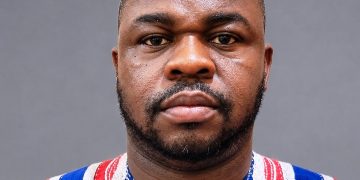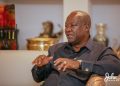
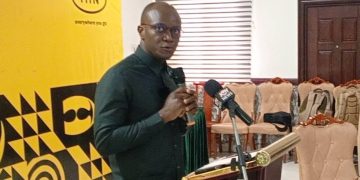



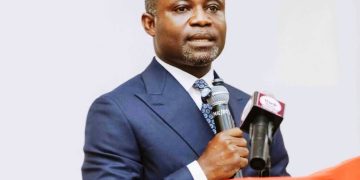


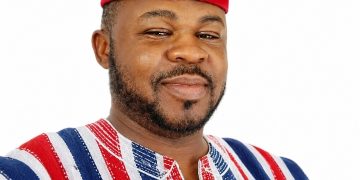
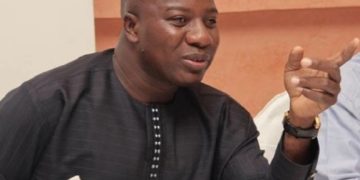


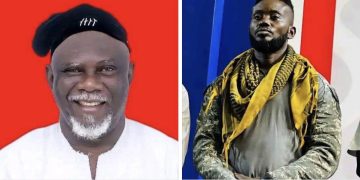
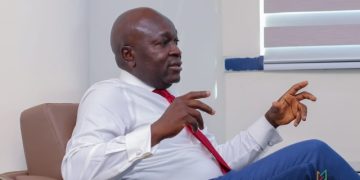

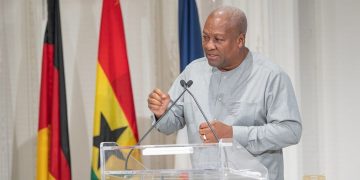


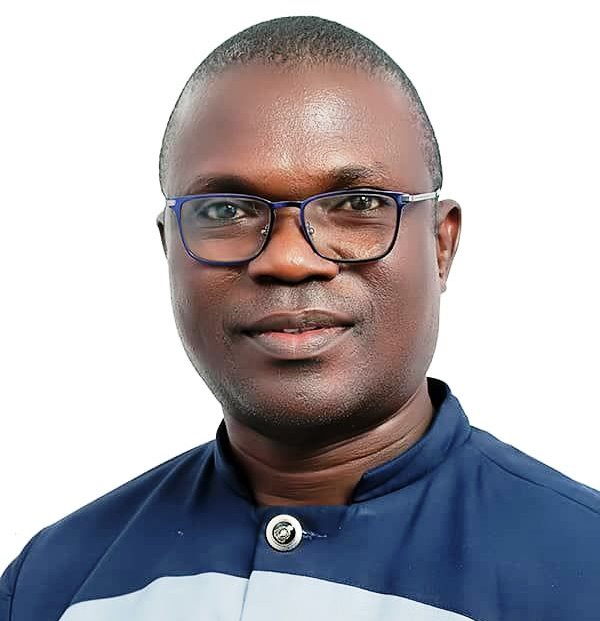
NPP parliamentary aspirant for Nandom, Hon. Alois K.K. Mohl, has sought to draw a sharp distinction between his campaign and what he described as the growing influence of money in parliamentary contests, insisting that his greatest political asset is his network of relationships and goodwill rather than financial muscle.


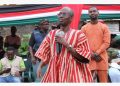
Mr Mohl, who formally declared his intention to contest the NPP parliamentary primaries in Nandom on Thursday, said the party should not allow parliamentary contests to become a competition over who can spend the most money.
“My wealth is not paper money or hard currency wealth. My wealth is social capital. That is the kind of wealth Nandom needs, so that they can be assisted to grow their own wealth,” he said.
He argued that political leadership should be measured by the ability to create opportunities for people rather than the amount of money a candidate can distribute to delegates.
According to him, the increasing perception that only wealthy people can win parliamentary nominations risks allowing individuals with money but little commitment to the party’s principles to hijack the political process.
Mr Mohl said his own record of support to party members and constituents stretched back decades and was not driven by his current parliamentary ambition.
His political profile claims that since 2019 he has distributed Christmas hampers containing rice, cooking oil and money to polling station executives, electoral area coordinators, constituency executives, elders, patrons and selected vulnerable people across Nandom.
It also lists support ranging from school fees and medical bills to tractor services, farm inputs, petty trading and livelihood assistance, vocational training, rent, land purchases, bicycles, motorbikes and repairs.
The profile further claims that he donated 1,300 branded T-shirts and GH¢20,000 to support the Nandom NPP campaign in 2020, adopted 10 polling stations for financial support during the 2016 elections and supported constituency executives financially between 2011 and 2015.
Mr Mohl also claims to have contributed to the construction of a volleyball court in Nandom, donated football jerseys and footballs to youth groups, and supported the NPP’s Upper West Regional office with air-conditioners and furniture for the regional youth office.
He said his support had also extended to securing employment opportunities for constituents through his national connections.
According to his declaration, he has helped constituents secure jobs in the Local Government Service, Ghana Revenue Authority, Audit Service, Ghana Water Limited and security services, while also assisting some workers with challenges involving promotions, transfers, salaries and disciplinary matters.
Mr Mohl said he intended to turn those networks into an asset for Nandom if elected.
“I am connected nationally and internationally,” he said, adding that his networks were “so rich” that Nandom would benefit from them.
His professional background forms a major part of that argument.
Mr Mohl has worked in Ghana’s public service for more than 30 years, rising to the position of Director and serving in several national programmes and specialised desks. He was later appointed Deputy CEO of the Social Investment Fund, where he says he helped secure development projects for Nandom.
He holds an MBA in Human Resource Management, an MSc in Defence and International Politics, an LLB and a BA in Political Science with Sociology, in addition to a Certificate in Social Work.
His professional profile also lists international training in child protection, non-profit management, international adoptions, child labour reporting and care reforms in Israel, the United Kingdom, the United States, Italy, Ethiopia and South Africa.
Politically, he says his experience across NPP structures from constituency to national level has given him direct relationships with senior party figures and access to networks that could be deployed for the constituency.
Mr Mohl therefore urged NPP delegates to choose a candidate on the basis of capacity, connections, loyalty and the ability to create opportunities, rather than the size of his campaign purse.
“The contest is not about who has more money, but who can create opportunities,” he said.
Source: www.kumasimail.com