



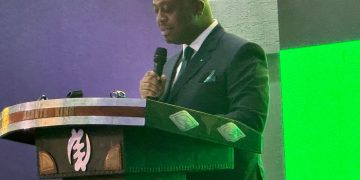










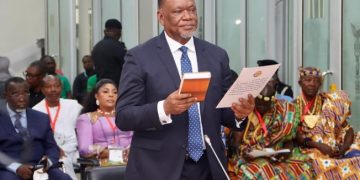





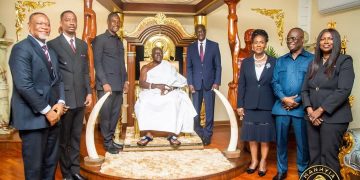
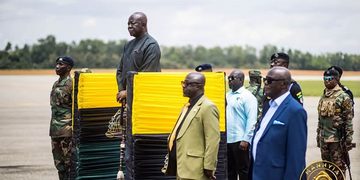

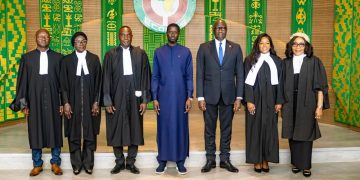


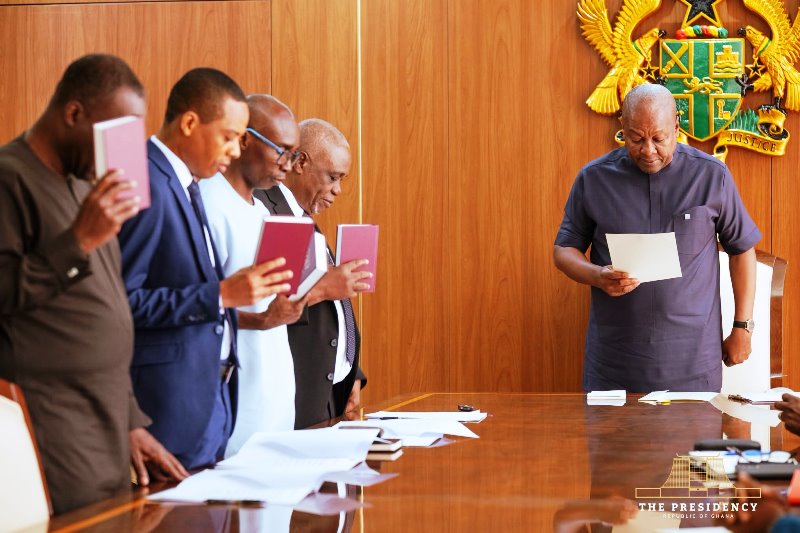
President John Dramani Mahama has sworn in a five-member Independent Fiscal Council, giving a new statutory body responsibility for scrutinising government’s fiscal decisions and helping enforce tighter discipline in the management of public finances.


The Council, established under the Public Financial Management (Amendment) Act, 2025 (Act 1136), is expected to provide independent and objective oversight of Ghana’s fiscal policy, monitor compliance with fiscal rules and assess the sustainability of government borrowing and expenditure.
The inauguration took place at the Presidency on Tuesday, September 8, 2026, against the backdrop of ongoing efforts to strengthen Ghana’s public finances, restore investor confidence and maintain macroeconomic stability.
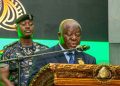
President Mahama said the Council’s work would be critical to the success of the government’s economic reforms, stressing that fiscal responsibility should go beyond compliance with legislation.
“Fiscal responsibility must not be regarded merely as a statutory requirement. It is a moral obligation to present and future generations,” he said.
He charged the members to scrutinise government’s fiscal decisions, assess compliance with established rules and provide recommendations based on evidence and the national interest.
“Your work must be guided by evidence and the national interest, without fear, favour, or political consideration,” President Mahama said.
A statutory fiscal check
The Independent Fiscal Council represents a significant change in Ghana’s fiscal-governance architecture.
Act 1136 amended the Public Financial Management Act, 2016 (Act 921) to establish an independent Fiscal Council aimed at promoting budget credibility, macroeconomic stability and fiscal and debt sustainability.
Unlike an advisory arrangement created solely by executive decision, the new Council derives its mandate from legislation. Its functions include advising on fiscal policy and providing Parliament’s budget committee with an assessment of government’s adherence to key fiscal rules. The Council is also required to engage the media at least twice a year to communicate its findings and recommendations to the public.
The Council is therefore expected to serve as an additional institutional check on government’s management of public resources, particularly at a time when fiscal credibility and debt sustainability remain central to Ghana’s economic recovery.
Act 1136 also introduced tighter fiscal rules, including a primary-balance requirement and a public-debt rule aimed at bringing debt to 45 per cent of GDP by 2034.
Board brings mix of economic expertise
The composition of the five-member Council is designed to bring together expertise from financial markets, central banking, academia, research and public policy.
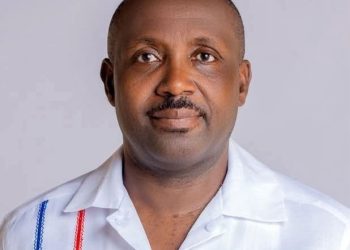
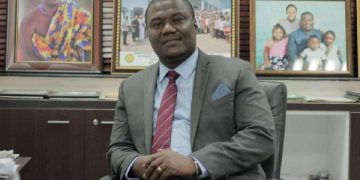
It is chaired by Dr Emmanuel Oteng Kumah, an international economic consultant and former Board Chairman of Standard Chartered Bank Ghana.
The other members are Dr Henry Akpenamawu Kofi Wampah, former Governor of the Bank of Ghana; Professor Patrick Opoku Asuming of the University of Ghana Business School; Leslie Dwight Mensah, representing the think-tank community; and J. Kweku Bedu-Addo, a former public policy expert at the Ministry of Finance.
The composition is significant because the Council’s mandate requires more than political oversight. It must assess fiscal policy using economic evidence, monitor compliance with fiscal rules and provide credible assessments of government’s financial decisions.

The presence of a former central bank governor gives the Council experience in monetary and financial-sector policy, while the academic and think-tank representation provides research and analytical perspectives. The experience of members with financial-market and government policy backgrounds further broadens the Council’s understanding of public finance and economic management.
Four year mandate
The Council will serve a four-year term and is expected to operate independently in carrying out its statutory functions.
President Mahama pledged that his administration would respect the Council’s independence and provide the institutional support needed for it to perform its functions effectively.
That independence will be particularly important because the Council’s effectiveness will depend not only on its ability to produce fiscal assessments, but also on whether its findings can withstand political pressure and influence government and parliamentary decisions.
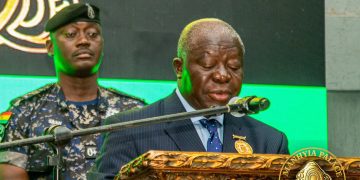
Speaking on behalf of the Council, Dr Wampah assured the President that the members would faithfully discharge the responsibilities assigned to them under the law.
The inauguration marks the operationalisation of a key element of Ghana’s revised fiscal-governance framework, with the Council now positioned to scrutinise government’s financial decisions and provide an independent assessment of whether the country is staying within the fiscal limits established by law.
Source: www.kumasimail.com