















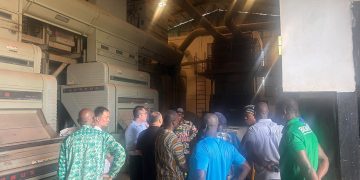

























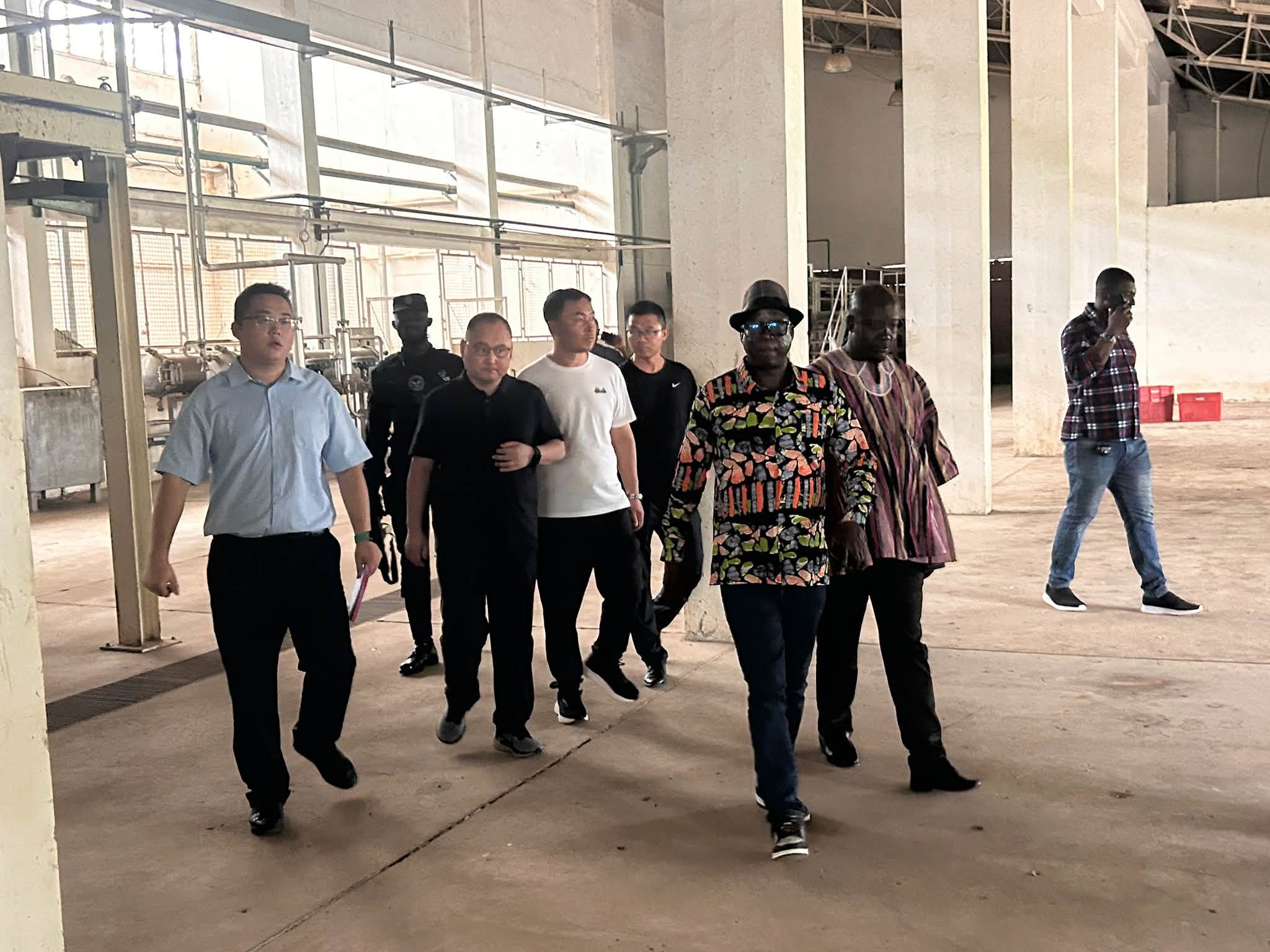
Chinese investors from Hanway International Investment Ltd have inspected the dormant Pwalugu Tomato Factory as the government steps up efforts to revive the facility and position it as a major agro-processing hub.


The delegation, led by the company’s Chief Executive Officer, Cui Yongzhi, toured the factory in the Talensi District on Friday, October 9, 2026, alongside Upper East Regional Minister, Hon. Akamugri Donatus Atanga, to assess the facility and explore investment opportunities.
The factory has remained idle since 2013, leaving its production capacity untapped despite the region’s agricultural potential.
The proposed investment could pave the way for the restoration of tomato processing at Pwalugu, with the government pushing for the establishment of a canning facility on-site to eliminate the need to transport processed tomato paste to Tema for packaging.
Addressing the investors during the tour, Hon. Atanga said the government wanted a revived factory to operate a complete production chain, from processing to packaging, to improve efficiency, extend product shelf life and open up export opportunities.
Under the previous arrangement, tomato paste produced at the facility was packaged in drums and transported to Tema for canning.
The minister said bringing the canning process to Pwalugu would reduce logistical demands and enable the factory to supply both the domestic and international markets more efficiently.
Government targets year-round production
Beyond reviving tomato processing, the government wants the facility to diversify into other agricultural products to sustain operations throughout the year.
Hon. Atanga identified onions, pepper, garden eggs, beans and dawadawa jam as potential products that could be processed at the factory, reducing its dependence on seasonal tomato supplies.
He said the revival plan must also address productivity at the farm level by improving crop yields and quality.
“The government wants to improve on the first step. That is improving the quantities, and the quality of production,” he said, adding that the goal was to enable farmers to produce more from the same acreage.
As part of the tour, the minister led the delegation to agricultural lands along both sides of the White Volta to assess their potential for tomato cultivation.
The availability of reliable raw materials is expected to be a key consideration for any investment decision, as the factory would require a consistent supply of tomatoes and other crops to operate sustainably.
Regional export market in focus
The government is also positioning the proposed factory to serve markets beyond Ghana, particularly in neighbouring countries.
Hon. Atanga cited Pwalugu’s proximity to Burkina Faso, Togo and Mali as an advantage that could support cross-border trade in processed agricultural products.
He argued that canning at the production site would help preserve products for longer periods, reduce the risk of spoilage associated with prolonged storage and improve their readiness for distribution.
The minister said the factory could help create a dependable market for farmers while opening opportunities for exports across the sub-region.
However, the potential benefits would depend on the successful rehabilitation of the facility, sustained agricultural production and the establishment of viable distribution channels.
Government promises institutional market
In a further pitch to the investors, Hon. Atanga proposed that government-supported institutions, including schools and hospitals operating feeding programmes, could provide a ready market for products manufactured at the factory.
He said the government was interested in using local production to reduce Ghana’s reliance on imported tomato products.
The proposed arrangement would support an import-substitution strategy aimed at strengthening domestic agro-processing, creating markets for local farmers and retaining more value within the economy.
The minister also raised the possibility of tax relief on machinery and equipment required to rehabilitate the factory.
He said he would engage the government on the proposed relief once the company identified the equipment needed for the project.

“So the machines, all that you are going to bring here, let us know. We are bringing them to reform the public tomato factory in Upper East,” he told the investors.
He added that he would advocate for tax waivers to ease the cost of bringing the equipment into the country.
Investment decision yet to be announced
Although the inspection marks a step towards exploring the factory’s revival, no final investment commitment, rehabilitation timeline or production restart date was announced during the tour.
The potential partnership would need to translate into a concrete investment plan covering the cost of rehabilitation, installation of canning equipment, supply of raw materials and access to markets.
For farmers in the Upper East Region, a successful revival could restore a major outlet for their produce, reduce post-harvest losses and create jobs across farming, processing, packaging and distribution.
The immediate question, however, is whether the discussions with Hanway International Investment Ltd will result in the investment required to bring the factory back into production after more than a decade of inactivity.
Source: www.kumasimail.com