













“THE SACRILEGE OF APPOINTING POLITICALLY PARTISAN PERSONS TO THE ELECTORAL COMMISSION”


Since the inception of the Fourth Republic on 7th January 1993, Ghana’s democratic experiment has been presented to the world as a beacon of political stability in Africa. The peaceful transfer of power on three occasions – 2001, 2009, and 2017 – is celebrated as evidence of democratic maturity.
Yet beneath this veneer of stability lies a more sobering reality: the consolidation of a political duopoly that has, with remarkable consistency, subordinated the collective interest of the Ghanaian people to parochial, self-serving, and clientelist considerations.
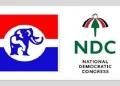
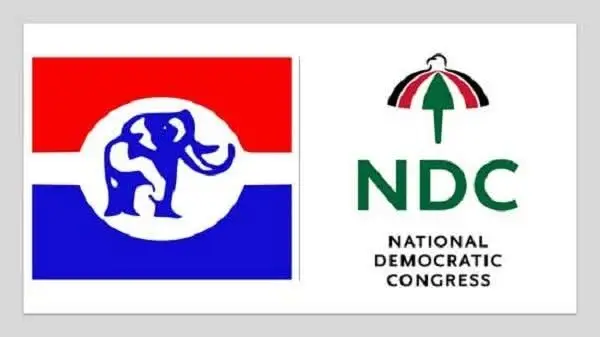
The New Patriotic Party (NPP) and the National Democratic Congress (NDC), the two dominant parties that have governed the state since 1992, have perfected the art of political alternation without genuine transformation. The goal posts are not moved to advance the nation; they are shifted to perpetuate the interests of the political class.
- THE ECONOMY OF PROMISES AND THE POLITICS OF AMNESIA
The most visible manifestation of this disdain for the masses is the cyclical economy of extravagant promises.
Every four years, both parties unveil manifestos replete with grandiose, populist pledges that border on the fantastical, fully aware of the structural constraints of the Ghanaian economy. The NDC and NPP have both promised to transform Ghana into a paradise of jobs, affordable housing, industrialization, and incorruptible governance, only to preside over the familiar cycle of fiscal indiscipline, unsustainable borrowing, and eventual recourse to the International Monetary Fund.
The electorate has witnessed this ritual repeatedly:
Under both administrations, election years are characterized by massive, unbudgeted expenditure, the award of dubious contracts, the bloating of the public payroll, and the depletion of reserves. This is followed by a period of austerity, tax hikes, utility tariff increases, and the inevitable invocation of “the mess we inherited.”
The Ghanaian voter is thus treated not as a citizen to be empowered, but as a consumer to be manipulated – to be seduced with largesse before an election and disciplined with hardship after it.
The management of the nation’s debt is instructive. From a debt stock of less than 100 billion under the watch of both parties. Each accuses the other of reckless borrowing, yet each, when in power, engages in the same pattern of Eurobond issuances, collateralization of future revenues, and opaque loan agreements. The masses bear the brunt through inflation, cedi depreciation, and a crushing cost of living, while the political elite remains insulated.
- THE INSTITUTIONALIZATION OF WINNER-TAKES-ALL AND CLIENTELISM
The 1992 Constitution envisaged a system of inclusive governance. What the NPP and NDC have institutionalized is a rapacious winner-takes-all system.
Upon assuming office, the new government embarks on a wholesale purge of the public service. From Chief Executives of Metropolitan, Municipal and District Assemblies to heads of state-owned enterprises, ambassadors, board members, and even low-level public servants, appointments are made almost exclusively on the basis of partisan affiliation. Meritocracy is sacrificed on the altar of party loyalty.
This creates a precarious political economy where survival depends on proximity to power. The ordinary Ghanaian youth, educated and competent, quickly learns that employability is not a function of qualification but of a party card. The parties have thus taken the aspirations of an entire generation for granted, transforming the state into an employment bureau for party foot-soldiers.
Furthermore, the politicization of developmental projects has become entrenched. A road, a school block, or a hospital initiated by one administration is deliberately stalled, abandoned, or rebranded by the successor government. Continuity, which is the essence of statecraft, is sacrificed for partisan point-scoring. The people of a community are denied a hospital not because the state lacks resources, but because its completion would confer political credit on the opponent.
- THE DEPOLITICIZATION OF CORRUPTION AND THE THEATRE OF ACCOUNTABILITY
Perhaps the most profound betrayal is in the realm of accountability.
Both the NPP and NDC have, while in opposition, presented themselves as paragons of probity and champions of anti-corruption. Once in power, they exhibit a remarkable tolerance for graft within their own ranks. Corruption scandals – from the Mabey & Johnson affair, to Woyome, to SADA and GYEEDA under the NDC, and to PDS, Agyapa, and the litany of Auditor-General infractions under the NPP – follow an identical script: vehement denial, the formation of a committee, the clearing of the accused by party apparatchiks, and eventual public fatigue.
Accountability institutions – the Office of the Special Prosecutor, EOCO, CHRAJ, and the Auditor-General – are deliberately kept weak, underfunded, and vulnerable to executive manipulation. When an Auditor-General or a Special Prosecutor demonstrates genuine independence, he is hounded out of office with the tacit support of the political establishment.
The message to the masses is unequivocal: corruption is only a crime when committed by the opposition. This selective, theatrical application of justice has bred a deep, corrosive cynicism among Ghanaians and normalized the plunder of public resources.
- THE IDEOLOGICAL VACUUM AND THE ABSENCE OF A SOCIAL CONTRACT
At independence, politics was anchored in competing ideological visions for national development. Under the Fourth Republic, that ideological differentiation has collapsed.
The NPP, traditionally espousing property-owning democracy and liberal economic principles, and the NDC, born out of a social-democratic revolution, have converged into indistinguishable vehicles for accessing state power and its perquisites. Both parties liberalize when it suits them and intervene when it benefits their cronies. There is no coherent, long-term national development plan that survives a change in government because there is no ideological fidelity beyond the pursuit of power.
Consequently, critical existential issues – illegal mining (galamsey) which is destroying our water bodies and cocoa farms, the systemic decay of public basic education, the crisis of youth unemployment, the collapse of the railway sector – are not addressed with the seriousness they deserve. They are instead weaponized as campaign slogans. Galamsey is condemned in opposition and condoned in power because party financiers are complicit. Unemployment is lamented, but no comprehensive industrial policy is pursued beyond the creation of slogans like “One District, One Factory.”
Conclusion: The Complicity of the Citizen
It would be intellectually dishonest to absolve the citizenry. The political class takes the masses for granted because the masses have, to a large extent, allowed themselves to be taken for granted. We have monetized our franchise, selling our votes for GH¢50, a piece of cloth, and a bottle of cooking oil. We defend the indefensible when our party is in power and condemn the trivial when we are in opposition. We have tribalized political discourse and personalized national debates.
The person who introduced this brand of politics into Ghana did a great disservice, as you rightly observed, because he introduced a system where loyalty to party supersedes loyalty to country.
The refusal to enter mainstream politics, therefore, is not an act of cowardice. It is a principled act of self-preservation – a refusal to be co-opted into a system where to rise, you must betray the very people you sought to serve. Until Ghana moves from a duopoly of patronage to a true democracy of ideas, principles, and accountability, the shifting of goal posts will continue, and the masses will remain mere spectators in a game played for and by the political elite.
But I’ll definitely participate in the political theatre one day. Well maybe just maybe I’m the one destined to change the tyranny of the status quo. As Aristotle aptly puts it ( zoon politikon) ” man is a political animal”, I therefore cannot stand aloof forever.
Calvin Powell
Media Personality and Social Commentator.