


































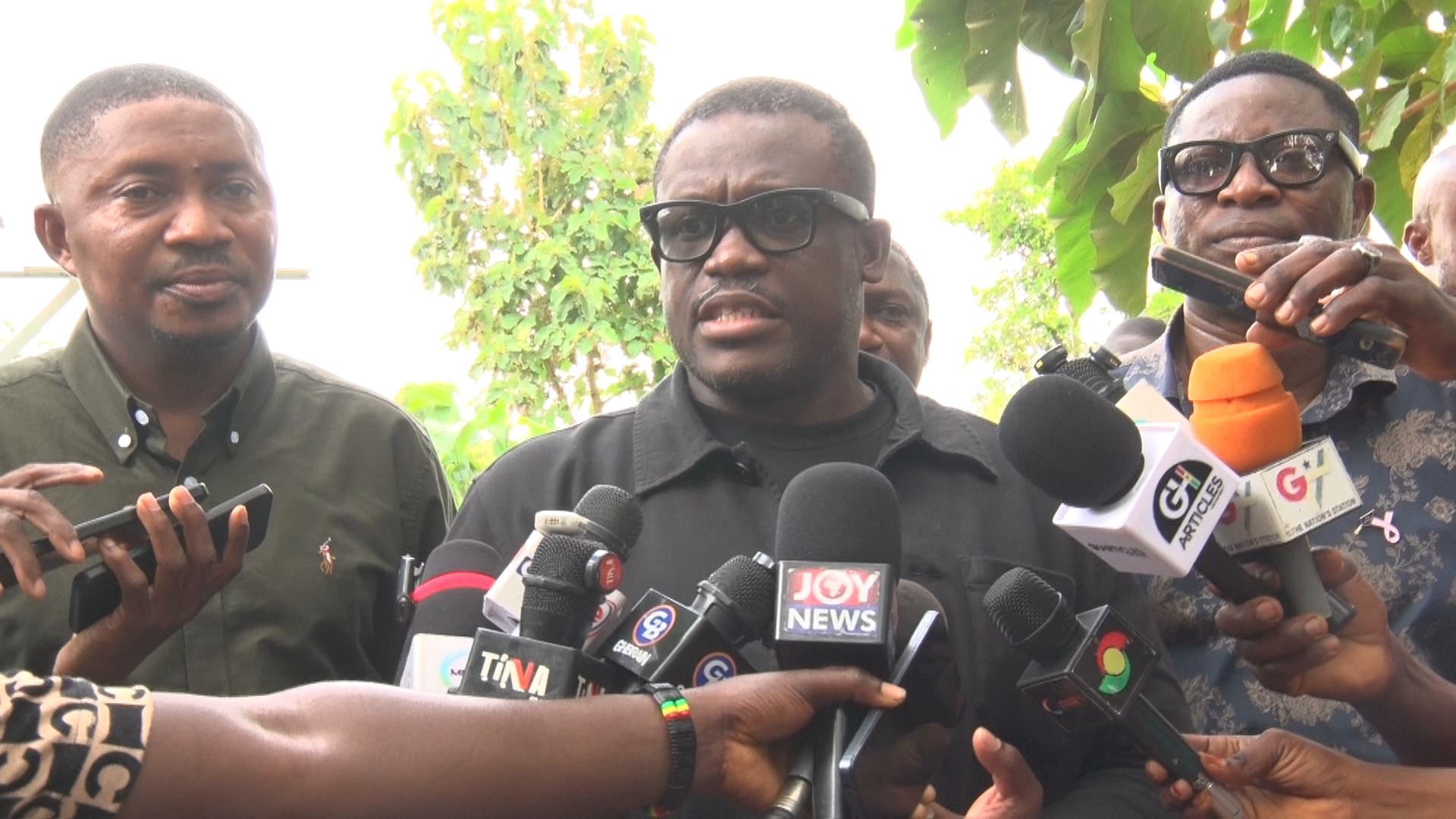
The Minister of Communication, Digital Technology and Innovations, Samuel Nartey George, has reaffirmed the government’s commitment to expanding telecommunications connectivity in underserved communities, with four network sites expected to become operational within days.


He gave the assurance during a media briefing on the final day of his two-day working tour of the Ashanti Region, which ended in the Sekyere Afram Plains District.
The minister said his team had inspected four sites in the area — Nyameama No. 1, Nyameama No. 2, Abenua and Dibia — to assess progress on rural telephony projects and engage directly with beneficiary communities.
According to him, the Dibia site was expected to become operational by the close of the day, while the Nyameama and Abenua sites were anticipated to be powered by the end of the week.
He added that Mpekasa was the next site scheduled to become operational.
The Ningo Prampram MP said the field visit had provided an opportunity to assess the work completed so far, identify outstanding challenges and determine the additional communities requiring urgent installation of telecommunications equipment.
He disclosed that about three more communities had been identified for intervention and that the administrator of the Ghana Investment Fund for Electronic Communications (GIFEC) had been tasked to expedite work on them.
Audit of rural telephony projects
The minister announced that his ministry would meet contractors and other relevant stakeholders the following week to evaluate progress on the rural telephony projects inherited by the current administration.
He said the government had also authorised an audit of the 2016 sites to establish their actual status, including whether they had been constructed and were operational and carrying telecommunications traffic.
Mr. George explained that the audit would provide a clearer picture of the state of the projects, particularly as it was not feasible for him to personally visit every site.
Battery theft threatens connectivity
The minister identified the theft of batteries and other technical challenges as some of the major factors affecting the operation of rural telecommunications sites.
He said some sites had been reported as non-functional only for investigations to reveal problems relating to electricity supply, prepaid power accounts, connectivity equipment or tampering with solar-powered installations.
Sam George therefore appealed to traditional authorities and community members to help protect the equipment, particularly the batteries, warning that their theft could cause entire sites to shut down.
He urged district-level authorities to take a keen interest in safeguarding the facilities to ensure the sustainability of the investments.
Government targets wider digital inclusion
The minister stressed that the government remained committed to ensuring that every community, regardless of its size, had access to digital connectivity.
He observed that many of the communities visited had no electricity, yet the government was prioritising telecommunications infrastructure to reduce the digital divide.
Mr. George explained that conventional telecommunications masts were often commercially unviable in smaller communities because of their high installation and operational costs, including electricity and generator expenses.
He said GIFEC played an important role in addressing the challenge by supporting smaller community networks in areas where telecommunications companies might not generate sufficient revenue to justify conventional infrastructure.
The minister, however, called for a gradual upgrade of existing rural networks from 3G to 4G, arguing that the rollout of 5G in major cities without corresponding improvements in rural areas could widen the digital divide.
He expressed confidence that the government would secure the necessary resources to sustain investments in rural telephony, citing assurances from the presidency and the Ministry of Finance.
MTN to deploy 800 additional sites
Sam George also disclosed that the ministry was working with MTN Ghana on plans to deploy 800 additional physical telecommunications sites to improve network coverage nationwide.
He said the locations for the proposed sites had been identified through consultations with Members of Parliament, who had presented network challenges in their respective constituencies during a 13-hour working session with the ministry and MTN’s technical team.
According to the minister, one of the planned sites would be located at Ayemofu, with Rainbow, a subcontractor, undertaking the work.
He expressed confidence that the Ayemofu site would be completed before the end of the year and commended the area’s Member of Parliament, whom he identified as Hon. Nassira, for advocating improved telecommunications services for the constituency.
Mr. George added that Central Fampings and other communities identified by the MP would be considered in subsequent telecommunications investment plans, including those anticipated in 2027.
He acknowledged that all outstanding connectivity challenges might not be resolved before the end of the year but said the government expected to make considerable progress in improving network coverage across the constituency.
The minister urged residents to support the implementation process and work with local authorities to protect telecommunications infrastructure, stressing that reliable connectivity had become essential to communities across the country.
Source: www.kumasimail.com