







































The Ministry of Health has called for urgent national action to tackle lead poisoning, warning that exposure to the toxic metal can cause lasting damage to children’s brain development, learning abilities and behaviour.


The Ministry says stronger regulation, public education and coordinated surveillance are needed to identify exposure sources and protect vulnerable populations from the potentially devastating effects of lead contamination.
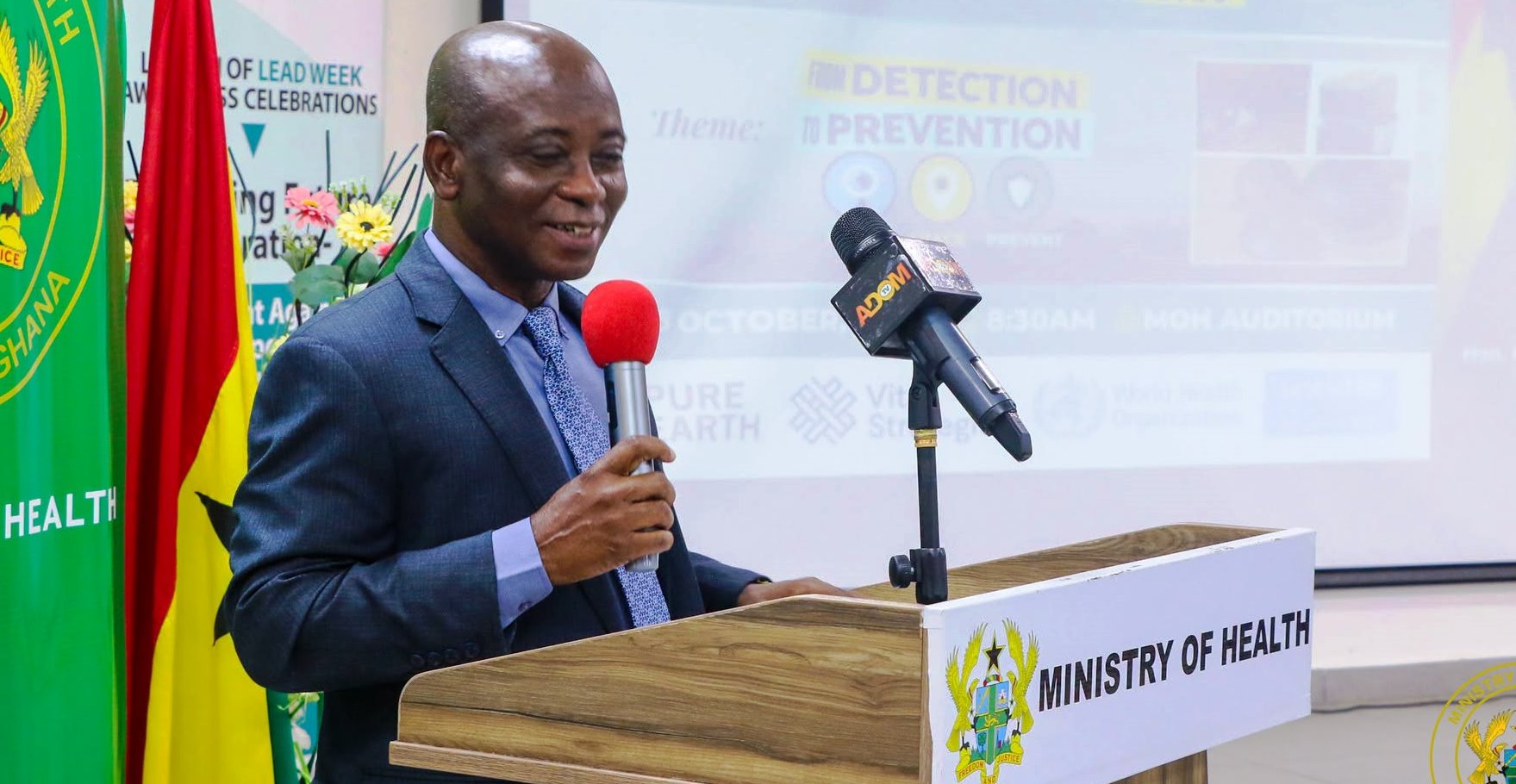
The warning was issued at the launch of the 2026 National Lead Poisoning Awareness Week, organised under the theme “From Detection to Prevention.”
Speaking on behalf of the Minister for Health, the Ministry’s Chief Director, Desmond Boateng, described lead poisoning as a serious but preventable public health threat that requires action beyond the health sector.
He warned that while children face significant risks to their brain development, learning and behaviour, prolonged exposure can also damage the kidneys and cardiovascular system in adults.
Among the identified sources of lead exposure are lead-based paints, mining activities, battery recycling, electronic waste and contaminated consumer products.
Mr Boateng outlined key priorities for tackling the threat, including intensifying public education, protecting vulnerable communities, equipping health workers to detect and manage exposure, and enforcing regulations to eliminate lead contamination at its source.
Deputy Country Representative of UNICEF Ghana, Emmanuelle Collet, also called for a coordinated national surveillance system to identify children exposed to lead, trace contamination sources and ensure unsafe products are withdrawn from the market.

The awareness campaign brings together the Ministry of Health, Pure Earth, Vital Strategies, the Environmental Protection Agency (EPA), the World Health Organization (WHO), the Food and Drugs Authority (FDA) and the Ghana Health Service (GHS).
The partners say they will intensify public education, strengthen surveillance and improve regulatory enforcement as part of efforts to reduce lead exposure, particularly among children and other vulnerable groups.
The campaign shifts attention from simply detecting lead poisoning to preventing exposure in the first place, with public awareness, effective regulation and early intervention identified as critical to protecting public health.
Source: www.kumasmail.com