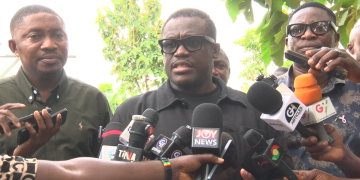





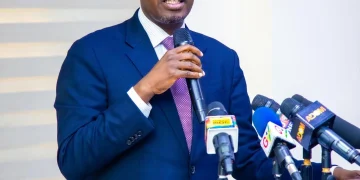


























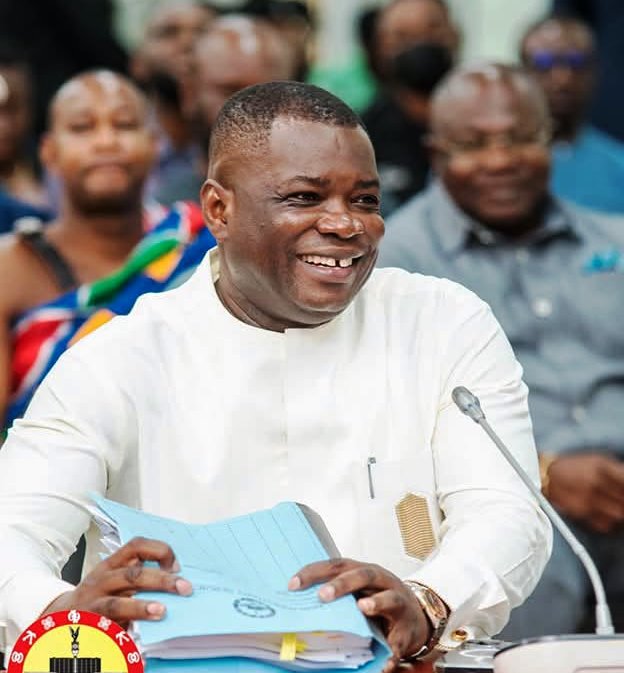
Roads and Highways Minister Kwame Governs Agbodza has threatened to terminate contracts awarded to non-performing contractors under the government’s Big Push infrastructure programme, as he inspected ongoing works on the critical Wenchi–Sawla–Wa and Wa–Sawla road corridors.


The warning came during an inspection tour of road projects across the Bono, Bono East, Savannah and Upper West regions on Wednesday, September 2, as mounting concerns over the pace of some Big Push projects put contractors under renewed pressure to deliver.
Mr Agbodza expressed what the Roads and Highways Ministry described as his “total disappointment and dissatisfaction” with the pace of work on some of the projects.
He subsequently directed affected contractors to appear before a critical review meeting in Accra on Monday to account for their performance.
The Minister’s inspection of the Wenchi–Sawla and Wa–Sawla roads is particularly significant for the Upper West Region, where the pace of work on the corridor has been a subject of public concern and recent parliamentary scrutiny.
The Upper West Parliamentary Caucus only last month undertook its own inspection of Big Push projects, calling on contractors to accelerate construction and deliver roads that meet the required quality standards.
The caucus’ intervention followed persistent complaints from residents over the pace of work on major roads in the region.
N12 corridor under spotlight
The Wenchi–Sawla–Wa corridor forms part of the N12, one of the country’s strategically important north-south routes.
President John Dramani Mahama, when he cut the sod for the reconstruction of the corridor in November 2025, said the project covered 195 kilometres and had been divided into seven lots to allow for concurrent execution, with completion targeted within two years.
The President described the road as an international route linking Ghana’s agricultural-producing areas to northern markets and onward to Burkina Faso and Mali.
The corridor carries significant agricultural freight, with the Presidency estimating that between 2,000 and 2,500 vehicles use the route daily, transporting commodities including grains, yam, cashew and livestock.
For communities along the route, however, the promise of a transformed highway has been measured against the visible pace of construction.
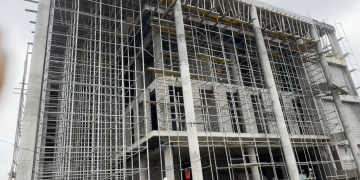
The Upper West MPs, during their recent inspection of the N12, observed road clearing, drainage works, repairs to damaged sections and asphalt-related activities at locations including Tuna, Kulmasa and Gindabuo.
The Regional Minister, Charles Lwanga Puozuing, subsequently said the level of activity contradicted reports that no work was being done, although he urged the contractor to increase the pace.
The latest inspection by Mr Agbodza therefore puts the corridor under a second layer of scrutiny—this time from the minister responsible for the sector.
Contractors face tougher test
Mr Agbodza’s warning is not the first time contractors working under the Big Push have faced direct pressure from the Roads and Highways Ministry.
In May, the Minister gave Maripoma Enterprise Limited a two-month ultimatum to achieve at least 20 per cent progress on its Wenchi–Sawla project or face termination, following an earlier inspection in which he expressed strong dissatisfaction with the contractor’s performance.
The latest directive suggests that government is moving from monitoring and warnings towards possible contract cancellations where contractors fail to meet expectations.
That stance could have significant implications for Upper West, where several major road projects have been divided into separate lots and assigned to different contractors.
The Ministry’s project records show multiple contractors working on major corridors including Wa–Han and Tumu–Han–Lawra, while the wider Big Push programme also covers the N12 corridor connecting Wenchi, Sawla and Wa.
From inspections to action
The Minister’s latest tour comes at a time when the Big Push programme is facing a crucial test: whether government’s ambitious infrastructure commitments can be translated into visible and timely construction.

Mr Agbodza’s decision to summon underperforming contractors to a review meeting signals that government is seeking explanations for projects that are not progressing at the expected rate.
It also raises the prospect of government replacing contractors whose performance falls short.
The issue is particularly important for Upper West, where poor roads have become a major development concern, affecting transportation, agriculture, trade and access to essential services.
For residents who have repeatedly demanded faster work, the minister’s threat to terminate non-performing contracts will now be judged by what follows the Monday review meeting.
If contractors are given further deadlines, residents will expect those deadlines to be enforced.
If contracts are terminated, they will want to know how quickly replacement contractors will be appointed and mobilised.
And if contractors are found to be performing satisfactorily, government will have to demonstrate that progress is sufficient to meet the promised completion timelines.
The Big Push, increasingly, is no longer being judged by the number of roads awarded.
It is being judged by how quickly the roads move from contracts and promises to asphalt, connectivity and completed infrastructure.
Source: www.kumasimail.com