


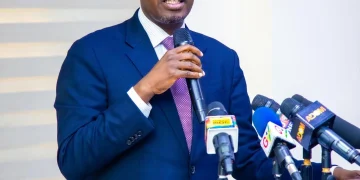



















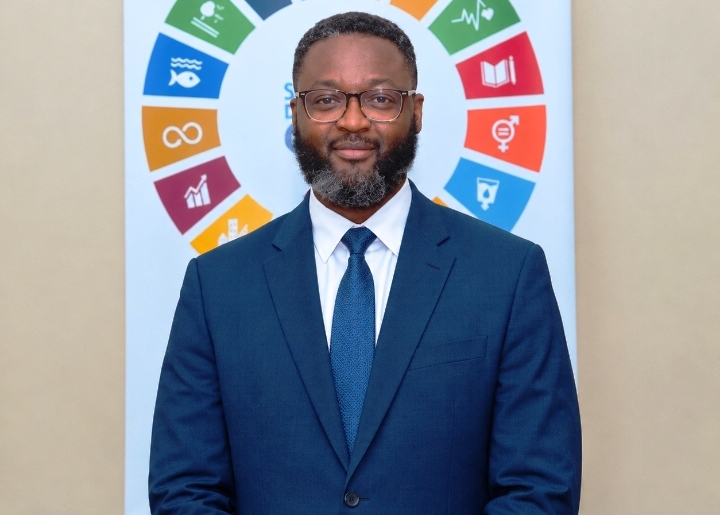
A Ghanaian economist from Nandom in the Upper West Region, Dr Maxwell Tuuli, has risen from working at Newmont Ghana to becoming the International Monetary Fund’s (IMF) new Resident Representative in Sierra Leone.


Tuuli, who joined the IMF in 2019, has assumed the Freetown-based assignment at a critical point in Sierra Leone’s economic reform programme, with the country implementing IMF-supported programmes focused on fiscal consolidation, domestic revenue mobilisation, public financial management and economic resilience.
He succeeds Wayne Mitchell as the Fund’s principal representative in Sierra Leone.
The appointment places the relatively young economist at the centre of the IMF’s engagement with the Sierra Leonean government and development partners as the country works to strengthen its economy and address persistent fiscal and structural challenges.
His first engagements since taking office have already pointed to some of the priorities ahead.
During a meeting with Sierra Leone’s Commissioner General of the National Revenue Authority, Abu Martin Kanneh, discussions focused on strengthening domestic revenue mobilisation, improving tax administration and compliance, addressing revenue leakages and enhancing institutional performance.
The IMF’s engagement comes as Sierra Leone continues to implement its Extended Credit Facility programme and a new Resilience and Sustainability Facility arrangement approved by the IMF Executive Board in June 2026. The latter provides about US$211.45 million to support efforts to strengthen the country’s resilience to climate-related shocks.
Tuuli has also begun engagement with the United Nations Country Team in Sierra Leone. During a courtesy meeting with UN Resident Coordinator Seraphine Wakana in Freetown on September 16, he expressed his commitment to working with the UN Country Team in support of Sierra Leone’s national development priorities.
From Nandom to the IMF
Long before assuming one of the IMF’s important country-level assignments in Africa, Tuuli was a student in Nandom.
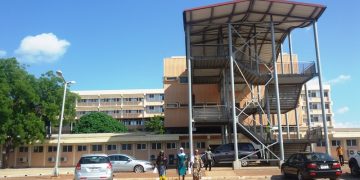
He had his basic education in the Nandom area before attending Nandom Senior High School, the prestigious all-boys Catholic institution in the Upper West Region, from 2002 to 2005.
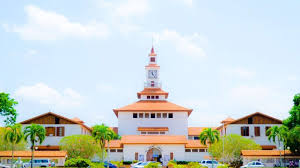
At Nandom Senior High School, he studied Economics, Elective Mathematics and Government before proceeding to the University of Ghana, where he obtained a Bachelor of Arts degree in Economics.
His academic journey subsequently took him to Canada, where he obtained a Master’s degree in Economics from the University of Manitoba in 2012 before earning a PhD in Economics from McGill University in 2017.
His doctoral research focused on international firms, with his broader areas of expertise including international economics, industrial organisation and macroeconomics.
Nandom Senior High School, established by the Catholic Church in 1968, has produced professionals serving in several fields in Ghana and internationally.
From Newmont to international economics
Tuuli’s professional journey also began outside the IMF.
Before embarking on his graduate studies in Canada, he worked as a procurement officer at Newmont Ghana Gold Ltd from 2010 to 2011.
He subsequently combined graduate studies with teaching and research positions at the University of Manitoba and McGill University.
After completing his PhD, he became a Postdoctoral Research Fellow at the University of Victoria in Canada, before joining the IMF in September 2019.
He entered the Fund through its Economist Program, beginning in the Finance Department, where he worked on concessional financing issues.
He later served on the Tajikistan desk in the IMF’s Middle East and Central Asia Department and subsequently worked in the Fund’s Strategy, Policy and Review Department.
His professional experience has covered macroeconomic policy, fiscal policy, economic growth, international finance and international trade.
He has also contributed to IMF research, including a 2022 paper examining the relationship between fiscal consolidation and firm-level productivity.

In 2024, he was among the authors of an IMF study examining how fragile and conflict-affected states respond to global commodity, external-demand and financing shocks. The study found that such economies can be particularly vulnerable to external shocks because of fiscal weaknesses, limited spending controls and constrained access to financing.
A new assignment at a critical time
As IMF Resident Representative, Tuuli will serve as the Fund’s key liaison with the Sierra Leonean authorities and development partners, supporting policy discussions and the implementation and monitoring of reforms under IMF-supported programmes.
Sierra Leone’s current economic programme places particular emphasis on fiscal consolidation, stronger revenue mobilisation, public financial management, debt management and structural reforms. The IMF has also identified the need for stronger tax administration and mining revenue collection, while reforms in the financial sector and climate resilience remain important components of the country’s programme.
While the IMF has not publicly stated the specific considerations behind Tuuli’s selection for the Sierra Leone posting, his professional record aligns closely with many of the economic policy areas confronting the country.
From a classroom in Nandom, through Newmont Ghana and Canadian universities, to the corridors of the IMF, Tuuli’s journey has now taken him to Freetown, where he is expected to play a key role in the Fund’s engagement with Sierra Leone’s economic transformation.
For Nandom and the Upper West Region, his appointment adds another international milestone to the growing list of professionals with roots in the region making their mark beyond Ghana.
Source: www.kumasimail.com