
































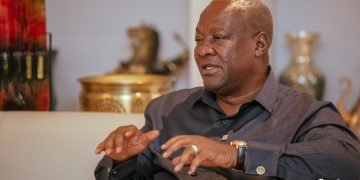




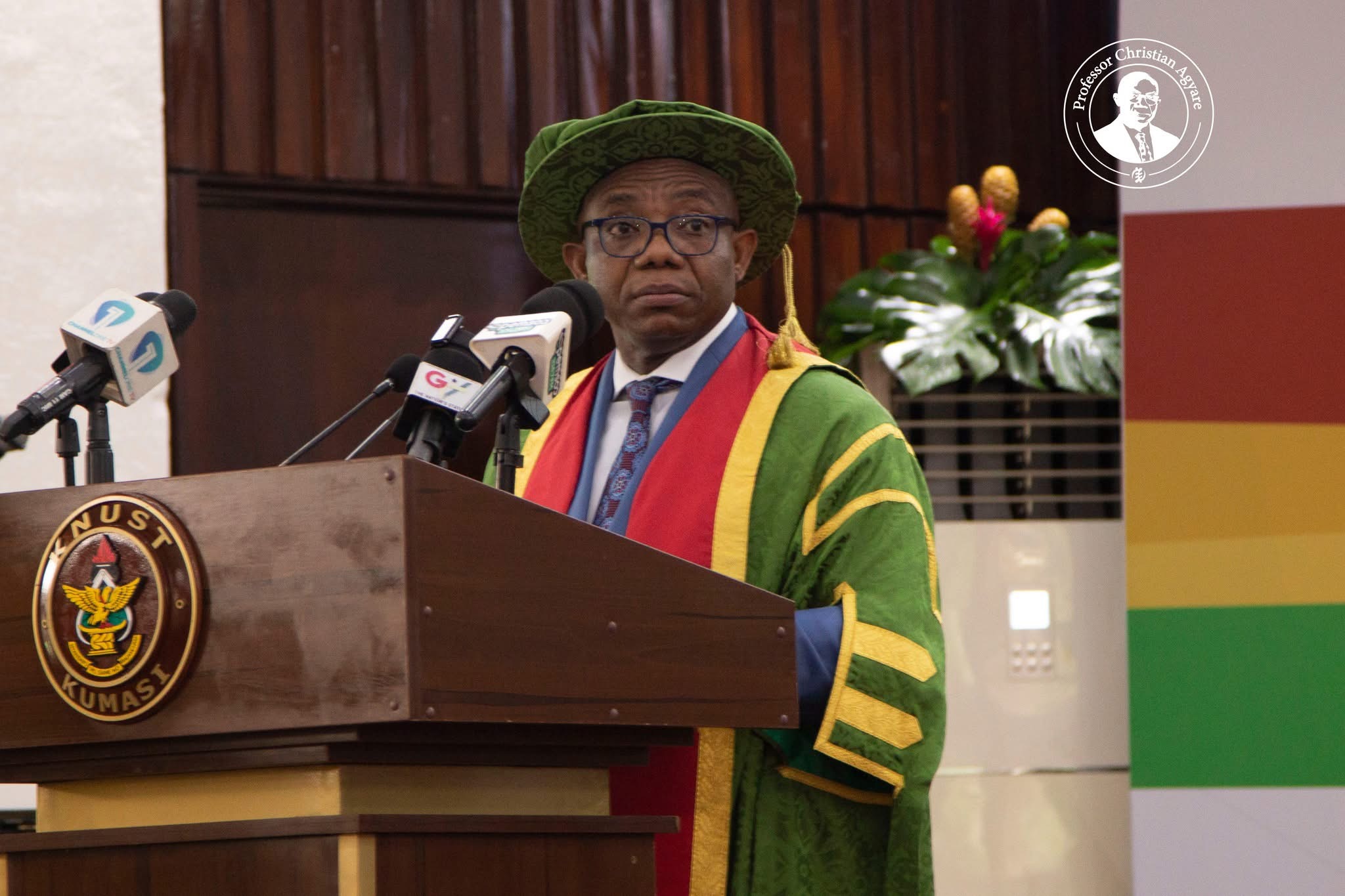
The new Vice-Chancellor of the Kwame Nkrumah University of Science and Technology (KNUST), Prof. Agyare, has pledged to place innovation, practical research and industry collaboration at the centre of the university’s next phase of growth.


Speaking at his inauguration, Prof. Agyare said the university must move beyond traditional teaching and research to produce tangible solutions that improve lives and drive national development.
“A university that teaches without innovating, research without creating, has only done half of its work,” he said.
“The vision of KNUST is one where knowledge does not reside in the lecture halls, studios and laboratories, but walks out of our gates, changes the world, and transforms lives,” Prof Agyare firmly stated.
He said KNUST’s mandate should go beyond academic excellence to include measurable social and economic impact, stressing that the institution must help shape the future rather than merely respond to it.
Quoting management guru Peter Drucker, he said: “The best way to predict the future is to create it.”
Prof. Agyare said his administration would introduce transformative teaching methods and dual degree pathways to better prepare students for a rapidly changing world.
“We will reimagine our curriculum,” he opined stating“We can produce graduates who do not simply seek employment, but create them; graduates who are not only academically distinguished, but commercially astute and socially responsive.”
He also assured stakeholders and industry partners that his administration would deepen existing collaborations, describing them as essential to building a stronger and more competitive university.
“To our stakeholders and industry partners, we are going to deepen our ties with you, recognizing that excellence flourishes through diverse expertise,” he said.
“We will leverage the experience of our professors of practice and experts in industry to foster enduring partnerships that will enhance KNUST’s global competitiveness.”
Prof. Agyare said the role of universities in the 21st century had become even more critical, arguing that national prosperity would depend increasingly on ideas generated within institutions of higher learning.
“The worth of nations in the 21st century will be determined less by what lies beneath their soil and more by the ideas generated within their universities,” he said.
He expressed confidence in KNUST’s ability to lead that charge, insisting the university has the talent, mandate and vision to become a hub of innovation and transformation.
“I believe KNUST has the talent, the mandate, and the vision,” he emphasized. “Let us build a university that does not just educate, but also drives economic transformation, advances innovation, and improves the lives of people and communities.”
Source: www.Kumasimail.com