





























The Ministry of Sports and Recreation says it is pursuing a major restructuring of Ghana’s sports sector to reduce its dependence on government funding and increase private-sector participation.
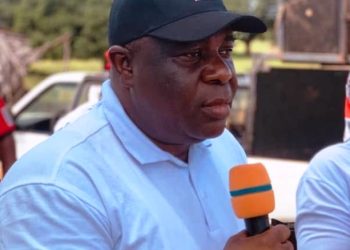
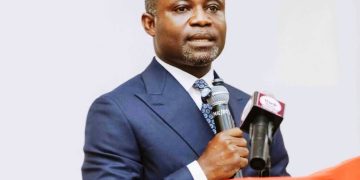
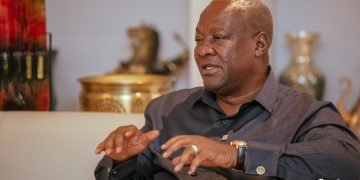
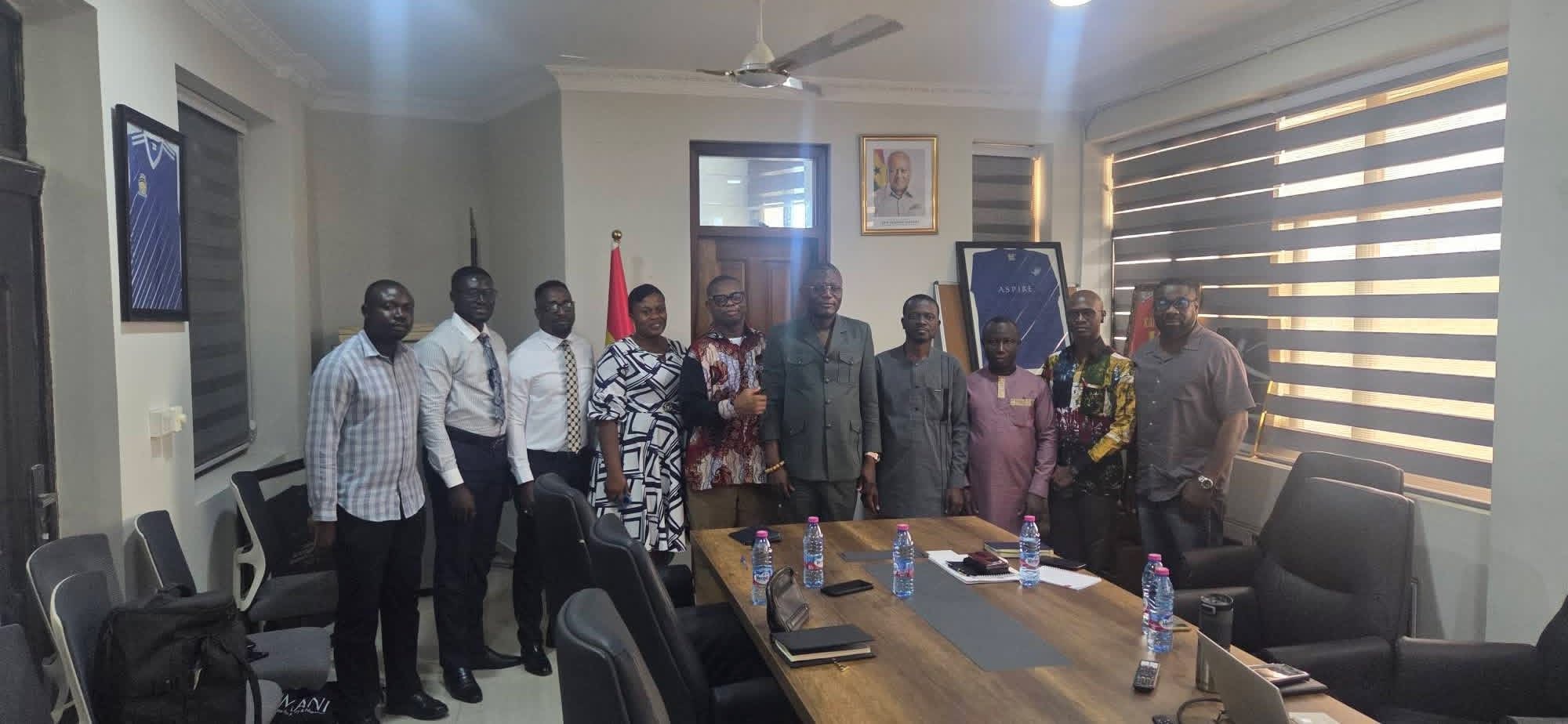
The Minister of Sports and Recreation, Kofi Iddie Adams, outlined the proposed reforms during a strategic engagement with representatives of the IMANI Centre for Policy and Education.
The engagement was aimed at presenting the Ministry’s policy direction, discussing its fiscal constraints and seeking policy input on measures to make sports a more commercially sustainable sector.
A key component of the proposed reforms is the operationalisation of the Ghana Sports Fund, through which the Ministry intends to diversify funding sources.
According to the Minister, government would provide 35 per cent of the fund’s financing, with the remaining 65 per cent expected to come from corporate partnerships and other independent sources.
The Ministry also wants to expand commercial activity across the sports value chain, including broadcasting, merchandising, gate proceeds and other revenue-generating activities beyond football.
Mr Adams cited the high operating costs of sports facilities as one of the challenges confronting the sector. He said a weekend stadium event could incur more than GH¢25,000 in electricity costs while generating less than GH¢100,000 in gate revenue.
Stadium management
The Ministry is also considering Public-Private Partnerships (PPPs) for the management of major sports facilities as part of efforts to address persistent maintenance challenges.
The Minister said discussions were ongoing with local and international companies, including managers associated with Kigali’s BK Arena.
However, he acknowledged difficulties in securing private operators because of the substantial capital investment already made by the state, relatively low projected revenues and the long lease periods being requested by potential managers.
The Ministry is also proposing smaller sports facilities with capacities of between 5,000 and 12,000 spectators, particularly near tertiary institutions, as a way of improving utilisation and addressing regional infrastructure gaps.
Federation governance
On sports administration, the Minister said the Ministry supervises about 56 national federations, many of which previously lacked adequate technical, financial and administrative systems.
He said governance reforms had resulted in about 20 federations attaining compliance, compared with none, apart from the Ghana Football Association, in 2024.
Under the proposed approach, government support to federations would increasingly be linked to domestic and regional performance indicators.
Athlete database
The Ministry also identified the absence of a centralised national athlete database as a major weakness in sports administration.
Mr Adams said the lack of reliable information on athletes makes it difficult to track issues such as injury histories, talent development and potential transfer values.
The Ministry therefore intends to strengthen sports information systems and establish a more comprehensive database of athletes.
School sports and talent development
The Ministry has also established a dedicated secretariat to strengthen the connection between school sports and elite-level competition.
The initiative is intended to create a structured pathway from primary-level participation through to national federations.
The Minister said the decline in basic sports equipment in schools had affected grassroots development and announced efforts to procure equipment to support school sports.
Athlete welfare and anti-doping
The Ministry reported that it had cleared outstanding debts owed to national coaches dating back to 2020.
Following a recent fatality in boxing, an Interim Management Committee was established to strengthen ringside medical procedures and testing requirements.
The Minister also said the measures had helped prevent a pregnant athlete from participating in competition.
The newly constituted Anti-Doping Agency is meanwhile undertaking education programmes aimed at promoting clean sport.
Black Stars expenditure
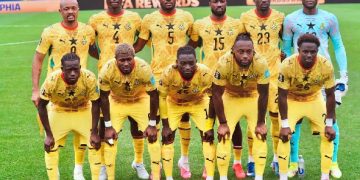
The Ministry also disclosed measures taken to reduce expenditure on the senior national football team, the Black Stars.
According to the Minister, the average cost of a two-match international window had been reduced from more than US$2 million to about US$1.3 million.
The measures included replacing some chartered flights with military aircraft and changing the bonus structure for members of the management team, with payments tied to eventual tournament qualification.
The figures, however, were identified during the engagement as requiring independent verification, including an assessment of whether expenditure reductions had affected sporting performance.
Sports and public health
The Ministry views sports as an instrument for preventive healthcare and social development.
Mr Adams argued that increased participation in sports from an early age could promote discipline and reduce the long-term burden of non-communicable diseases on the state.
However, an analytical assessment of the Ministry’s proposals noted that claims concerning potential healthcare savings and the broader contribution of sports to Ghana’s Gross Domestic Product (GDP) require further empirical research and quantification.
Gaming Commission
Another proposal discussed was the possible transfer of the Gaming Commission from the Ministry of the Interior to the Ministry of Sports and Recreation.
The Minister argued that sports betting constitutes a significant source of the Commission’s revenue and that placing the agency under the Sports Ministry could enable more of those resources to be directed towards sports development.
The proposal would require legislative and institutional changes.
Alcohol sponsorship
The Ministry also raised concerns about restrictions on alcohol-related sponsorship of sports.
Mr Adams argued that restrictions imposed by the Food and Drugs Authority limit potential sponsorship revenue for local clubs, while Ghanaian audiences continue to encounter alcohol advertising through international sports broadcasts.
The proposal to review the existing framework has, however, been identified as an area requiring careful assessment because of the potential public health implications.
Budget constraints
The Ministry said its ability to implement its programmes had been constrained by limited capital funding.
It disclosed that no capital expenditure allocation was received in 2025, despite a GH¢60 million allocation for goods and services.
For 2026, the Ministry said its capital expenditure allocation had increased to about GH¢280 million, of which GH¢200 million was earmarked for mini-stadium projects.
The Ministry also indicated that some previous budget proposals had been characterised by the Ministry of Finance as a “wish list.”
Sports infrastructure and the environment
The Minister expressed concerns about the quality of some artificial turf installations, arguing that low-quality surfaces constructed over excavated rock bases could contribute to knee injuries among young athletes.
He advocated the use of high-quality natural grass pitches where appropriate, citing their potential environmental benefits, including carbon sequestration.
Need for evidence-based implementation
The engagement identified four major challenges facing the sports sector: dependence on central government financing, deteriorating infrastructure, inadequate athlete data and weak domestic commercialisation.
An assessment of the Ministry’s reform agenda noted that the proposed transition towards a more commercially productive sports sector provides a broad policy direction but requires stronger empirical evidence.
Among the areas requiring further research are the sports sector’s contribution to GDP, the potential healthcare savings associated with increased physical activity and the lifecycle costs and benefits of proposed mini-stadium projects.
The assessment also cautioned that long-term PPP agreements could expose the state to financial risks if commercial demand for sports facilities remains weak.
It further noted that the proposed 65 per cent private financing component of the Ghana Sports Fund would require strong governance, transparency and credible mechanisms for attracting corporate investment.
The Ministry has therefore been encouraged to develop an annual Sports Sector Performance Dashboard to track indicators such as private capital mobilised, facility utilisation and federation performance.
It has also been advised to undertake independent commercial valuations before concluding stadium PPP agreements and to conduct a comprehensive cost-benefit analysis of any proposed changes to alcohol sponsorship regulations.
Source: www.kumasimail.com