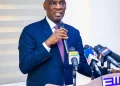



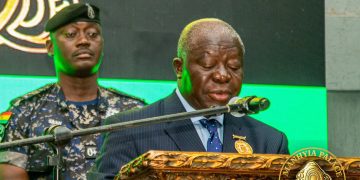


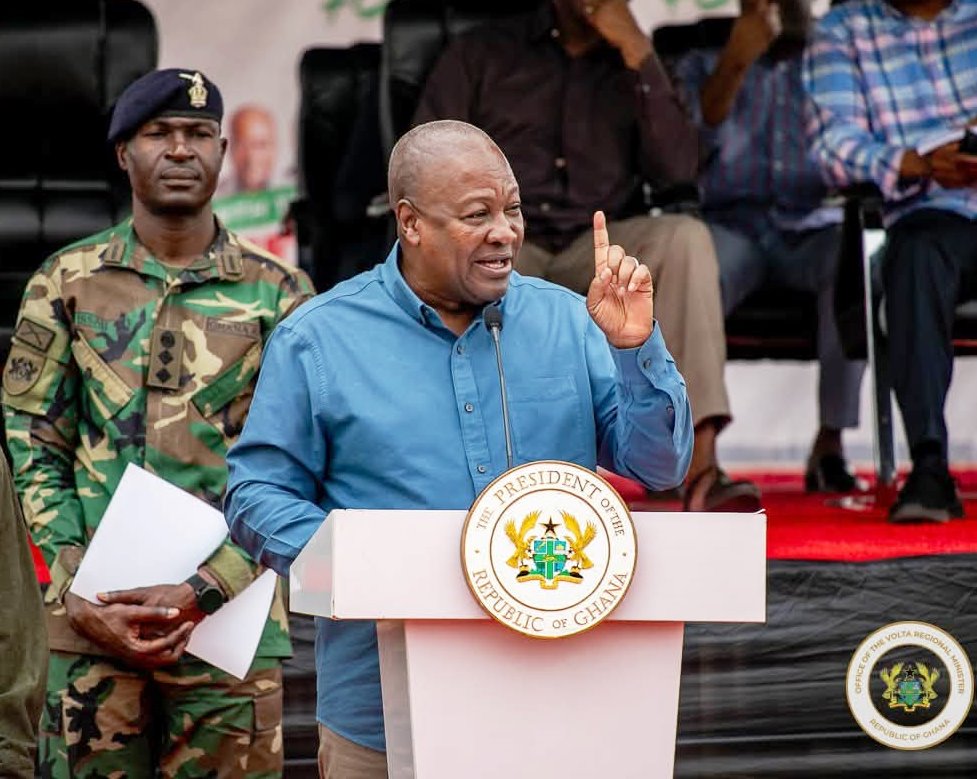
President John Dramani Mahama’s impending two-day “Resetting Ghana” tour of the Upper East Region has triggered mixed reactions, with some residents expressing disappointment over what they describe as a lack of major new projects to mark the visit.


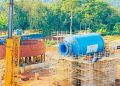
The President is scheduled to begin the tour on Thursday, August 13, with an inspection of the proposed Bolgatanga Airport project site, followed by an inspection of the Navrongo–Chuchuliga–Tumu Road, the commissioning of a completed “E” Block at Paga and a free primary healthcare durbar at the Zuaringu Health Centre.
On Friday, August 14, the President is expected to inspect a four-storey laboratory complex at the University of Technology and Applied Sciences, Navrongo, engage citizens at Fountain Gate Chapel and either cut the sod for the Tongo–Shega–Pelungu Road or inspect the Bolgatanga–Bawku–Polimakom Road before departing for Tamale.
While the itinerary includes project-related activities, some residents and commentators on social media say they had expected the President’s visit to bring announcements, commissioning of major completed projects and the unveiling of new development initiatives capable of transforming the region and creating jobs.
Their concerns come against the backdrop of the overwhelming electoral support the National Democratic Congress (NDC) received in the region in the 2024 general elections.
The NDC secured all 15 parliamentary seats in the Upper East Region, while President Mahama also won the presidential election in all 15 constituencies. The Electoral Commission’s regional results page lists the 15 constituencies and their presidential and parliamentary results.
Nearly 20 months into the Mahama administration, some residents say the scale of development they expected in return for their electoral support has yet to become sufficiently visible.
“There’s nothing to expect. He’s only coming to greet his party members and go back,” Cletus Adugbire said in a Facebook reaction.
Benjamin Abangka, meanwhile, urged the President to prioritise the region’s roads, particularly the long-delayed Chuchuliga–Wiesi road.
“We have suffered for long,” he said.
For Paulga Anaba, the situation reflects what he considers the consequences of voting along party lines without demanding measurable development.
“That is the benefit we will continue to get if we vote based on party colours, not based on development,” he wrote.

Albert Akabure also questioned the substance of the visit, asking: “With all the noise he made in his 2024 campaign, is this what Mr President is only coming to do?”
The reactions have also attracted attention from journalists in the region.
Nicholas Azabire of Dreamz FM described the itinerary as an “inspection tour” when it came to the Upper East Region.
“When it got to our turn, it became an inspection tour. Charlie, when?” he wrote.
Samuel Ayammah of the Ghana Broadcasting Corporation was even more critical, describing what he termed “very, very weak leadership” and contrasting the pace of development in the Upper East with developments in Bono East.
The discontent is not limited to the scope of projects on the itinerary. Some residents are also questioning whether the region is receiving sufficient economic opportunities and infrastructure investment despite its overwhelming support for the governing party.
Joseph Nchorbuno called for a demonstration as a “welcome package,” while alleging that “the true state of the region is being hidden by our own.”
The reactions, largely drawn from social media, may not represent the views of the entire region. However, they point to growing expectations among some residents that the President’s “Resetting Ghana” programme should translate into visible and transformative development beyond inspections of existing or ongoing projects.
The President’s programme does include some potentially significant interventions. The proposed Bolgatanga Airport, the road projects and the laboratory complex at the University of Technology and Applied Sciences could have implications for transportation, connectivity, education and regional economic activity if completed and fully operational.
The key question for many residents, however, appears to be whether the visit will result in firm commitments, timelines and resources for projects that directly address the region’s infrastructure deficit, unemployment and broader development needs.
For a region that delivered all 15 parliamentary seats to the NDC and gave President Mahama a clean sweep in the presidential election, some residents believe the expectations are understandably high.
As the President begins the two-day tour, attention is therefore likely to focus not only on what he inspects or commissions, but also on what new commitments he makes to the people of the Upper East Region.
Source: www.kumasimail.com