

































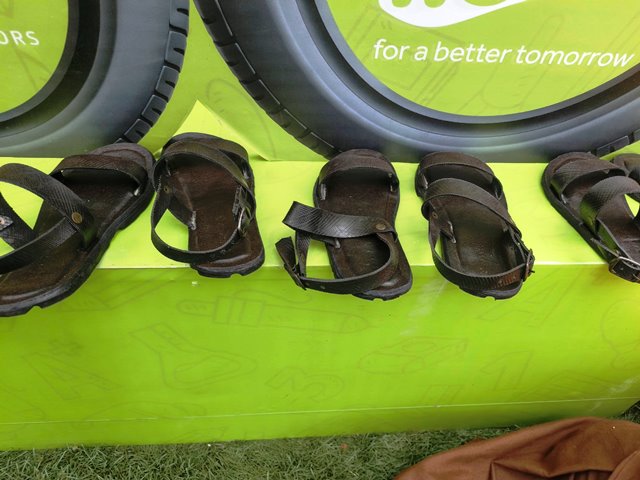
About 10,000 pairs of sandals made from discarded vehicle tyres are to be distributed to schoolchildren across northern Ghana under the fourth phase of Access Bank Ghana’s A Sandal More for a Better Tomorrow initiative.


The intervention, being implemented in partnership with Rana Motors, Nana Tea and Horseman Shoes, marks the first time the programme has been extended to northern Ghana.
The initiative was launched at Nyankpala D/A Junior High School in the Tolon District on Wednesday, with the Northern Regional Coordinating Council (NRCC) describing the intervention as an example of how private-sector resources could be channelled into addressing practical education and environmental challenges.
The sandals, produced from upcycled waste vehicle tyres, are expected to be distributed across communities in the Northern, Upper East, Upper West and Savannah regions.
Access Bank’s Executive Director for Retail and SME Banking, Eugene Ocansey, said the initiative was designed to tackle two problems at the same time: inadequate footwear among schoolchildren and the environmental problems associated with the disposal and burning of used vehicle tyres.
He said the programme had already distributed more than 31,000 pairs of sandals during its first three phases.
For the fourth phase, however, the bank has expanded the intervention beyond footwear by introducing school bags for the beneficiaries.
Mr. Ocansey said the initiative also supported the livelihoods of artisans involved in converting discarded tyres into footwear.
According to him, the bank had trained the participating artisans in financial management and banking to help them manage their businesses and incomes more effectively.
The Chief Director of the NRCC, Sumaila Ewuntomah Abudu, who represented the Northern Regional Minister, Ali Adolf John, said the intervention addressed practical challenges faced by children and families, particularly in underserved communities.
He said the provision of durable footwear was significant for children who sometimes walked long distances to school, adding that the intervention could ease part of the financial burden on their families.
Mr. Abudu said the use of discarded tyres to produce the sandals also gave the initiative an environmental dimension by turning waste into a useful product.
He urged other private-sector organisations to develop interventions that combined business activity with measurable social and environmental benefits.
The Tolon District Chief Executive, Seidu Braimah, also called for deeper private-sector support for education, skills development and other basic development needs in the district.

He said while the sandal distribution addressed an immediate need, communities continued to require support for educational infrastructure and other development priorities.
The fourth phase also comes with a mobile distribution component.
Access Bank unveiled an A Sandal More distribution van which will move the footwear and school bags from Tamale and Yendi to Bolgatanga, Wa and Damongo as the exercise expands across northern Ghana.
The programme’s organisers said the intervention was intended not only to provide footwear for schoolchildren but also to reduce tyre waste, support local artisans and promote sustainable practices.
Source: www.kumasimail.com