







































The National Food Buffer Stock Company (NAFCO) has been directed to immediately release 50,000 bags of 50-kilogramme grains to settle Ghana’s outstanding obligation to the Economic Community of West African States (ECOWAS).


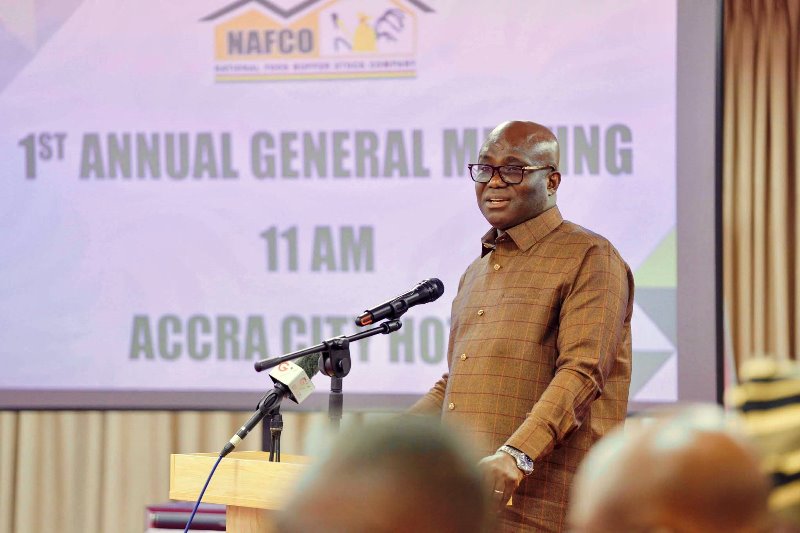
The Minister of Food and Agriculture, Eric Opoku, who issued the directive at NAFCO’s maiden Annual General Meeting in Accra on Thursday, said Ghana borrowed the grains from ECOWAS in 2018 to support the School Feeding Programme.
He said NAFCO now had sufficient stocks to repay the obligation, with the company currently holding about 20,443 metric tonnes of grains.
“We have directed NAFCO to immediately release 50,000 bags of 50-kilogramme grains to ECOWAS,” Mr Opoku said.
The repayment comes as NAFCO seeks to strengthen its position as Ghana’s strategic food reserve and market stabilisation institution.
The company was established to purchase, store and distribute food commodities, provide a ready market for farmers and manage emergency food supplies.
At the AGM, Mr Opoku also disclosed a sharp improvement in NAFCO’s financial position, with the company moving from a GH¢19 million loss in 2024 to a GH¢91.7 million net profit in 2025.
The company’s gross profit margin also rose from 1.61 per cent in 2024 to 13.96 per cent, while it paid GH¢20.3 million in taxes to the state in 2025, its highest annual tax contribution in 16 years, according to the State Interests and Governance Authority (SIGA).
The financial recovery followed governance and operational changes, including the establishment of a dedicated procurement department, strengthened internal audit and food safety functions, and the reconstitution of the company’s board and committees.
NAFCO Board Chairman, Dr Eric Osei-Owusu, told the meeting that the board inherited the company in June 2025 with a GH¢19.4 million loss, governance gaps and weaknesses in key operational structures.
He said the board subsequently established an Entity Tender Committee and Internal Audit Committee, strengthened procurement and food safety functions, brought the company’s audited accounts up to date and activated all 16 regional offices.
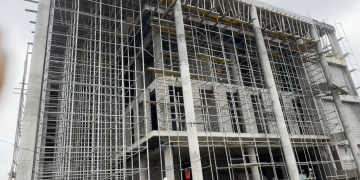
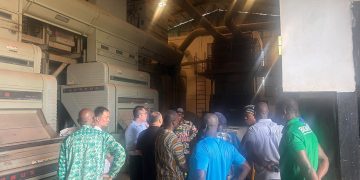
The board is also working to rehabilitate warehouses and expand storage capacity, he said.
The storage challenge remains significant for NAFCO. In May, the company disclosed that inadequate and deteriorating warehouse infrastructure was constraining its ability to mop up surplus grains from farmers despite government releasing GH¢300 million for strategic food reserves.
NAFCO Chief Executive Officer, George Abradu-Otoo, had earlier said the company needed as much as GH¢1.5 billion to build a strategic grain reserve capable of absorbing large surpluses from farmers. At the time, government support announced for the reserve stood at GH¢300 million.

Mr Opoku therefore urged NAFCO’s management to maintain strict discipline in the management and storage of its stocks, stressing that the reserves must remain available when the country needs them.
He also called for continued investment in NAFCO’s facilities and funding to enable the company to provide farmers with a reliable market for their produce.
The minister’s call comes against the backdrop of concerns over agricultural surpluses and weak market access. In June, he acknowledged that increased crop production was creating pressure on farmers who lacked stable markets and called for greater investment in agro-processing to absorb excess production.
The AGM, NAFCO’s first since its establishment in 2010, was held under the theme “Strengthening Food Security through Strategic Partnerships.”
Source: www.kumasimail.com