








































A lecturer at St. Teresa’s College of Education, John Newton Kumi, has called for urgent reforms to the structure and scheduling of the Basic Education Certificate Examination (BECE), describing the current timetable as unfair and overly demanding for students.


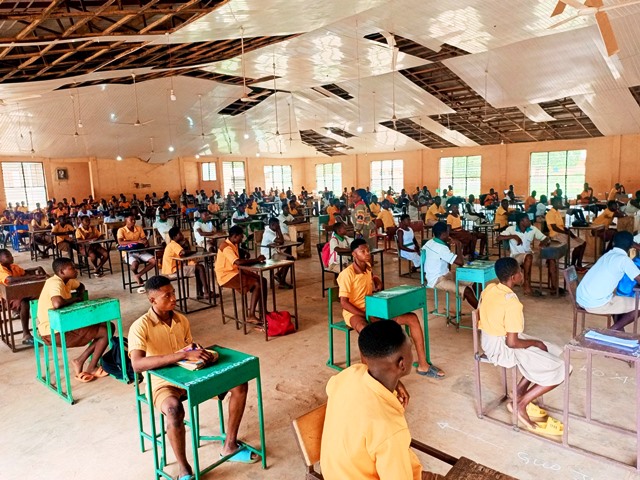
In an opinion piece, Mr. Kumi argued that the existing examination arrangement places excessive pressure on candidates, many of whom are required to sit for between 10 and 11 subjects within just five days.
According to him, some candidates are compelled to write as many as three papers in a single day, a situation he believes negatively affects performance and undermines the true purpose of academic assessment.
Mr. Kumi referenced recent comments by Benjamin Otchere-Ankrah, published by Adom FM on May 4, 2026, questioning the rationale behind subjecting students aged between 14 and 15 to such an intensive examination schedule.
He noted that university students, who are generally older and more academically mature, are often given weeks to complete examinations after studying fewer courses over an extended period.
“If we acknowledge the limits of adult learners, why do we ignore those of children?” he questioned.
Mr. Kumi maintained that the current BECE structure goes beyond testing academic knowledge and instead measures students’ endurance levels.
“The current BECE format does not merely assess knowledge; it tests stamina,” he stated, adding that fatigue can significantly affect students’ ability to perform well in later examination papers.
He further expressed concern about the psychological and physical toll of the examination process, citing reports of students collapsing or falling ill during examinations due to stress and exhaustion.
According to him, because the BECE plays a major role in determining placement into Senior High Schools, the examination process must fairly reflect students’ abilities rather than their capacity to withstand pressure.
As part of his recommendations, Mr. Kumi proposed extending the examination period to at least two weeks to allow candidates adequate rest between papers.
He also called for a review of the number of externally examined subjects and urged policymakers to place greater emphasis on student welfare and mental health in educational reforms.
The lecturer suggested that Ghana could adopt more balanced assessment systems similar to those implemented in other countries without compromising educational standards.
He appealed to key stakeholders, including the West African Examinations Council and the Ghana Education Service, to prioritise reforms to the BECE timetable.
Mr. Kumi stressed that education should promote growth and understanding rather than subject students to unnecessary hardship.
Below is the full unedited script
GIVE BECE CANDIDATES A FAIR CHANCE: RETHINKING AN UNJUST TIMETABLE
For years, many parents, teachers, and students have quietly expressed concern about the structure of the Basic Education Certificate Examination (BECE). Today, that concern deserves a stronger, more public voice. As an educator at St. Teresa’s College of Education, I believe the current BECE timetable places unnecessary and unfair pressure on our children, and it is time we addressed it.
Recent remarks by Dr. Benjamin Otchere-Ankrah, published on Facebook by Adom 106.3 FM on 4th May 2026, reinforce what many of us in the classroom have long observed: asking 14- and 15-year-olds to sit for 10 to 11 subjects within just five days is not only excessive, but counterproductive.
The Burden We Place on Children
Under the current system, candidates often write up to three papers in a single day. These are not minor quizzes; they are high-stakes examinations covering three years of academic work. At that age, students are still developing mentally, emotionally, and physically. Expecting them to perform optimally under such intense conditions is unrealistic.
Dr. Otchere-Ankrah rightly draws a comparison with university education. Undergraduate students typically study fewer courses over several months and are given weeks to complete their exams. There is time to rest, revise, and regain focus between papers. If we acknowledge the limits of adult learners, why do we ignore those of children?
When Assessment Becomes Endurance
The current BECE format does not merely assess knowledge; it tests stamina. A student may excel in Mathematics but struggle in an afternoon Integrated Science paper simply due to fatigue. In such cases, results reflect exhaustion rather than true ability.
This raises a serious concern: are we accurately measuring what students know, or merely how much stress they can endure?
The Hidden Costs
Beyond academic performance, the human cost is troubling. Each year, reports emerge of students experiencing extreme stress, with some collapsing and others falling ill during exams. These are not isolated incidents; they are symptoms of a system that prioritizes speed over well-being.
Moreover, the BECE plays a critical role in determining placement into Senior High Schools. It is, in effect, a gateway to future opportunities.
Therefore, the use of a compressed and stressful examination structure to make such important decisions risks misrepresenting students’ true capabilities.
A Practical Way Forward
The good news is that this problem is not without solutions. Both Dr. Otchere-Ankrah and I share the view that reform is not only necessary but achievable:
- Extend the examination period to at least two weeks, allowing one major paper per day and adequate rest between subjects.
- Reassess the number of examinable subjects, ensuring that external examinations focus on core areas while continuous assessment covers others.
- Place student welfare at the center of policy decisions, recognizing that mental health is essential to academic success.
Other countries have adopted more balanced approaches, reducing subject loads and integrating continuous assessment. Ghana can do the same without compromising educational standards.
A Call for Fairness
Education should inspire growth, not impose unnecessary hardship. Assessment should reflect understanding, not endurance. If we trust university students with weeks to demonstrate their knowledge, we should extend similar consideration to our younger learners.
Dr. Otchere-Ankrah’s intervention is timely and necessary, and I fully align with his position. This is not merely about convenience; it is about fairness, credibility, and the future of our education system.
The responsibility now lies with key stakeholders, including the West African Examinations Council and the Ghana Education Service. Reforming the BECE timetable is not an impossible task; it is a moral imperative.
Our children deserve a system that allows them to perform at their best, not one that overwhelms them. The time to act is now.
John-Newton Kumi
[email protected]
TERESCO
Source: source.www.kumasimail.com