








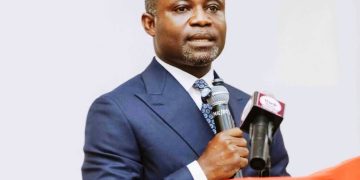





























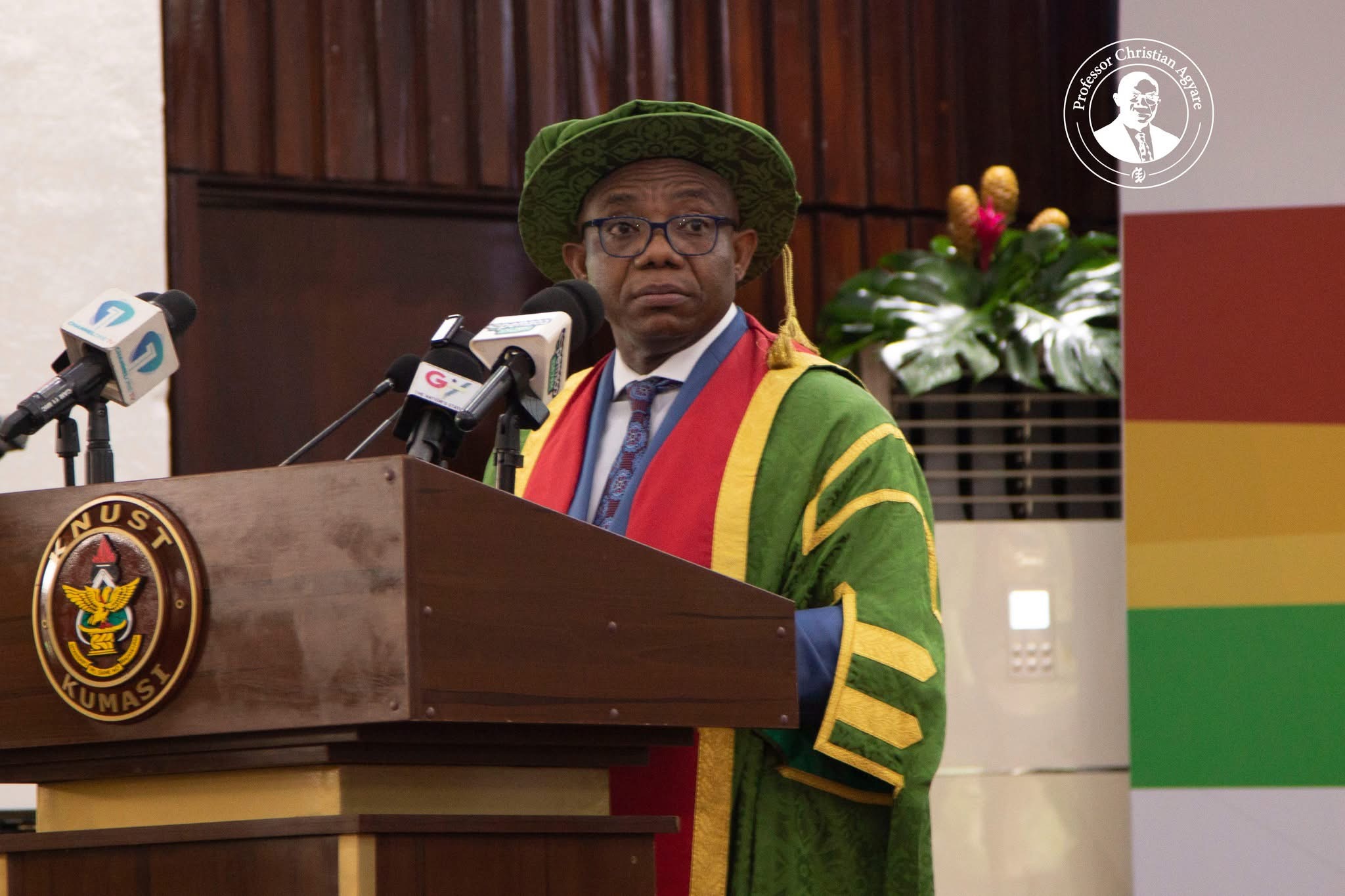
The Vice-Chancellor of the Kwame Nkrumah University of Science and Technology (KNUST), Prof. Agyare, has said artificial intelligence will play a central role in shaping the university’s future, with plans to integrate AI and other smart technologies into every major aspect of institutional life.


Speaking at his investiture ceremony in Kumasi, Prof. Agyare said the university cannot afford to remain a passive observer in the face of fast-changing technological advances.
“We stand at a defining point in human history,” he said. “Artificial intelligence is no longer a subject of science fiction or distant speculation. It is here, and it is reshaping every sector of human endeavour.”
According to him, the real question is no longer whether KNUST will embrace AI, but whether the university will take the lead in applying it.
“The question before us is not whether KNUST will engage with AI, but whether we will lead or be led,” he said.
“My vision, priority is a commitment to the strategic integration of artificial intelligence and emerging smart technologies across every dimension of this institution. Our campus infrastructure must become intelligent,” he added.
Prof. Agyare said the university’s future must be built around innovation, efficiency and digital transformation, adding that AI can help improve both academic and administrative operations.
He said this includes the use of AI to streamline admissions screening, student life-cycle management, budgeting, staff recruitment and performance benchmarking.
“Operationally, leveraging AI to streamline and optimize our institutional processes, from admissions screening, student life cycle management, to budgeting, staff recruitment, and performance benchmarking, is important,” he emphasized.
“Efficiency is not a luxury, but an obligation you owe to every stakeholder of this university,” Prof Agyare opined.
The Vice-Chancellor also pointed to the experiences of South Korea, China and Singapore as evidence that national development is closely tied to investment in research, innovation and higher education.
“As artificial intelligence, biotechnology, and other emerging disruptive technologies reshape global economies, the experiences of South Korea, China, and Singapore demonstrate a powerful truth,” he said.
“Nations achieve prosperity by investing strategically in research, innovation, and higher education.”
He added that those countries did not wait until they became wealthy before investing in knowledge, but used knowledge as the foundation for wealth creation.
“These countries did not wait to become wealthy before investing in knowledge. They invested in knowledge to become wealthy,” he stressed.
Prof. Agyare said universities must be seen not only as centres of teaching, but as strategic national assets capable of driving scientific discovery, economic transformation and national competitiveness.
“Their universities became engines of scientific discovery, economic transformation, and national competitiveness,” he stated adding “The lesson for us is clear. Universities are not only centers of teaching, but strategic national assets.”
Source: www.Kumasimail.com