


























The Presbyterian Church of Ghana (PCG) has called on the government to take urgent and sustained action to address illegal mining, flooding, youth unemployment, healthcare challenges and other pressing national issues.


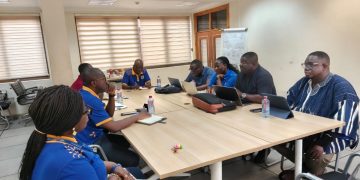
The call was contained in a communiqué issued at the end of the 26th General Assembly of the PCG, held virtually from July 31 to August 11, 2026, and in person from August 12 to 16 at the Ramseyer Training Centre, Abetifi-Kwahu.
The Assembly, held under the theme, “Celebrating Our Heritage: Building on the Foundation Already Laid”, reaffirmed the church’s commitment to contributing to Ghana’s peace, development and social wellbeing as it prepares to celebrate its bicentenary in 2028.
Galamsey
The church expressed deep concern about the continued destruction of Ghana’s forests, rivers and ecosystems through illegal mining, describing the practice as a national security threat requiring “urgent, sustained, and uncompromising actions.”
The PCG commended the government for repealing Legislative Instrument (LI) 2462, which previously permitted mining in certain forest reserves, but said implementation of the policy appeared to be lagging.
It cited a recent documentary on illegal mining in forest reserves and warned that some forests were increasingly being taken over by armed illegal miners.
The church therefore called on state agencies and security services to act immediately to halt illegal mining activities, particularly in forest reserves that serve as sources of major rivers.
It said its Ecological Integrity Campaigns, public lectures, “Red Sunday” campaign and church sermons would continue to raise awareness about environmental degradation.
Flooding
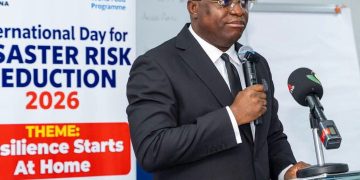
The PCG also expressed concern over the recurring flooding in parts of the country, particularly the floods of June 29, 2026, which it said claimed the lives of 34 people.
It attributed the severity of flooding not only to intense rainfall but also to environmental degradation, illegal mining, poor drainage, waste disposal and construction on waterways.
According to the church, the degradation of upstream landscapes, destruction of wetlands and heavy sedimentation of rivers such as the Pra, Offin, Ankobra, Birim and Densu have increased the vulnerability of downstream communities.
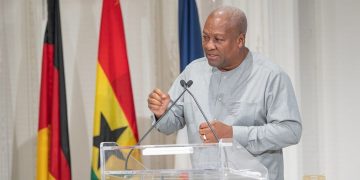
The PCG commended President John Dramani Mahama for establishing a National Post-Flood Mitigation Task Force and committing GH¢350 million to relief, dredging and long-term flood prevention measures.
It also called for closer collaboration between government agencies and faith-based organisations in disaster preparedness, emergency response and long-term recovery.
Economy and employment
The church welcomed what it described as signs of macroeconomic recovery, including declining inflation, relative stability of the cedi, economic growth and increased international reserves.
However, it warned that structural weaknesses in the energy sector, cocoa industry and state-owned enterprises, as well as corruption, procurement irregularities and import dependence, could threaten long-term economic sustainability.
The PCG urged the government to pursue credible, home-grown economic solutions following the completion of Ghana’s three-year Extended Credit Facility programme with the International Monetary Fund.
On unemployment, the church expressed particular concern about young people and called for transparent recruitment processes based on merit and competence.
It criticised the perception that political connections are sometimes necessary to secure public-sector employment, saying such practices undermine meritocracy and public confidence in state institutions.
Healthcare
The Assembly also raised concerns over Ghana’s persistent “no-bed syndrome,” following the reported death of 29-year-old engineer Charles Amissah, who was reportedly unable to receive timely emergency care.
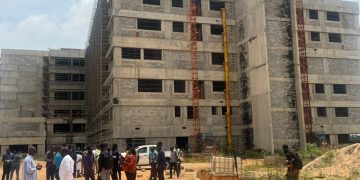
The church called for increased investment in healthcare infrastructure and urged the government and other stakeholders to complete stalled health projects, including the Afari Military Hospital, La General Hospital, the Komfo Anokye Teaching Hospital Maternity Block, Weija Children’s Hospital and projects under Agenda 111.
It welcomed the government’s directive that emergency patients should not be turned away and called for sustained reforms to ensure access to timely and quality emergency healthcare.
Education and drug abuse
The PCG expressed alarm over reported attacks on teachers, violence and sexual assault in some senior high schools.
It called for stronger cooperation between the state and mission institutions in providing holistic education and supported disciplinary measures aimed at preparing students to become responsible adults.
The church also raised concerns about the growing abuse of marijuana, “kush”, Tramadol and other substances, particularly among young people.
It urged the Ghana Police Service, religious bodies and civic organisations to work together to combat drug abuse and prevent the infiltration of illicit substances into educational institutions.
Agriculture and transport
The church called for greater investment in irrigation, modern farming and food processing following the killing of seven Ghanaian tomato traders in Burkina Faso.
It also expressed concern over the reduction in cocoa producer prices and urged extensive engagement with farmers to ensure that reforms in the cocoa sector benefit producers.
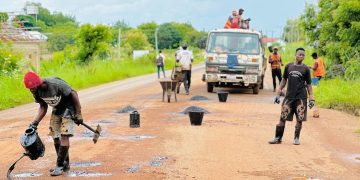
On transportation, the PCG called for the completion of the Accra-Kumasi and Accra-Takoradi road dualisation projects and associated bypasses.
It welcomed the government’s Big Push Agenda and the proposed Accra-Kumasi Expressway, while urging strict quality assurance and value for money in infrastructure projects.
The church further advocated the revival and expansion of Ghana’s railway network to connect major cities, including Accra, Kumasi, Tamale, Takoradi and Aflao.
It expressed concern over the country’s road safety situation, citing National Road Safety Authority figures indicating that 2,949 people died in road crashes in 2025, compared with 2,494 in 2024.
The PCG called for strict enforcement of road traffic regulations, particularly against speeding, dangerous driving and the improper operation of commercial motorcycles and tricycles.
National values
The church also urged Ghanaians to exercise restraint and decorum in public discourse, particularly on television, radio and social media.
It called on Parliament to address the issue impartially and develop bipartisan solutions to promote respectful public debate.
The PCG further urged Ghanaians to uphold patriotism, discipline, hard work, integrity, humility and godly leadership.
As the church approaches its 200th anniversary, it reaffirmed its commitment to using its prophetic voice to draw attention to social and economic challenges while supporting efforts to promote justice and the welfare of the Ghanaian people.
The communiqué was issued at Abetifi-Kwahu on August 15, 2026, and concluded with a call for national unity and a renewed commitment to building Ghana on the principles of collective responsibility and solidarity.
Source:www.kumasimail.com