


























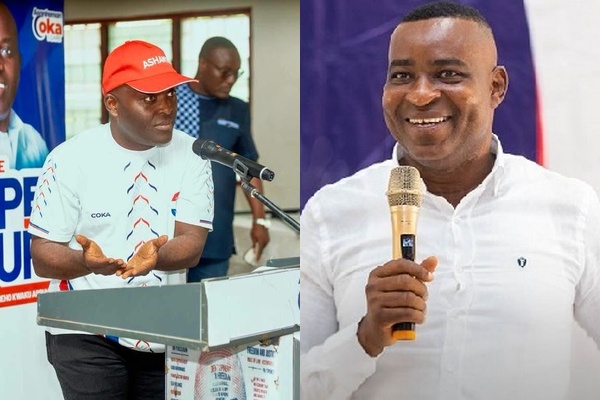
The New Patriotic Party’s (NPP) Ashanti Regional leadership has entered a new political chapter.


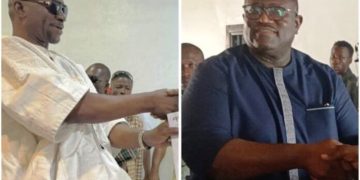
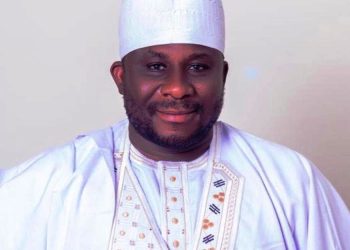
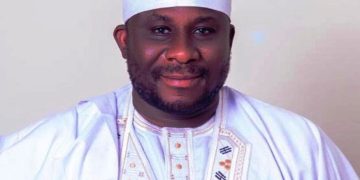
For three terms, Bernard Antwi Boasiako, popularly known as Chairman Wontumi, was the dominant figure at the helm of the party’s regional affairs. His successor, Odeneho Kwaku Appiah, better known as COKA, now faces the challenge of leading the party through one of the most consequential periods in its recent history.
The transition is not simply a change of personalities.
It represents a shift in political style — from Wontumi’s highly visible, energetic and sometimes flamboyant approach to COKA’s emphasis on consultation, grassroots organisation and what he repeatedly describes as “less talk and more work.”
When COKA launched his campaign for the regional chairmanship, his message was deliberately simple: “I will lead Ashanti with less speeches and more work.”
The delegates eventually gave him the opportunity to prove it.
COKA secured 663 votes in the regional contest, defeating Dr. Henry Kwabena Kokofu, a former Chief Executive of the Environmental Protection Agency, who obtained 269 votes.
But winning the election may prove easier than delivering on the expectations that come with it.
A mandate shaped by electoral setbacks
COKA takes over at a time when the NPP is confronting difficult questions about its political fortunes in the Ashanti Region.
The region remains central to the party’s electoral calculations, yet the NPP suffered significant losses in the 2024 general election.
The party’s presidential candidate, Dr. Mahamudu Bawumia, obtained approximately 1.37 million votes in Ashanti, about 65 per cent, down from roughly 1.79 million votes in 2020.
The party also lost 7 of the region’s 47 parliamentary seats to the National Democratic Congress (NDC).
For the new chairman, those figures are not simply statistics. They represent the scale of the rebuilding exercise ahead.
His campaign focused heavily on strengthening party structures from the polling station to the regional level, improving internal coordination and restoring the NPP’s electoral advantage.
“I am coming to lead the Ashanti Region so we can do everything legally possible to increase our presidential votes, increase our parliamentary seats, and win Election 2028,” he said during the campaign.
The 2028 election will therefore provide the clearest measure of whether COKA’s leadership philosophy can translate into electoral gains.
From grassroots organiser to regional chairman
COKA’s rise has been rooted largely in the party’s grassroots structures. His political career has included service as a Ward Organiser, Ward Chairman, Regional Financial Secretary and Afigya Kwabre Constituency Chairman, a position he reportedly held for five terms.
He also served as chairman of the Conference of Constituency Chairmen in Ashanti for two terms and participated in several party committees.
That experience gives him familiarity with the machinery that ultimately drives elections: constituency executives, polling-station structures, grassroots mobilisation and the day-to-day relationships between party leaders and members.
His supporters have used that background to portray him as a politician who understands the party from the bottom up rather than one whose political influence was built primarily through national prominence.
That grassroots identity has also been reinforced by his welfare activities and support for party members and vulnerable people in the region.
It contributed to the nickname “Asanteman COKA, I Care” — a label that reflects another component of his political brand: accessibility.
The leadership style he inherits
The comparison with Wontumi is unavoidable. Wontumi’s three terms in office were characterised by a highly recognisable public persona. He was outspoken, energetic and comfortable operating at the intersection of politics, media and business.
His visibility became part of the NPP’s political identity in Ashanti.
Supporters viewed his confidence, humour and willingness to confront political opponents as strengths. Critics, however, sometimes questioned whether his flamboyant style was appropriate for the leadership of a major regional party structure.
COKA has offered a markedly different proposition.
His campaign has emphasised discipline, consultation and institutional responsibility rather than personal visibility.
He has repeatedly argued for a leadership structure in which party organs are allowed to perform their respective functions.
That philosophy could prove important as the NPP attempts to strengthen internal cohesion following its 2024 electoral setback.
But a quieter style will also face its own test: whether it can generate the same level of enthusiasm and grassroots mobilisation that accompanied the previous administration.
More than a change of personality
The new leadership comes with a broader debate about what the NPP needs in Ashanti.
Does the party require a charismatic political figure capable of dominating the public space, or does it need a more structured administrator who can rebuild party organisation away from the spotlight?
COKA’s victory suggests that a significant section of the party’s delegates preferred the latter approach.
His supporters believe his combination of grassroots experience, business exposure and academic training gives him the tools to lead the region differently.
He holds a degree in Business Administration and a Master of Arts in Peace, Security and Intelligence Management from the University of Professional Studies, Accra (UPSA).
His professional experience also extends into the private sector, including hospitality, construction, transportation and haulage.
He has been associated with Longford Royal Group Limited and has more than two decades of experience in private-sector management.
The challenge now is to convert that experience into effective political administration.
The Wontumi chapter ends amid turbulence
The circumstances surrounding Wontumi’s departure have added another layer to the transition.
After serving three terms as regional chairman, Wontumi turned his attention to the NPP’s national chairmanship and began campaigning for the position.
His regional leadership, however, was interrupted by legal proceedings that culminated in an Accra High Court conviction in July 2026 over illegal-mining-related offences connected to the Samreboi concession.
He was sentenced to 20 years in prison, while the NPP rejected the judgment and announced plans to appeal.
The legal developments have inevitably changed the political context surrounding the transfer of power in the Ashanti Region.
For COKA, that means taking charge of the party at a moment when the previous era has ended under extraordinary circumstances.
The communication question
One of COKA’s immediate tests will be how the new administration communicates with party members and the wider public.
The NPP’s electoral setbacks have generated questions about its messaging, media presence and ability to connect with voters beyond its traditional support base.
A regional chairman who campaigned on structure and consultation will have to ensure that those principles are reflected in the party’s public communication.
The task is not merely to speak more effectively.
It is to make the party’s message coherent across constituencies, rebuild confidence among supporters and present a clear political alternative ahead of 2028.
That will require close coordination between the regional executives, constituency organisations and the party’s communication structures.
From welfare politics to institutional leadership
COKA’s philanthropic activities and personal support for party members have helped build a network of relationships across the region.
But regional party leadership requires more than personal goodwill.
The new chairman must turn those relationships into an organised political network capable of mobilising voters, resolving internal disagreements and sustaining party activity between elections.
This distinction will become increasingly important as the 2028 election approaches.
The NPP cannot rely solely on individual personalities or welfare initiatives to regain lost parliamentary seats and increase its presidential vote.
It will need functioning structures, disciplined executives and a leadership team capable of working toward common objectives.
Can COKA make “less talk, more work” an electoral strategy?
The slogan that defined COKA’s campaign now becomes the standard against which his leadership will be judged.
He has promised to work collectively, protect the party’s constitution and allow the various structures to perform their responsibilities.
That approach could help address some of the organisational challenges facing the NPP.
But the ultimate test will be electoral.
Can COKA rebuild the party’s grassroots structures?
Can he help recover parliamentary seats lost to the NDC?
Can he increase the NPP’s presidential vote in Ashanti?
And, perhaps most importantly, can he unite competing interests within a party that is already looking ahead to the 2028 presidential contest?
Those questions will define his tenure more than his personality ever could.
A new era, with old expectations
The Ashanti Region remains one of the NPP’s most important political territories.
Its electoral performance can significantly influence the party’s national prospects, making the regional chairman’s role much larger than the title suggests.
Wontumi leaves behind a legacy built around visibility, personality and energetic political mobilisation.
COKA begins his tenure with a different formula: grassroots experience, consultation, institutional structures and a promise of action over rhetoric.
Whether that formula succeeds will depend on what happens between now and 2028.
For now, the political baton has changed hands.
The Wontumi era has ended.
COKA has won the mandate.
The real contest rebuilding the NPP in Ashanti and converting that mandate into electoral results starts now.
Source: www.kumasimail.com