




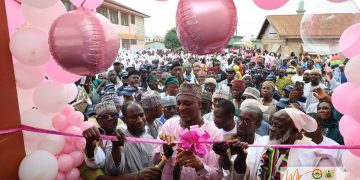


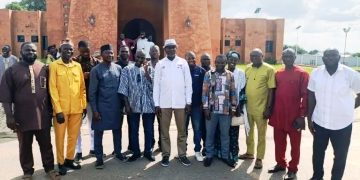








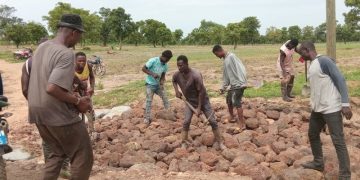













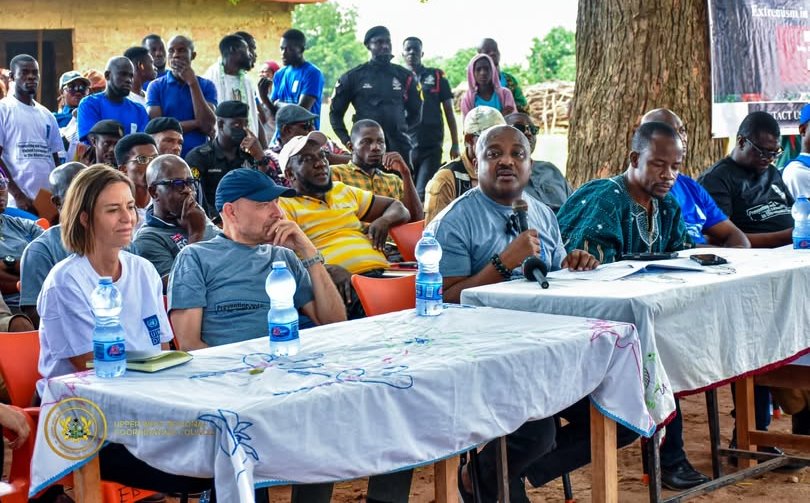
Economic empowerment is being deployed as a frontline strategy against violent extremism in Ghana’s vulnerable northern border communities, with 100 women and young people in Fatchu in the Sissala West District of the Upper West Region, receiving livelihood support and a solar-powered irrigation facility.


The intervention, handed over on Thursday, August 27, forms part of the Preventing and Responding to Violent Extremism in the Atlantic Corridor project, implemented by the Capacity Enhancement and Community Support (CAPECS) in partnership with the United Nations Development Programme (UNDP), with funding from Denmark and Norway.
Fatchu, which shares a border with Burkina Faso, is considered vulnerable to the spillover of violent extremism from the Sahel, with poverty, unemployment and social exclusion identified as factors that can heighten communities’ susceptibility to radicalisation and recruitment.
The beneficiaries have been supported to establish 22 green enterprises, including tailoring, make-up artistry, poultry production, bread baking and groundnut-paste production.
A 1.58-acre fenced farm fitted with a solar-powered mechanised borehole has also been commissioned to enable beneficiaries to undertake year-round, high-value vegetable production, reducing their dependence on rainfall and strengthening their resilience to climate shocks.
The Upper West Regional Minister, Charles Lwanga Puozuing, said the intervention demonstrated that development and peacebuilding could not be treated as separate agendas.
“When a young person has a productive livelihood, when a woman has an income-generating enterprise, and when a community has the means to produce food and generate wealth, we reduce vulnerability and strengthen the social foundations upon which peace depends.”
He urged beneficiaries and community leaders to establish transparent systems for managing the facility and warned against vandalism, misuse and environmental degradation.
Mr Puozuing further challenged the beneficiaries to move beyond subsistence production and pursue aggregation, value addition, market access and enterprise development to turn the intervention into sustainable businesses.
UNDP’s Head of the Transformative Governance Cluster, Dr Edward Ampratwum, said the initiative was part of efforts to contain the growing risk of violent extremism spreading southwards from the Sahel into the coastal states.
He said UNDP assessments in Ghana’s five regions of the north had identified poverty, unemployment and social exclusion—particularly among women and young people—as key sources of vulnerability. The Atlantic Corridor project has consequently combined livelihood interventions with peacebuilding, social cohesion and stronger local early-warning mechanisms.
Dr Ampratwum urged beneficiaries to work closely with community peace structures, traditional leaders and security agencies to identify and respond to emerging threats.
The Sissala West District Chief Executive, Abudu Fuseini Gbene, said the intervention was particularly important given the district’s proximity to Ghana’s northern borders.
He said economic insecurity and limited employment opportunities could create conditions that extremist groups might exploit, while Community Peace Committees established and strengthened under the project could help identify and resolve conflicts before they escalate. He also appealed for support to revive the dormant Sissala West Youth Parliament as a platform for civic education and youth participation in governance.

For 22-year-old beneficiary Sanah Fadila, the intervention offers more than physical assets.
She said beneficiaries had acquired practical skills in soap and shower-gel production, make-up, ornament making, gardening and savings, which she described as tools for becoming economically self-reliant.
The Denmark and Norway-backed intervention reflects a broader regional strategy to prevent violent extremism by tackling its underlying socioeconomic vulnerabilities. Phase II of the Atlantic Corridor project, covering 2025–2028, specifically targets youth unemployment, inequality, governance gaps and other factors that can increase communities’ vulnerability to radicalisation.
UNDP says the wider initiative has already supported livelihood skills, starter packs and economic opportunities for hundreds of women and young people, alongside community-level peace and early-warning mechanisms.
In Fatchu, therefore, the strategy is clear: put productive assets in the hands of vulnerable people, strengthen their economic independence and, in the process, make communities harder targets for extremist recruitment.
This approach fits the wider Atlantic Corridor programme, which treats economic opportunity, social inclusion and community resilience as critical components of preventing violent extremism rather than waiting to confront the threat solely through security measures.
Source: www.kumasimail.com