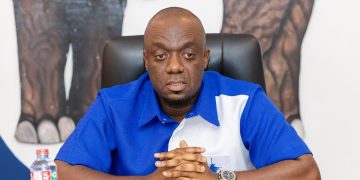





















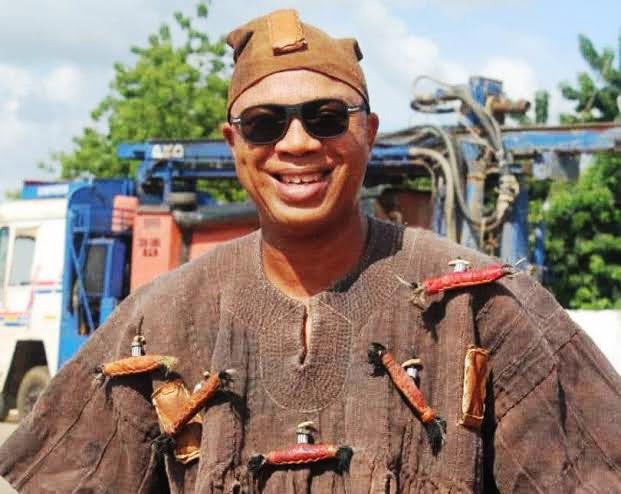
The Managing Director of Ghana Water Limited, Adam Mutawakilu, appears to be stepping up his grassroots engagement in the Damongo Constituency, raising fresh questions about his political ambitions ahead of the 2028 parliamentary elections.


Mutawakilu, who represented Damongo in Parliament on the ticket of the National Democratic Congress (NDC) from 2013 to 2021, has in recent days undertaken two high-profile community interventions — commissioning a mosque built in honour of his late father and donating industrial sewing machines to a women’s group with which he has maintained a political relationship for more than a decade.
While the former MP has not publicly declared that he intends to contest the Damongo parliamentary seat again, the timing and nature of the interventions are already being interpreted by some of his political opponents as an effort to strengthen his grassroots base ahead of the next parliamentary contest.
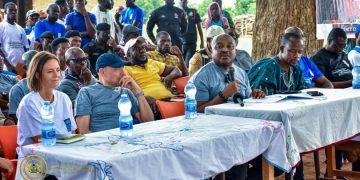
His latest intervention came on Saturday, August 29, 2026, when he donated 15 industrial sewing machines to members of the Lordina Ladies, an NDC-linked women’s group in the constituency.
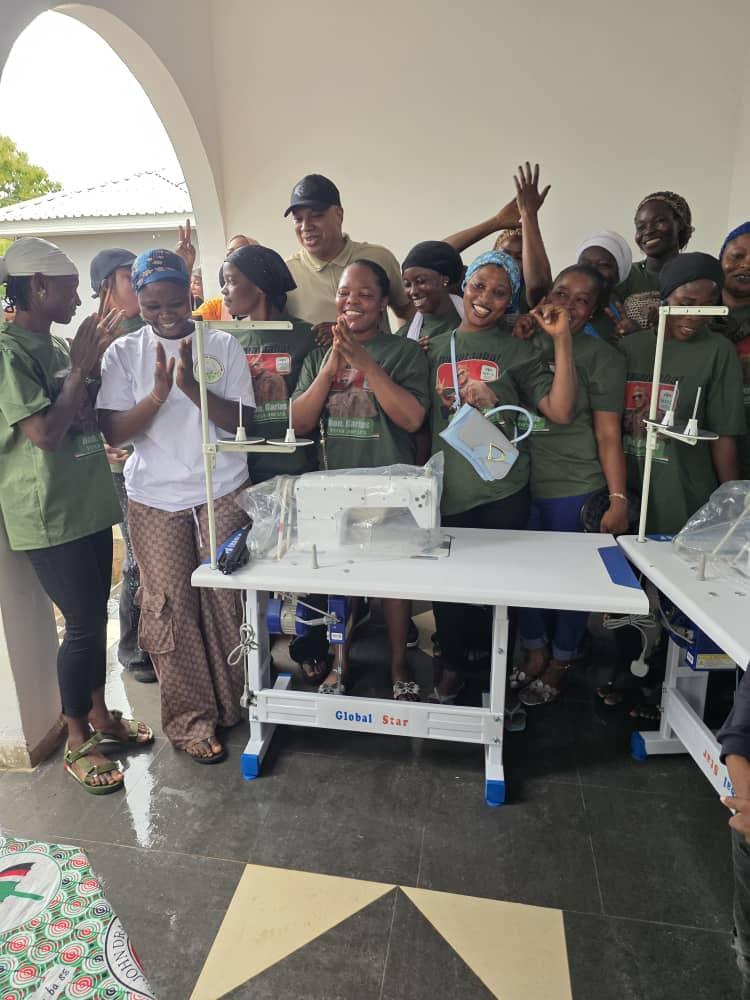
The group has been active in political and community activities in Damongo for more than a decade, with Mutawakilu tracing their relationship to 2010.
At the presentation, Mutawakilu openly linked the support to the group’s longstanding loyalty to him and the NDC.
“Everyone knows how the Lordina Ladies and I started. It has been 16 years since 2010, and they have been there for the party, myself and His Excellency John Dramani Mahama,” he said.
He recalled periods when the group and the party endured political difficulties together, saying their loyalty had remained intact despite the challenges.
“There are times we enjoy together and there are times we suffer together, but they stood with me through challenges from opposing sides, though some changed their minds,” he added.
The former MP further disclosed that similar support was being planned for hairdressers and other artisans within the group, promising to provide them with the appropriate equipment.
The beneficiaries said the machines would provide opportunities for skills development, income generation and improved livelihoods, while also enabling members to expand their businesses and train others.
But beyond the immediate empowerment objective, the intervention carries political significance in a constituency where Mutawakilu has twice come close to reclaiming the parliamentary seat.
Two defeats, narrowing margin
Mutawakilu’s political comeback challenge is closely tied to his electoral history with the incumbent, Samuel Abu Jinapor.
In the 2020 parliamentary election, Jinapor, then making his first bid for Parliament, defeated the incumbent Mutawakilu with 15,671 votes against 13,330.
The contest was repeated in 2024 after Mutawakilu returned as the NDC’s parliamentary candidate.
Jinapor again won, but the gap narrowed. Officially reported results put Jinapor at 16,222 votes, representing 52.93 per cent, while Mutawakilu secured 14,425 votes, or 47.07 per cent.
The 2024 result therefore left Mutawakilu less than 1,800 votes away from reclaiming the constituency — a considerably smaller gap than in 2020.
That performance could provide an incentive for the former MP to maintain a strong presence in the constituency, particularly if he is considering another attempt at the seat.
Damongo is also politically significant for the NDC. The constituency had traditionally been held by the party before Jinapor’s victory in 2020, making the recovery of the seat an important objective for the party’s local organisation.
Beyond politics?
Mutawakilu’s recent activities, however, are being presented as community interventions rather than campaign activities.
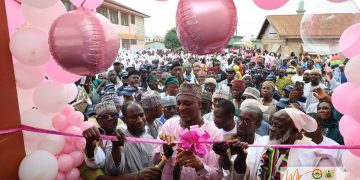
On August 23, he commissioned an ultra-modern mosque in Damongo in honour of his late father, adding a religious and community-development dimension to his recent activities. Local reports described the facility as having been built by the former MP in memory of his father.
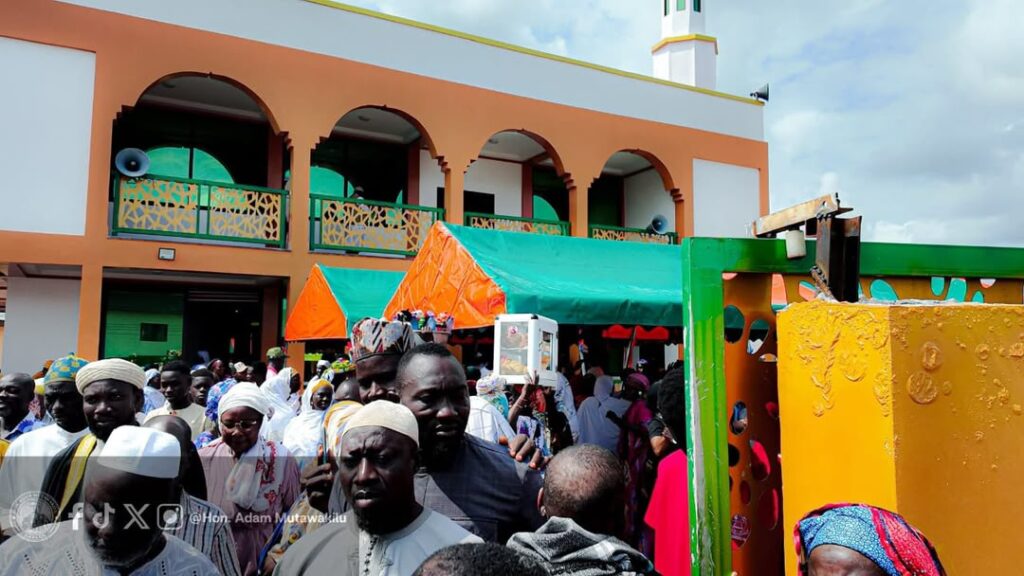
The combination of religious, community and economic interventions gives Mutawakilu several avenues through which to maintain contact with constituents outside the formal electoral cycle.
His latest engagement with the Lordina Ladies is particularly significant because of the political history he himself highlighted.
By stressing that the women have stood with him and the NDC since 2010, Mutawakilu was not merely presenting sewing machines; he was publicly reaffirming an old political relationship.
He also promised to continue contributing to the development of the constituency, suggesting that the latest donation may be part of a broader programme of engagement rather than a one-off intervention.
A grassroots rebuilding exercise?
For Mutawakilu’s opponents, the interpretation is straightforward: the former MP is rebuilding his political machinery early.
For his supporters, however, the initiatives could simply be viewed as the continued fulfilment of his commitment to Damongo and the people who have supported him over the years.
Either way, the political significance is difficult to ignore.

With the 2024 election showing that Mutawakilu had reduced Jinapor’s advantage compared with 2020, sustained grassroots engagement could become an important part of any future strategy to reclaim the constituency.
The question now is whether the former MP’s recent interventions represent a broader political comeback strategy or simply the activities of a former legislator who intends to remain active in the constituency.
For now, Mutawakilu is keeping his political cards close to his chest.
But with the 2028 election cycle still ahead, his renewed visibility in Damongo — particularly among women, religious communities and longstanding NDC supporters — is likely to attract increasing political attention.
Source: www.kumasimail.com